


Jul
Why does the nervous system play a role in back pain?
The nervous system plays a central role in back pain because the nerves in and around the spine send pain signals to the brain. When vertebrae, intervertebral discs, or surrounding tissues are under pressure or inflamed, nearby nerves become irritated or compressed, causing pain, radiating symptoms, or loss of sensation. In this article, we answer the most frequently asked questions about the relationship between the nervous system and back pain.
How does the nervous system influence the pain you feel in your back?
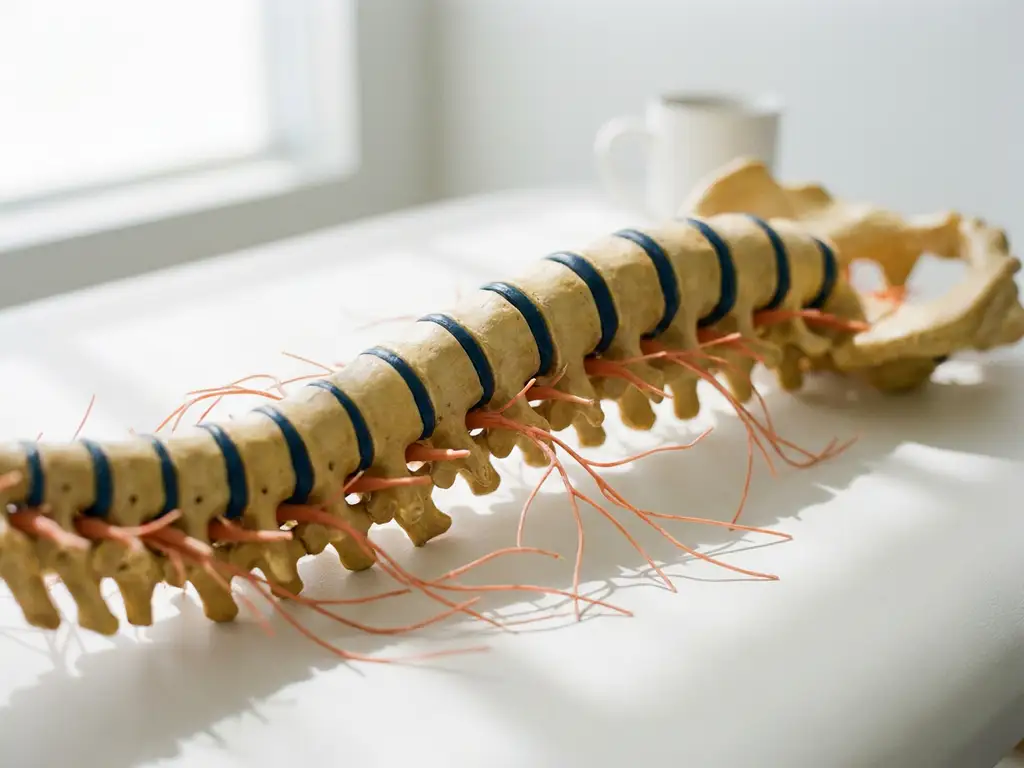
The nervous system determines how you experience back pain by processing pain signals from the spine through the spinal cord and brain. The spine houses the spinal cord, from which dozens of nerve roots branch out to the rest of the body. As soon as tissue in the back is damaged or irritated, pain receptors activate these nerve pathways and send out an alarm signal.
What makes this complex is that the nervous system does not simply pass signals along passively. With prolonged pain, the system can become hypersensitive — a phenomenon known as central sensitization. In this state, the nervous system responds to stimuli that would not normally cause pain as though they are genuinely dangerous. This explains why chronic back pain sometimes persists even after the original cause has largely healed.
Stress amplifies this effect. When the body is under prolonged tension, it increases the sensitivity of the nervous system and raises the likelihood of muscle tension and spinal complaints. The connection between the mind, the nervous system, and the back is therefore far more direct than most people realize.
What is the difference between muscle pain and nerve pain in the back?
Muscle pain in the back typically feels dull, stiff, or cramping and is localized to the area where the muscle is overworked or tense. Nerve pain, by contrast, has a sharper, burning, or shooting quality and often radiates to other parts of the body such as the buttocks, legs, or arms. This distinction helps determine the appropriate treatment approach.
With muscle pain, the tissue is responding to overuse, an awkward movement, or prolonged tension. The pain usually resolves with rest and recovery. Nerve pain occurs when a nerve is irritated, compressed, or damaged. This type of pain responds less well to rest alone and requires an approach that reduces pressure on the nerve.
A practical distinction: if you have pain that radiates down your leg past the knee, that is a strong indication that a nerve is involved. If the pain feels more localized and eases with movement or warming up, a muscle problem is more likely. In practice, both forms can occur simultaneously, with muscle tension placing additional pressure on a nerve.
Which back complaints are caused by a pinched nerve?
A pinched nerve in the back can cause a variety of complaints, depending on which nerve root is involved and at which level of the spine the compression occurs. The most common symptoms are radiating pain, tingling, numbness, and muscle weakness in the arms or legs.
Some common examples:
- Sciatica: radiating pain from the lower back through the buttock and into the leg, caused by pressure on the sciatic nerve, often due to a herniated disc or spinal stenosis
- Cervical radiculopathy: radiation from the neck into the shoulder, arm, or hand, often accompanied by tingling or reduced strength
- Thoracic nerve irritation: pain that radiates around the rib cage, sometimes confused with heart or stomach complaints
- Tension headaches and migraines: pressure in the cervical spine can irritate nerves that contribute to headaches
Compression occurs when an intervertebral disc bulges, a vertebra shifts, or surrounding tissue becomes swollen. The pinched nerve responds with inflammatory signals and disrupted nerve conduction, which explains the radiating symptoms.
How does the nervous system recover after back pain?
The nervous system has a remarkable capacity for recovery, but that recovery is slower than it is for muscles or bones. After the cause of nerve irritation is removed — such as pressure from an intervertebral disc — the nerve begins to heal gradually. This process can take weeks to months, depending on how long and how severely the nerve has been under stress.
Recovery requires a combination of factors:
- Reduction of pressure: the cause of the compression must be addressed so the nerve has room to recover
- Movement: thoughtful, gentle movement stimulates circulation and promotes healing of nerve tissue
- Sleep and rest: the nervous system recovers largely during sleep; sleep deprivation slows this process
- Stress reduction: an overstimulated nervous system recovers more slowly; lowering stress levels helps the body enter a recovery state
With chronic back pain, the nervous system has sometimes been overstimulated for so long that recovery requires more than simply resolving the physical cause. An approach that addresses both the spine and the nervous system yields the best long-term results.
How does chiropractic care help with nerve-related back pain?
Chiropractic care focuses on restoring spinal alignment, thereby reducing pressure on nerves and improving communication between the brain and the body. By returning blocked or misaligned vertebrae to their proper position, compressed nerves gain more space and are able to heal. This makes chiropractic care a direct, non-invasive approach to nerve-related back complaints.
One technique that can be particularly effective in this context is spinal decompression using the Y-strap. With this method, the head is pulled along the vertical axis of the body, releasing built-up pressure in the intervertebral discs in a single targeted movement. This reduces pressure on nerve roots and provides relief for complaints such as sciatica, neck pain, and radiating pain into the arms or legs.
The chiropractor selects the form of application that suits the situation: a slow, fluid stretching movement for general decompression and relaxation, or an HVLA movement (High Velocity Low Amplitude) when a blocked vertebra requires a targeted adjustment.
How Ruggensteun helps with nerve-related back pain
At Ruggensteun, we treat people with back pain in which the nervous system plays a central role every day. Our approach is focused on addressing the structural cause, not merely relieving the symptoms. We do this using specialized techniques and a holistic view of the spine and nervous system.
What we offer:
- Certified Y-strap treatment for spinal decompression, performed by one of the few authorized chiropractors in the Netherlands
- Treatment of chronic neck complaints, sciatica, tension headaches, and radiating pain through non-invasive chiropractic techniques
- Personalized guidance in which we thoroughly map the cause of your complaints
- Locations in Eindhoven and Valkenswaard with free parking and quick availability, including for acute complaints
- No referral from a general practitioner required
Do you suffer from recurring back pain, radiating symptoms, or the feeling that previous treatments never truly resolved the problem? Contact us directly and schedule an appointment at Ruggensteun in Eindhoven or Valkenswaard.
Sorry, the comment form is closed at this time.