


Oct
Why Does My Back Pain Radiate to My Leg?
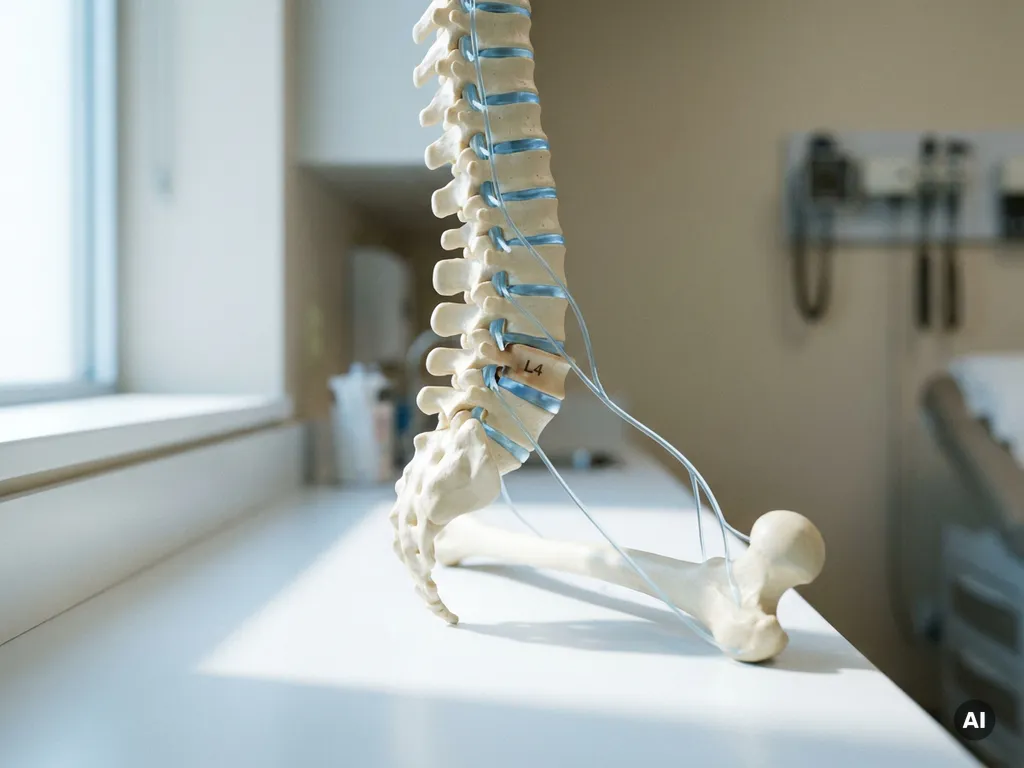
Radiating back pain into the leg occurs when a nerve in the lumbar spine is compressed or irritated. That pressure can come from a bulging intervertebral disc, a narrowed spinal canal, or tense muscles pressing on a nerve pathway. The pain signal then follows the route of that nerve, so you feel the pain not only in your back but also along the leg, sometimes all the way to the foot. In this article, we answer the most frequently asked questions about radiating back pain, so you know exactly what is going on and what you can do about it.
What causes radiating pain from the back into the leg?
Radiating pain from the back into the leg is caused by irritation or compression of a nerve in the lumbar spine. The nerve becomes irritated by external pressure, after which the pain signal follows the entire course of that nerve, from the lower back through the buttock and leg to sometimes the foot.
The most common causes are:
- A herniated disc: an intervertebral disc that bulges outward and presses on a nerve root
- Spinal stenosis: narrowing of the spinal canal due to wear and tear or bone growth
- Piriformis syndrome: an overloaded or cramped piriformis muscle in the buttock that compresses the sciatic nerve
- Facet joint irritation: wear or inflammation of the small joints between the vertebrae
- Muscle tension and poor posture: prolonged pressure on the spine due to overuse or an uneven posture
The location and character of the radiating pain provide a clue as to which nerve is involved. Pain running along the back of the leg often points to the sciatic nerve, while pain at the front of the leg is more likely related to nerves higher up in the lumbar spine.
What is the difference between sciatica and a herniated disc?
Sciatica is a symptom, not a diagnosis. It describes pain that radiates along the sciatic nerve, the thickest nerve in the body, from the lower back through the buttock into the leg. A herniated disc is a structural condition in which the core of an intervertebral disc protrudes outward and presses on a nerve root. A herniated disc is one of the causes of sciatica, but not the only one.
In other words: you can have sciatica without a herniated disc, but a herniated disc in the lumbar spine almost always causes sciatica-like symptoms. Other causes of sciatica include spinal stenosis, piriformis syndrome, or spondylolisthesis, in which a vertebra has slightly shifted relative to the one below it.
The distinction is practically important because the treatment differs. With a herniated disc, the focus is on reducing pressure on the intervertebral disc, while sciatica caused by muscle tension requires a different approach. A proper diagnosis is therefore the first step.
How do I know if my leg pain is coming from my back?
Leg pain originates from the back when the pain starts in the lower back or buttock and then radiates into the leg, and when moving the back affects the symptoms. Pain that is purely in the leg without any involvement of the back or buttock more often has a different cause, such as a local muscle or joint problem.
Signs that point to radiating back pain are:
- The pain follows a recognizable path, such as along the back of the leg or the outside of the calf
- You also experience tingling, numbness, or a feeling of weakness in the leg or foot
- Coughing, sneezing, or sitting for a long time worsens the pain
- The symptoms are on one side of the body
- Straightening the leg while lying down worsens the pain in the leg
Unsure about the cause? A healthcare provider can determine through targeted tests, such as the straight leg raise test, whether a nerve in the spine is involved. Imaging such as an MRI provides additional information about the condition of the intervertebral discs and the spinal canal.
When is radiating back pain a reason for immediate medical contact?
Radiating back pain requires immediate medical attention when the symptoms are accompanied by loss of bladder or bowel control, severe muscle weakness in the leg, or numbness in the saddle or groin area. These can be signs of cauda equina syndrome, a rare but serious condition that, without prompt treatment, can lead to permanent damage.
Also seek urgent attention if:
- The pain started suddenly and severely after a fall or accident
- In addition to the leg pain, you also experience fever, night sweats, or unexplained weight loss
- The pain gets worse at night rather than with movement
- Your leg is noticeably getting weaker or you have difficulty walking
With symptoms that do not include these warning signs, immediate emergency care is less urgent, but it is wise to make an appointment soon. Radiating back pain that persists for more than six weeks without improvement always warrants professional evaluation.
How does a chiropractor treat radiating back pain?
A chiropractor treats radiating back pain by assessing the spine for blockages, misalignment, or excessive pressure on the intervertebral discs, and then making targeted adjustments to reduce nerve irritation. The goal is not to suppress pain, but to remove the structural cause.
Depending on the diagnosis, a chiropractor can use various techniques:
- Spinal manipulation: targeted adjustments of vertebrae to restore movement and relieve pressure
- Spinal decompression: techniques that increase the space between the vertebrae and reduce pressure on the intervertebral disc
- Soft tissue therapy: treatment of surrounding muscles that contribute to nerve irritation
- Dry needling: for muscle tension that amplifies the radiating pain
Chiropractic care focuses on the nervous system as the central link: when the spine is better aligned, the nervous system can do its work and the body supports its own recovery process. You do not need a referral from your general practitioner to make an appointment with a chiropractor.
Can radiating back pain go away on its own?
Yes, radiating back pain can improve on its own in many cases, especially if the cause is milder nerve irritation and the symptoms have recently started. Research shows that some people with sciatica experience improvement within six to twelve weeks without intensive treatment. But this does not apply to everyone and depends strongly on the underlying cause.
Factors that promote recovery include rest alternated with light movement, avoiding prolonged sitting, and addressing postural problems. Factors that slow recovery include prolonged bed rest, overexertion, stress, and ignoring the symptoms.
When the pain does not decrease after six weeks, increases, or is accompanied by neurological symptoms such as tingling or muscle weakness, waiting is not advisable. In that case, professional guidance is needed to prevent the symptoms from becoming chronic. Recurring radiating back pain that keeps coming back almost always points to a structural problem that requires treatment.
How Ruggensteun helps with radiating back pain
At Ruggensteun, we treat radiating back pain by thoroughly assessing the spine and addressing the cause of the nerve irritation, not just the pain itself. Our chiropractors in Eindhoven and Valkenswaard work with proven techniques tailored to your specific situation.
What we offer:
- Targeted diagnosis: we map out which nerve is involved and what is causing the pressure
- Y-Strap treatment: spinal decompression via traction along the vertical axis, aimed at relieving pressure in the intervertebral discs. Ruggensteun is one of the few certified practices in the Netherlands for this technique
- Spinal adjustments and HVLA: for restoring mobility in blocked vertebrae
- Dry needling: for muscle tension that amplifies the radiating pain
- Quick availability: even for acute symptoms, we schedule an appointment quickly
- No referral needed: you can contact us directly
Are you suffering from radiating back pain and want to know what the cause is? Make an appointment directly or contact our team. We are happy to help you on the path to structural recovery.
Sorry, the comment form is closed at this time.