


Oct
Why Do I Have Lower Back Pain When Walking?
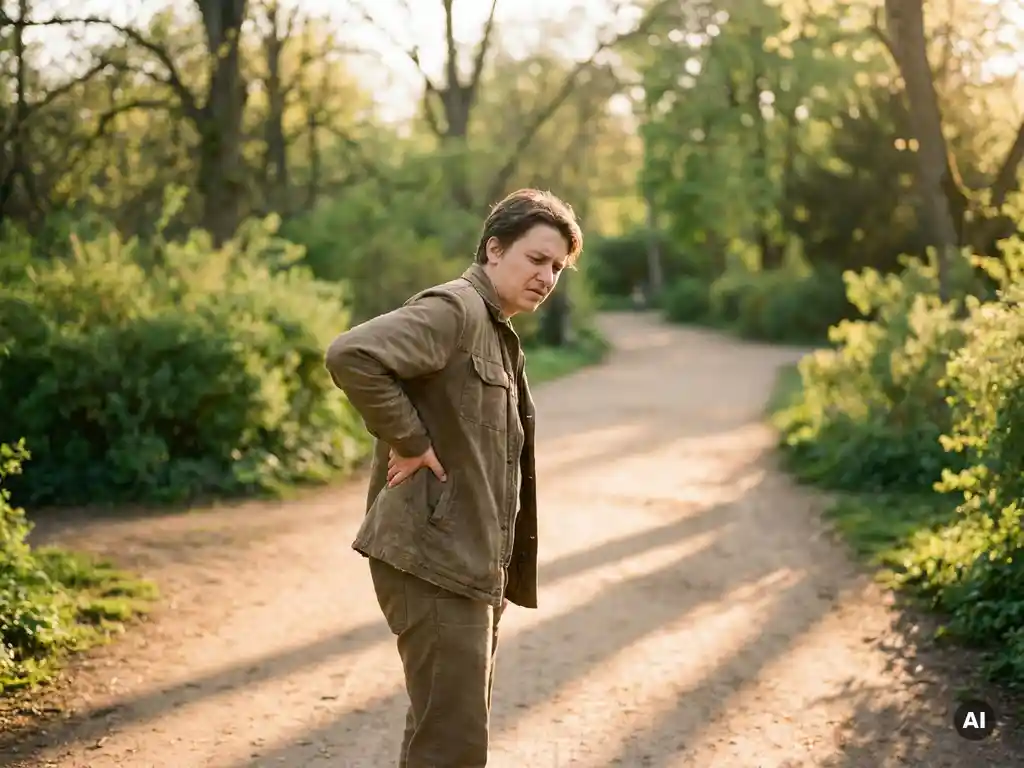
Low back pain when walking usually develops because structures in the lumbar spine, such as intervertebral discs, joints, or muscles, come under pressure during movement. This can be related to posture, overuse, wear and tear, or an underlying condition. In this article, we answer the most frequently asked questions about back pain while walking, so you can better understand what is going on and what you can do about it.
What are the most common causes of low back pain when walking?
Low back pain when walking is most often caused by overloading of the lumbar spine, muscle tension, poor walking posture, or pressure on the intervertebral discs. The movement of walking repeatedly transfers force to the lower back, which quickly makes existing weak spots or imbalances noticeable.
The most common causes are:
- Intervertebral disc problems – A bulging or damaged disc in the lumbar spine can cause pressure and pain with every step.
- Muscle tension or weak core muscles – When the muscles around the lower back and abdomen provide insufficient stability, the spine is placed under extra strain.
- Poor walking posture – A forward-tilted pelvis, inwardly rotating knees, or an overly large stride increases the load on the lower back.
- Joint irritation (facet joints) – The small joints between the vertebrae can become irritated with repetitive movement, especially during prolonged walking.
- Leg length discrepancy – Even a small difference in leg length can lead to a tilted pelvis when walking, and thus to lower back complaints.
- Unsuitable footwear – Shoes without adequate cushioning or support increase the impact load on the spine with every step.
Stress and sleep deprivation also play a role: they increase muscle tension and lower the pain threshold, causing complaints that normally remain in the background to come to the fore during physical exertion.
How do you know if your back pain when walking is serious?
Most low back pain when walking is not immediately dangerous, but certain signs indicate a condition that deserves serious attention. Back pain may be serious when it is accompanied by radiating pain into one or both legs, loss of sensation, tingling, or muscle weakness below the knee.
Also watch out for the following warning signs:
- Pain that persists at rest or worsens at night
- Loss of bladder or bowel control
- Back pain following a fall, accident, or direct impact
- Pain accompanied by fever or unexplained weight loss
- Progressively worsening pain despite rest and modification of activities
Back pain that only occurs while walking and disappears at rest is generally mechanical in nature. This means the pain is related to movement, load, and posture, and not to a serious underlying disease. Nevertheless, it is wise to consult a professional for persistent complaints, even if the signs seem mild.
Why does low back pain when walking often get worse over time?
Low back pain when walking often worsens because the underlying cause is not addressed. Compensatory behavior — unconsciously adjusting your walking pattern to avoid pain — places extra load on other muscles and joints, which causes new complaints or worsens existing ones.
There are a few mechanisms that explain this:
Compensation patterns accumulate
When the lower back hurts, people adjust their walking posture. This may provide temporary relief, but the alternative movement patterns place strain on other structures such as the hips, knees, or pelvis. Over time, a chain of complaints develops that is harder to break.
Muscles and joints become increasingly imbalanced
Chronic pain leads to muscle tension and reduced use of certain muscle groups. As a result, the stabilizing muscles of the spine become weaker, while other muscles become overloaded. This disrupts the balance in the musculoskeletal system and makes the lower back more vulnerable to further irritation.
Moreover, prolonged pressure on the intervertebral discs can lead to gradual wear and tear. When a disc has less fluid and resilience, it absorbs shocks less effectively, which worsens the pain with every step. Early intervention is therefore more effective than waiting for complaints to resolve on their own.
What helps immediately against low back pain while walking?
Immediate relief from low back pain while walking is possible by adjusting your walking posture, taking shorter strides, and varying the surface you walk on. A soft surface such as grass or an athletics track significantly reduces the impact load on the spine compared to asphalt or concrete.
Practical tips that can help right away:
- Shorten your stride length – Shorter, more frequent steps reduce the impact load on the lower back with every step.
- Check your posture – Stand upright, keep your shoulders relaxed, and make sure your pelvis does not tilt too far forward while walking.
- Warm up properly – Dynamic stretching exercises before walking, focused on the hip flexors and hamstrings, reduce tension in the lower back.
- Build up distance and pace gradually – Overloading is one of the biggest triggers of low back pain in walkers and runners.
- Choose suitable footwear – Shoes with good cushioning and support reduce the impact load on the spine.
- Strengthen your core muscles – Exercises such as planks, bridges, and bird-dogs build the stability that relieves the lower back while walking.
If the pain acutely worsens during walking, stopping and resting is the wisest choice. Pushing through increases the risk of further irritation or injury.
When is a chiropractor the right choice for back pain when walking?
A chiropractor is the right choice when low back pain while walking persists despite rest and adjustments, when complaints recur regularly, or when you suspect the cause lies in the alignment of the spine or pelvis. Chiropractic care focuses on the structural cause of the pain, not just the symptoms.
Chiropractic treatment can contribute to:
- Restoring the mobility of blocked vertebrae and joints
- Reducing pressure on intervertebral discs and nerves
- Improving communication between the nervous system and the rest of the body
- Breaking compensation patterns that perpetuate complaints
You do not need a referral from your GP to make an appointment. Chiropractic care is suitable for people of all ages and can be used for both acute and chronic lower back complaints.
How Ruggensteun helps with low back pain
At Ruggensteun, we address low back pain when walking at the source. Our chiropractors bring the spine into balance, improve nerve communication, and ensure your body regains its natural ability to heal. We offer specialized treatments tailored to your specific complaints:
- Chiropractic adjustments to restore mobility of the lumbar spine and pelvis
- Y-Strap treatment for targeted decompression of the intervertebral discs, performed by one of the few certified chiropractors in the Netherlands
- Dry needling to relax tense muscle groups around the lower back
- Personal advice on posture, walking technique, and preventive exercises
You can visit us without a referral from your GP, and for acute complaints we ensure rapid availability. We have locations in Eindhoven and Valkenswaard, both with free parking. Want to know what we can do for you? Make an appointment directly or contact us for more information.
Sorry, the comment form is closed at this time.