


Jul
When is a Y-strap treatment not suitable?
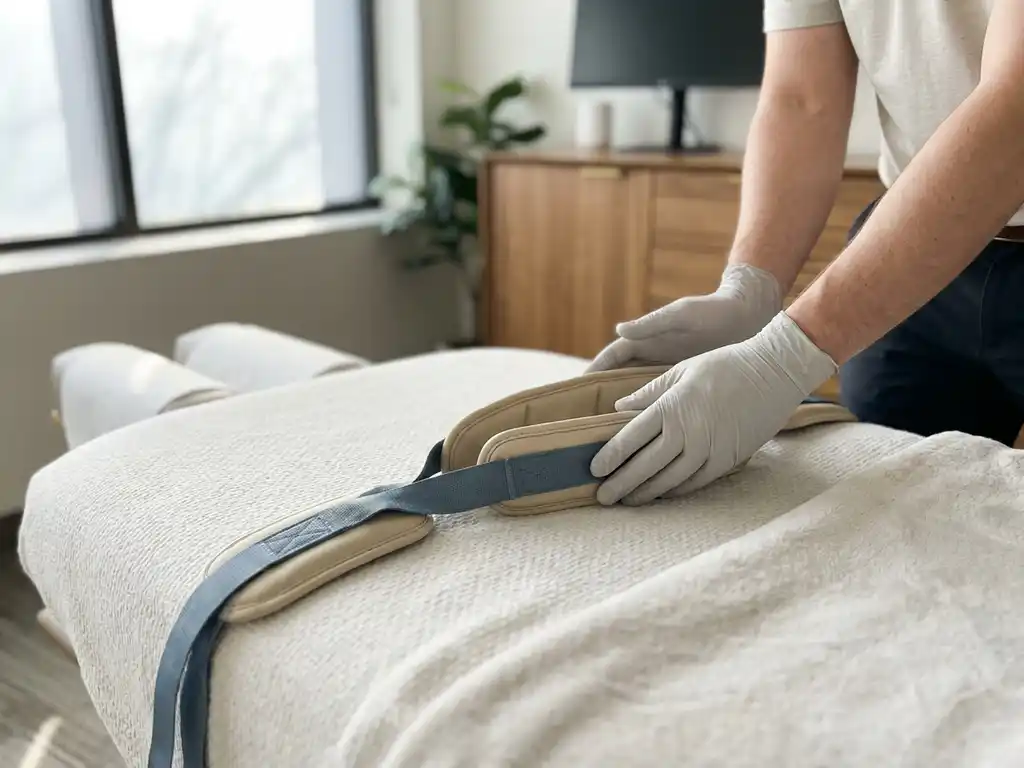
A y-strap treatment is not suitable for everyone. People with osteoporosis, a severe herniated disc, joint instability, previous neck surgeries, or active inflammatory diseases of the spine are generally not candidates for this technique. Suitability always depends on a thorough assessment by a qualified chiropractor, who determines the safest and most effective approach based on your symptoms and the condition of your spine. In this article, we answer the most frequently asked questions about when a y-strap can and cannot be used.
Who is a y-strap treatment dangerous for?
A y-strap treatment is dangerous for people with conditions that affect the stability or integrity of the spine. This includes severe osteoporosis, active inflammatory diseases such as ankylosing spondylitis, a severe herniated disc with nerve compression, spinal instability, or a history of neck surgeries. In these cases, the traction force generated by the y-strap can cause harm rather than provide relief.
Specifically, there are a number of situations in which a chiropractor will decline to perform a y-strap treatment or will approach it with extreme caution:
- Osteoporosis or bone loss: The spine is too fragile to withstand the decompression force of y-strap traction therapy.
- Severe herniated disc with neurological deficits: When active nerve damage or symptoms of paralysis are present, intensive traction poses a risk.
- Spinal instability: In cases of hypermobility or unstable joints, traction force can worsen the condition.
- Previous neck or spinal surgery: Metal implants, fusions, or scar tissue make a y-strap treatment inappropriate or dangerous.
- Active infections or tumors in the spine: These are absolute contraindications for any form of spinal manipulation.
- Severe vascular conditions in the neck: Problems with the carotid or vertebral arteries are a risk factor during rapid HVLA movements.
It is important to emphasize that the y-strap technique is performed in two forms: a slow stretching movement for general decompression and relaxation, and an HVLA movement for targeted chiropractic adjustments of blocked vertebrae. The HVLA variant carries a higher risk for the conditions mentioned above than the slow variant. A certified chiropractor always weighs which form of application is appropriate — or whether the treatment is responsible at all.
Which conditions are suitable for a y-strap treatment?
The y-strap treatment is particularly well suited for people with neck pain, back pain, headaches, and complaints stemming from compression of the intervertebral discs. The technique works by creating decompression in the spine through controlled traction, giving pinched nerves more space and allowing tense muscles to relax.
Conditions for which y-strap treatment is effectively used for neck pain or back pain include:
- Chronic neck complaints caused by compression or blockage
- Recurring back pain with structural causes in the spine
- Headaches and migraines originating from tension in the cervical spine
- Radiating pain in the arms or legs due to intervertebral disc problems
- Stiffness and limited mobility of the neck or back
- Complaints resulting from prolonged sitting or a sedentary occupation
Y-strap spinal decompression is not a treatment that masks symptoms. The goal is to address the underlying cause of the complaint by relieving pressure on the spine and improving nerve communication. This makes it an attractive option for people seeking a non-invasive back treatment without surgery or medication.
How does a chiropractor determine whether a y-strap is appropriate?
A chiropractor determines the suitability of a y-strap treatment based on a comprehensive intake assessment and physical examination. The nature of the complaints, medical history, condition of the spine, and any contraindications are carefully evaluated. Only then is a decision made as to whether y-strap traction therapy is appropriate and which form of application is most suitable.
During the assessment, the chiropractor looks at factors including:
- The location and nature of the complaints (acute or chronic, neck pain or back pain)
- The presence of neurological symptoms such as tingling or radiating pain
- Previous treatments, surgeries, or diagnoses
- Imaging such as X-rays or MRI scans when available
- The overall health and stability of the spine
Based on this picture, the chiropractor chooses between the slow stretching movement for decompression and relaxation, or the HVLA technique for a targeted adjustment of a blocked vertebra. It is also possible for the y-strap to be combined with other techniques as part of a broader treatment plan. Not every chiropractor in the Netherlands is certified in the y-strap method, which means that the appropriate qualifications are an essential requirement for safe application.
What are the alternatives if a y-strap is not suitable?
If a y-strap is not suitable, there are several alternative treatments available that pursue the same goals: pain relief, spinal decompression, and restoration of function. The choice of alternative depends on the specific complaint and the reason the y-strap was ruled out.
Commonly used alternatives within chiropractic care and related disciplines include:
- Gentle manual techniques: Careful joint mobilization without rapid impulses, suitable for vulnerable or sensitive vertebrae.
- Dry needling: Focused on releasing trigger points in muscles that contribute to neck or back pain.
- CFR (Cranial Facial Release): A specialized technique targeting the nervous system and cranial structures, useful for headaches, migraines, and stress-related complaints.
- Exercise therapy and rehabilitation: Aimed at strengthening the muscles surrounding the spine to support recovery.
- Posture correction and lifestyle advice: A preventive approach to structurally reduce recurring complaints.
A good chiropractor will never leave you without a suitable treatment option. When a y-strap is not appropriate, a joint effort is made to find an approach that does align with your situation and goals.
Is a y-strap treatment safe during pregnancy?
A y-strap treatment is generally not recommended during pregnancy, especially not in the form of the HVLA technique with rapid impulses. The changes the body undergoes during pregnancy — such as increased joint laxity due to hormones and a shifting center of gravity — make the spine more vulnerable. The traction force of y-strap traction therapy can place undesirable stress on the body during this period.
Pregnant women experiencing back and pelvic pain are certainly not uncommon, but they benefit from gentle, pregnancy-specific chiropractic techniques. These are specifically tailored to the changing demands on the body and to the safety of both mother and child. This may include careful mobilization, postural advice, and support for pelvic instability.
It is always advisable to inform your chiropractor about a pregnancy in advance, even if it is still in the early stages. Based on that information, a treatment plan will be developed that is safe and effective for your specific situation.
How we help with y-strap treatment and spinal complaints
At Ruggensteun, we understand that every complaint and every body is different. We are one of the few chiropractors in the Netherlands certified in y-strap treatment, and we take the assessment of suitability seriously. Our team offers:
- A comprehensive intake in which we thoroughly discuss your complaints, medical history, and goals
- Personalized guidance in choosing between y-strap, CFR, dry needling, or other techniques
- Specialized care for pregnant women, babies, children, and older adults
- Prompt availability for urgent complaints, without a referral from your general practitioner
- Locations in Eindhoven and Valkenswaard with free parking
Would you like to know whether a y-strap treatment is right for you, or are you looking for a non-invasive approach to recurring neck or back pain? Contact us directly or schedule an appointment. We are happy to help.
Sorry, the comment form is closed at this time.