


May
What role does the upper cervical vertebra play in headaches?
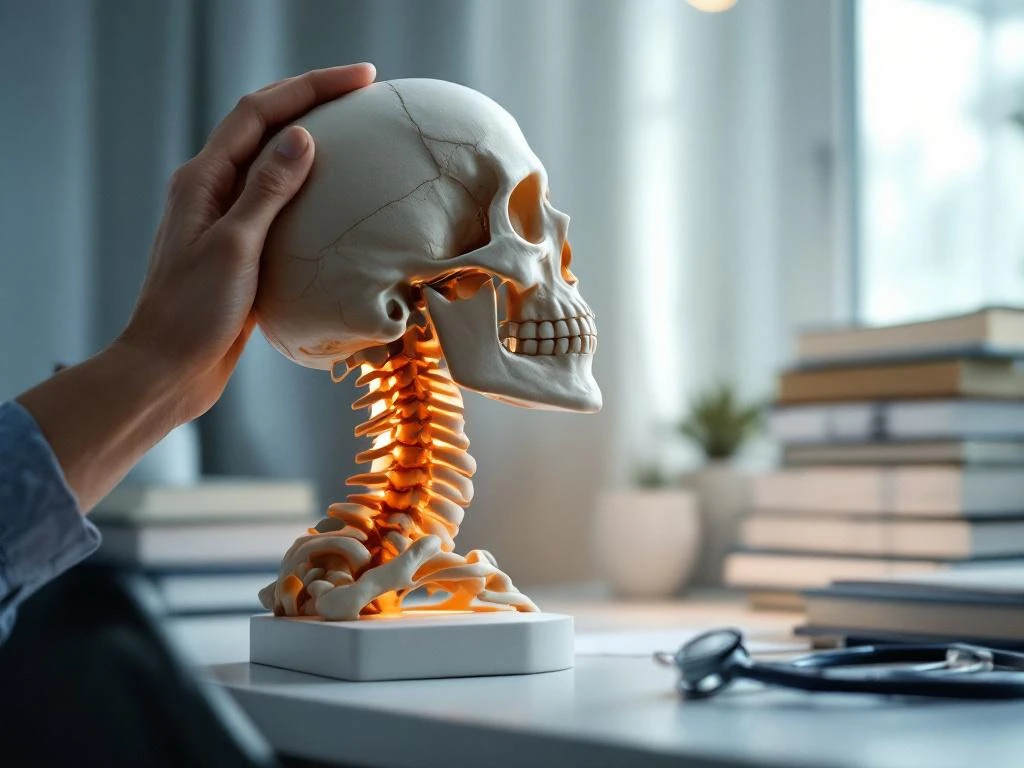
The upper cervical vertebra, also known as the atlas (C1 vertebra), plays a crucial role in headaches through its direct influence on blood flow, nerve function and muscle tension in the head-neck region. When this vertebra is misaligned, it can cause various types of headaches, from tension headaches to migraines. The atlas has a unique anatomical position: it supports the head and forms the connection between skull and spine.
What is the upper cervical vertebra and why is it so important?
The atlas is the uppermost vertebra of the spine and differs from all other vertebrae through its ring-shaped structure without a vertebral body. This unique anatomy allows the head to rotate and tilt, whilst the atlas simultaneously bears the complete weight of the skull.
The atlas forms together with the second cervical vertebra (axis) a complex joint connection that is responsible for approximately 50% of all head movements. Important nerve pathways run through this vertebra that handle communication between brain and body. Moreover, crucial blood vessels that supply the brain with oxygen are located around the atlas.
The position of the atlas directly influences the posture of the entire spine. A misalignment of this vertebra can have a cascade effect on the rest of the musculoskeletal system, which explains why atlas problems are often accompanied by complaints that extend beyond just the head-neck region.
How can the upper cervical vertebra cause headaches?
A misaligned atlas can cause headaches through three important mechanisms: nerve compression, reduced blood flow and increased muscle tension. When the atlas is not in the correct position, pressure develops on sensitive nerve structures that can send pain signals to the head.
The blood flow to the brain can be impeded when the atlas exerts pressure on the vertebral arteries. These blood vessels run through small openings in the cervical vertebrae and supply the brain with oxygen-rich blood. Reduced blood circulation can lead to headaches, dizziness and concentration problems.
Muscle tension arises because the neck muscles must work harder to keep the head balanced with a misaligned atlas. This chronic tension can spread to the jaw muscles, temples and the back of the head, resulting in tension headaches. The increased muscle tension can also worsen headaches through inflammatory reactions in the tissue.
Which symptoms indicate problems with the upper cervical vertebra?
Atlas-related headaches often have specific characteristics that distinguish them from other types of headaches. The pain usually begins in the neck and radiates to the back of the head, temples or forehead. Patients often describe this as a tight band around the head or pressure behind the eyes.
Besides headaches, there are various accompanying symptoms that may indicate atlas problems:
- Neck stiffness and reduced mobility of the head
- Dizziness or a feeling of imbalance, especially during head movements
- Nausea with headaches, mainly during severe episodes
- Tingling in arms or hands due to nerve compression
- Fatigue due to poor sleep quality
- Concentration problems and mental fatigue
These symptoms often worsen with certain postures or movements, such as working at a computer for long periods, sleeping in an incorrect position or sudden head movements. The complaints can vary in intensity throughout the day.
What are the most common causes of atlas problems?
Atlas subluxations can arise from various factors, with trauma and poor postural habits being the most common causes. Whiplash trauma from car accidents is a well-known cause, but smaller traumas, such as falls or sports injuries, can also displace the atlas.
Daily habits play an important role in developing atlas problems. Working for long periods with incorrect computer posture strains the cervical vertebrae, as does using pillows that are too thick or too thin during sleep. Stress causes unconscious muscle tension in neck and shoulders, which can exert pressure on the atlas.
Other common causes are:
- Birth trauma in newborns
- Repetitive strain from certain sports or occupations
- Degenerative changes due to ageing
- Inflammatory processes in joints and muscles
- Emotional stress that manifests as physical tension
How Ruggensteun helps with headaches caused by cervical vertebra problems
We offer specialised treatments for atlas-related headaches through advanced chiropractic techniques. Our approach focuses on restoring proper alignment of the upper cervical vertebra and improving nerve communication between brain and body.
Our treatment methods include:
- Y-strap decompression – a unique technique that applies gentle traction to decompress the intervertebral discs
- CFR (Cranial Facial Release) treatments for optimal skull-neck alignment
- Specific atlas corrections with gentle, precise adjustments
- Dry needling for relaxing tense neck muscles
- Holistic guidance on posture and lifestyle adjustments
As one of the few practices in the Netherlands authorised for Y-strap treatments, we can provide effective relief for persistent headaches. For more information about our headache treatments or to schedule an appointment directly, visit our practice or contact us for a personalised treatment plan.
Sorry, the comment form is closed at this time.