


Jun
What makes a y-strap chiropractor in Eindhoven different?
A y-strap chiropractor in Eindhoven stands apart through a specialized technique that applies spinal decompression via targeted traction force — something most chiropractors do not offer. Where regular chiropractic care works with direct joint manipulation, the y-strap treatment goes a step further by actively relieving pressure on the intervertebral discs. We are one of the few practices in the Netherlands qualified to perform this technique. In this article, we answer the most frequently asked questions about y-strap treatments, from how it works to its safety.
What does a y-strap treatment actually do to your spine?
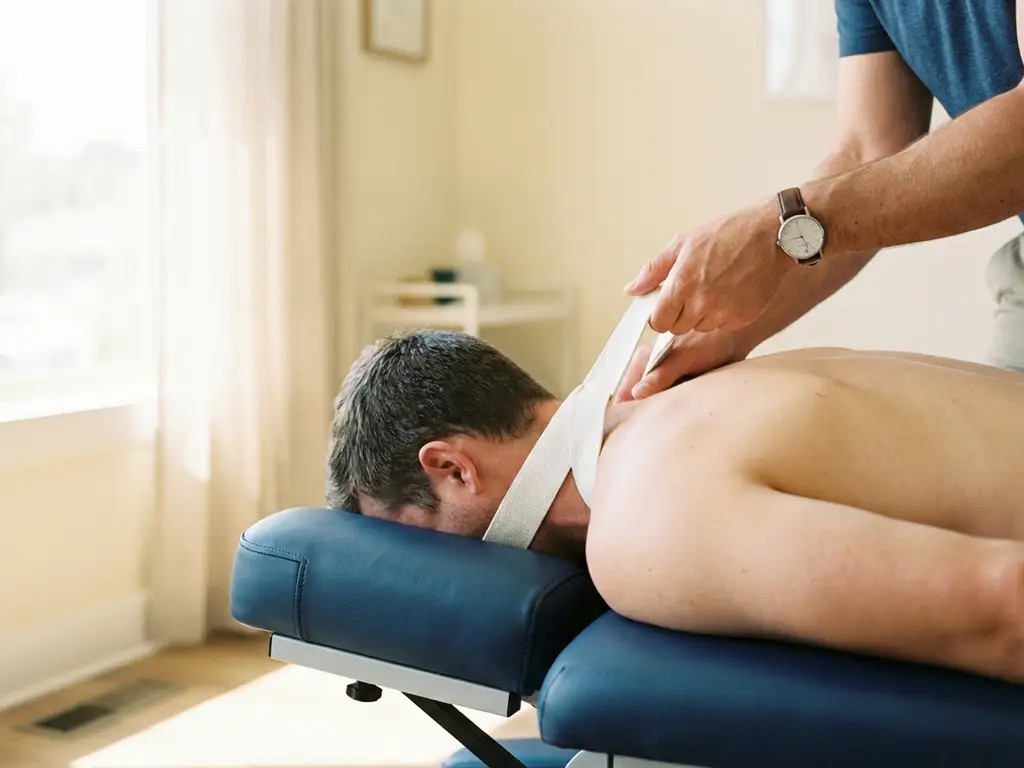
A y-strap treatment applies traction to the spine by placing a strap around the head and generating a controlled pulling force along the length of the spine. This creates decompression in the intervertebral discs, temporarily increasing the space between the vertebrae and reducing pressure on nerves and discs.
The treatment comes in two forms, depending on the nature of the complaint and the condition of the spine:
- Slow stretch movement (standard): Slow, smooth, and controlled movements aimed at general decompression and relaxation, without abrupt impulses. This form is suitable for people who want to reduce spinal tension without intensive adjustment.
- HVLA movement (High Velocity Low Amplitude): A rapid movement with limited amplitude, used when an actual chiropractic adjustment is needed — such as in the case of a blocked vertebra or functional restriction. HVLA is a recognized technique in manual medicine and is applied worldwide.
The result of y-strap traction therapy is that the spine literally gains space. When the intervertebral discs are relieved of pressure, the surrounding muscles can relax and nerve communication between the brain and body improves. Many people experience greater freedom of movement and reduced pain immediately after a treatment.
Why are so few chiropractors in the Netherlands allowed to perform y-strap?
The y-strap treatment requires specific training and authorization because the technique is more intensive than standard chiropractic manipulation. The traction force applied has a direct effect on the entire spine, including the cervical vertebrae in the neck, which demands thorough knowledge of anatomy and risk assessment.
Not every chiropractor completes the additional training required to apply y-strap safely and effectively. In the Netherlands, only a handful of practices are officially qualified for this technique. This makes y-strap chiropractors relatively rare, even in a city like Eindhoven.
The authorization requirement protects patients. An incorrectly performed y-strap treatment can cause unwanted effects in people with certain conditions. Precisely because the technique is powerful, professional expertise is not a secondary concern — it is an absolute requirement.
What complaints is a y-strap chiropractor suitable for?
A y-strap chiropractor is particularly suitable for people with complaints related to pressure on the intervertebral discs or nerves, such as chronic neck pain, recurring back pain, radiating pain in the arms or legs, and headaches originating from the neck. The y-strap treatment targets the structural cause rather than simply relieving symptoms.
Complaints for which y-strap traction therapy is commonly used:
- Chronic neck pain and muscle tension in the neck and shoulders
- Recurring back pain in the lower or mid back
- Headaches and migraines with a cervical cause
- Herniated discs or intervertebral disc problems
- Radiating pain caused by nerve compression
- Stiffness and limited range of motion in the spine
People who have previously tried treatments without lasting results — such as physical therapy or pain medication — often find that y-strap treatment for neck pain offers an alternative that addresses the root cause more directly. The technique is also appealing to those who consciously choose a non-invasive back treatment without surgery or medication.
What is the difference between y-strap and regular chiropractic care?
The key difference lies in how force is applied. Regular chiropractic care uses targeted manipulation of individual joints, with the chiropractor performing a specific correction on a particular vertebra using their hands. Y-strap traction therapy works through pulling force along the entire spine, producing decompression across a larger area simultaneously.
Regular chiropractic adjustments focus on correcting subluxations — minor misalignments of vertebrae that disrupt nerve communication. This is precision work at a specific level of the spine. The y-strap treatment adds a further dimension by actively relieving pressure on the intervertebral discs, something that is less directly achieved through standard manipulation.
In practice, both techniques are often combined. After a y-strap treatment, a chiropractor can perform targeted adjustments on specific vertebrae that become more accessible following decompression. This makes y-strap not so much a replacement for regular chiropractic care, but a complementary and in some cases more intensive form of treatment.
What happens during a first appointment with a y-strap chiropractor in Eindhoven?
A first appointment with a y-strap chiropractor always begins with a thorough intake consultation in which the complaints, medical history, and overall health are discussed. Only after this assessment does the chiropractor decide whether a y-strap treatment is appropriate and which form of application is most suitable.
A first visit typically proceeds as follows:
- Intake and medical history: Discussion of complaints, medical background, and treatment goals.
- Physical examination: Assessment of posture, mobility, and any pain points in the spine.
- Treatment plan: Explanation of the findings and which approach is most appropriate, including whether y-strap will be used.
- First treatment: In many cases, a treatment is provided during the first visit, depending on the complaint and the findings.
No referral from a general practitioner is required. You can get in touch and book an appointment directly, even for acute complaints. For urgent cases, appointments are often available quickly, so you do not have to wait weeks while your condition worsens.
Is a y-strap treatment safe for everyone?
A y-strap treatment is not suitable for everyone. The technique is safe when performed by a qualified chiropractor who has carried out a thorough assessment beforehand, but there are conditions in which y-strap traction therapy is not recommended or must be modified.
Situations where extra caution or a contraindication applies:
- Osteoporosis or reduced bone density
- Recent spinal surgery or implants
- Severe osteoarthritis in the cervical spine
- Certain neurological conditions
- Acute inflammation or infections in the spine
For most healthy adults, including those with chronic neck pain or recurring back pain, the treatment is safe provided a proper assessment has been carried out. The chiropractor always weighs up which form of application is appropriate for the condition of the spine. When in doubt, the slow stretch movement is chosen over the more intensive HVLA variant. The safety of the treatment therefore depends entirely on the expertise of the practitioner and the quality of the prior assessment.
How Ruggensteun helps with y-strap treatments in Eindhoven
We are one of the few chiropractic practices in the Netherlands officially qualified to perform y-strap treatments. From our location in Eindhoven, we offer a holistic approach in which we not only relieve complaints but address the structural cause through spinal decompression and targeted chiropractic corrections.
What we offer:
- Authorized y-strap treatments performed by specialized chiropractors
- Comprehensive intake consultation and physical examination at the first visit
- Both forms of y-strap application: slow stretch movement and HVLA, tailored to your complaint
- Treatments for chronic neck pain, recurring back pain, headaches, and more
- No GP referral required and free parking at our location
- Fast availability for urgent complaints
Want to know whether a y-strap treatment is right for your complaints? Contact Ruggensteun directly and schedule a first appointment in Eindhoven — no referral needed and no long waiting times.
Sorry, the comment form is closed at this time.