


Jul
What is the role of intervertebral discs in neck pain?
Intervertebral discs play a central role in neck pain. They act as shock absorbers between the vertebrae in the neck and allow for freedom of movement. When these discs become damaged, dry out, or are placed under excessive pressure, they can cause pain, restrict movement, and even compress nerves. In this article, we answer the most frequently asked questions about intervertebral discs in the neck, from causes to treatment options.
How can intervertebral discs cause neck pain?
Intervertebral discs in the neck cause pain when they are under excessive pressure, damaged, or have lost their resilience. A damaged or dehydrated disc can reduce the space between vertebrae, causing nerves to become compressed or the spine to become unstable. This leads to neck pain, radiating pain into the shoulders or arms, and sometimes headaches.
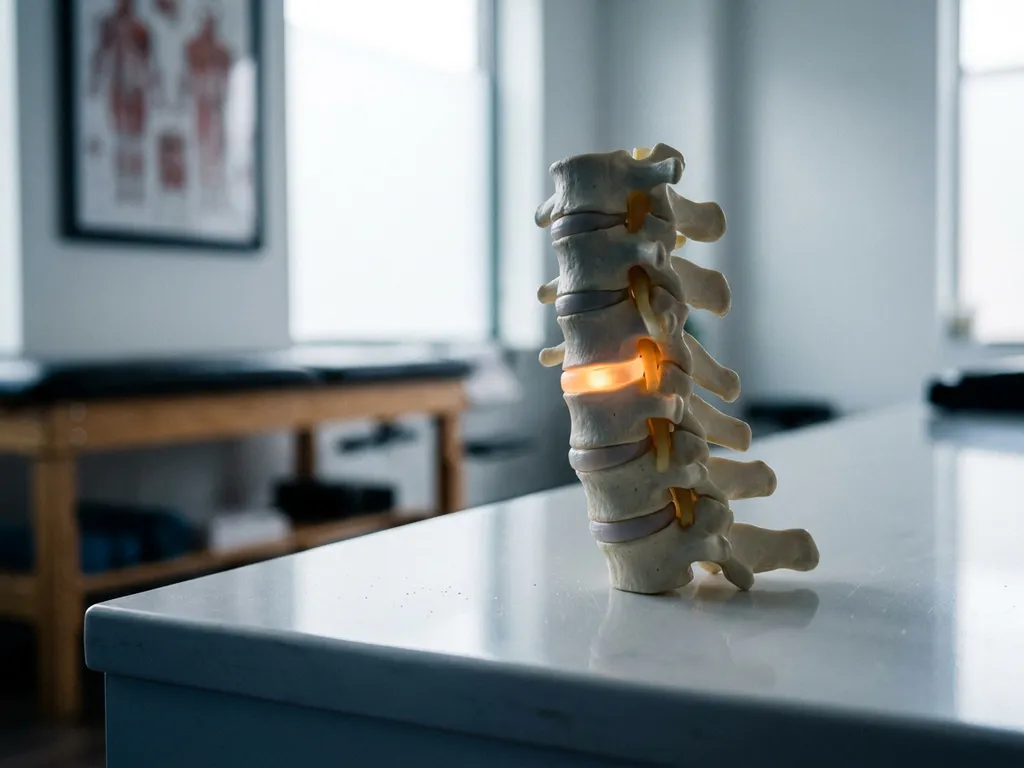
The intervertebral discs in the cervical spine — the neck region — consist of a tough outer ring and a soft, gel-like core. This core acts as a kind of hydraulic cushion that absorbs pressure with every movement you make. As long as the disc is intact and well-hydrated, the system works smoothly. However, once tears develop in the outer ring or the core loses its moisture content, the shock-absorbing capacity decreases.
The result is that the vertebrae move closer together. This can put pressure on the surrounding nerves, causing pain, tingling, or numbness in the neck, shoulders, arms, or hands. In addition, the muscles and joints around the neck can become overloaded as they compensate for the reduced stability of the disc, which further intensifies the pain.
What is the difference between a cervical herniated disc and disc degeneration?
A cervical herniated disc and disc degeneration are two distinct conditions, although they can overlap. With a herniated disc, the soft core of the disc pushes through the outer ring and presses on a nerve. With degeneration, the disc gradually loses height and resilience without necessarily producing a bulge.
A herniated disc often develops suddenly — for example, from an awkward movement, a fall, or prolonged overloading that pushes an existing weakness in the disc past its limit. The symptoms are typically intense and specific: sharp neck pain radiating into an arm, tingling in the fingers, or a numb sensation. The pain often follows a clear pattern that corresponds to the nerve region under pressure.
Disc degeneration, also known as cervical disc degeneration, is a slower process. The disc dries out as a person ages, but this can be accelerated by posture, lifestyle, and physical load. The symptoms are often less acute but persistent: a dull stiffness in the neck, limited range of motion, and sometimes recurring headaches. Degeneration also increases the risk of a herniated disc, as a compromised disc is less able to withstand sudden stress.
What factors accelerate disc degeneration in the neck?
Several factors accelerate the degeneration of intervertebral discs in the neck. The most significant are prolonged forward-leaning posture, chronic stress, sleep deprivation, excess weight, and insufficient physical activity. Repetitive movements or holding the same position for extended periods — such as during screen-based work — also contribute significantly to premature degeneration.
Here is an overview of the most common accelerating factors:
- Poor sitting posture and screen use: A head held forward significantly increases pressure on the cervical discs. The further the head extends in front of the body’s center of gravity, the greater the load on the neck.
- Chronic stress: Stress causes persistent muscle tension in the neck and shoulders, which increases pressure on the intervertebral discs and impairs recovery.
- Sleep deprivation and poor sleeping posture: During sleep, the discs recover by absorbing fluid. Insufficient or poor-quality sleep disrupts this recovery process.
- Insufficient movement: Intervertebral discs are nourished through diffusion, a process that is stimulated by movement. A sedentary lifestyle reduces this nourishment.
- Overloading and sports injuries: Repeated impacts or improper loading during sports or heavy physical work can damage the outer ring of the disc.
- Smoking: Smoking reduces blood flow and oxygen supply to the discs, which accelerates the degenerative process.
What makes these factors particularly insidious is that they accumulate. A combination of screen work, stress, and insufficient movement has a far greater effect on the intervertebral discs than any of these factors in isolation.
Can chiropractic care help with neck complaints related to intervertebral discs?
Chiropractic care can be effective in treating neck complaints associated with intervertebral discs, particularly by reducing pressure on the discs, improving vertebral mobility, and restoring communication between the nervous system and the body. Techniques such as spinal decompression are specifically aimed at relieving pressure in the cervical intervertebral discs.
A chiropractor does not only assess the site of pain itself, but looks at the spine as a whole. When vertebrae are not moving properly or are slightly out of alignment, this increases pressure on the surrounding discs and nerves. By making targeted corrections, the load on the damaged or overloaded disc can be reduced.
One specific technique that can be used for neck complaints is the Y-strap treatment. This method works through traction along the vertical axis of the body, releasing built-up pressure in the intervertebral discs. It is a form of spinal decompression similar to spinal traction, but can be combined with a chiropractic adjustment. The technique has two variations: a slow stretching movement for general decompression and relaxation, and a fast HVLA movement for cases where a restricted vertebra needs to be corrected.
Chiropractic care therefore focuses not on suppressing symptoms, but on addressing the structural cause of the complaints. This aligns with the desire of many people with chronic neck pain to stop seeking temporary relief and instead address the problem at its root.
When should you see a specialist for neck pain caused by disc problems?
You should see a specialist for neck pain when the pain persists for more than a few weeks, radiates into the arms or hands, is accompanied by tingling, numbness, or loss of strength, or when the pain significantly interferes with your daily functioning. These are signs that nerve compression or more serious disc pathology may be present, requiring targeted treatment.
In addition to these clear warning signs, there are also more subtle situations in which professional advice is advisable:
- Neck pain that keeps returning after temporary improvement
- Stiffness in the neck that does not resolve after getting up in the morning
- Headaches that radiate upward from the neck
- Pain that worsens in certain positions or with certain movements
- Neck complaints following an accident or fall, even if the pain initially seems mild
It is important not to wait too long before seeking help. Intervertebral discs become harder to heal as the damage grows or persists. Early intervention increases the chances of full recovery and prevents complaints from becoming chronic. A specialist can assess whether the symptoms originate from the discs themselves, from the surrounding muscles and joints, or from a combination of factors, and recommend a targeted treatment plan accordingly.
How we help with neck pain caused by disc problems
At Ruggensteun, we treat neck complaints by addressing the cause, not just the symptoms. We combine a thorough analysis of the spine with targeted treatment techniques specifically tailored to your complaints. Our approach includes:
- Y-strap treatment: We are one of the few chiropractors in the Netherlands certified in this technique. The Y-strap provides targeted decompression of the cervical intervertebral discs and offers relief from neck pain, radiating pain, and headaches.
- Chiropractic adjustments: By mobilizing vertebrae that are not moving properly, we reduce pressure on the discs and improve nerve communication.
- Holistic assessment: We look at posture, lifestyle, and the nervous system as a whole, so that we address structural causes rather than providing temporary relief.
- Quick availability: For acute complaints, we ensure a prompt appointment — no referral from a general practitioner required.
Do you have persistent neck pain, recurring complaints, or would you like to know whether Y-strap traction therapy is right for you? Contact our practice in Eindhoven or Valkenswaard today and find out how we can help you.
Sorry, the comment form is closed at this time.