


Jun
What is the difference between a Y-strap and spinal decompression?
The y-strap and spinal decompression are related but clearly distinct treatment methods. The y-strap is a specific chiropractic tool that applies manual traction via a strap over the chin and back of the head, while spinal decompression is a broader treatment category that encompasses both mechanical tables and manual techniques. The key difference lies in the application, the intensity, and the degree of control the practitioner has over the traction force. In this article, we answer the most frequently asked questions about both methods, so you know exactly what to expect.
How does the y-strap technique work exactly?
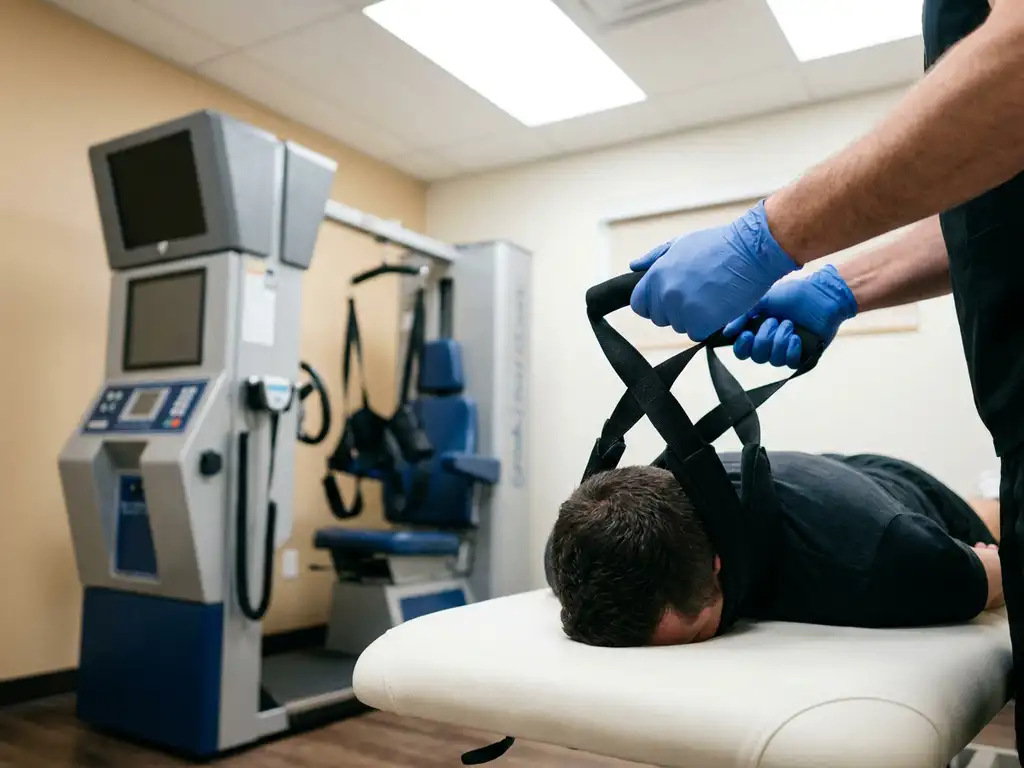
The y-strap is a traction technique in which a Y-shaped strap is placed around the chin and the back of the head. The chiropractor then pulls along the length of the spine, creating decompression in the intervertebral discs. This traction force relieves pressure on nerves and promotes space between the vertebrae.
The chiropractor selects the method of application based on the nature of the complaint and the condition of the spine. There are two variants:
- Slow stretch movement (standard): Slow, fluid, and controlled stretching movements aimed at general decompression and relaxation, without abrupt impulses. This variant is suitable for people who are new to y-strap traction therapy or who have a sensitive spine.
- HVLA movement (High Velocity Low Amplitude): A rapid movement with limited displacement, used when an actual chiropractic adjustment is needed — for example, in the case of a blocked vertebra or functional restriction. HVLA is a recognized technique within manual medicine and is applied worldwide.
What sets the y-strap apart from many other techniques is its direct influence on the entire cervical and thoracic spine in a single movement. The traction works from the bottom up, allowing multiple segments to be affected simultaneously. This makes the technique particularly effective for complaints that are spread across multiple levels of the spine.
How does spinal decompression work as a treatment method?
Spinal decompression is a non-invasive back treatment in which the spine is gently stretched to reduce pressure on intervertebral discs and nerves. The goal is to create negative pressure within the disc, allowing bulges to retract and nutrients to be better absorbed by the disc tissue.
Spinal decompression can be performed in several ways. Mechanical decompression tables use computer-controlled traction in which the patient is secured to a specialized table. The table pulls the lower back or neck in a controlled rhythm. Manual decompression, such as y-strap traction, is performed by the chiropractor directly and offers more immediate control and adjustment based on the practitioner’s feel.
With both forms, the goal is the same: to create space between the vertebrae, reduce pressure on nerve roots, and stimulate the body’s natural healing response. Spinal decompression is regarded as a structural approach that addresses the underlying cause of complaints rather than simply suppressing symptoms.
What are the main differences between the two techniques?
The primary difference is that the y-strap is a specific manual technique, while spinal decompression is an overarching treatment category. The y-strap therefore falls under spinal decompression, but not all spinal decompression is y-strap. The application also differs fundamentally: the y-strap is practitioner-led and direct, while mechanical decompression is machine-based and protocol-driven.
The most important practical differences at a glance:
- Application: The y-strap is performed manually by a chiropractor; mechanical decompression is carried out via an automated table.
- Adjustment: With the y-strap, the chiropractor adjusts the traction in real time based on the patient’s response; with mechanical decompression, parameters are set in advance.
- Area of application: The y-strap primarily targets the cervical and thoracic spine; mechanical decompression is more commonly used for the lumbar spine.
- Intensity: The y-strap can be either gentle or intensive, depending on the chosen method; mechanical decompression is typically more gradual and built up slowly over multiple sessions.
- Availability: The y-strap requires a certified chiropractor; mechanical decompression tables are also available at physical therapy practices and some clinics.
For people seeking a structural solution to recurring back pain, both techniques offer valuable options. The choice depends on the location of the complaint, the patient’s preference, and the practitioner’s assessment.
For which complaints is the y-strap used?
Y-strap treatment is used for complaints in which pressure on the intervertebral discs or nerve roots plays a role, particularly in the neck and upper back. Common indications include neck pain, headaches, tingling in the arms or hands, and stiffness in the cervical spine. The y-strap is also an effective option for chronic neck complaints where the underlying cause is addressed structurally.
These are the most common situations in which y-strap traction therapy is considered:
- Y-strap treatment for neck pain: For persistent neck complaints that do not respond to relaxation exercises or conventional physical therapy.
- Y-strap headache treatment: Tension headaches and cervicogenic headaches caused by tension or blockages in the cervical vertebrae.
- Herniated or bulging discs: When an intervertebral disc is pressing on a nerve, y-strap spinal decompression can relieve that pressure.
- Stiffness from prolonged sitting or screen work: People in physically or mentally demanding professions who work in a poor posture on a daily basis.
- Recurring complaints without a clear cause: When previous treatments have produced insufficient results and a deeper structural correction is needed.
The y-strap is not a universal treatment and is not suitable for everyone. A thorough intake and assessment by a chiropractor determines whether the technique is appropriate for the patient’s specific situation.
Who is qualified to perform a y-strap treatment in the Netherlands?
In the Netherlands, a y-strap treatment may only be performed by a certified chiropractor with specific training in this technique. Not every chiropractor is qualified or trained to apply the y-strap. It is an intensive corrective technique that requires thorough knowledge of spinal anatomy, contraindications, and the correct application methods.
Certified y-strap chiropractors in the Netherlands are rare: only a limited number of practices have the required authorization and expertise to offer this treatment safely and responsibly. This is due to the intensity of the technique — particularly the HVLA variant — and the need to minimize risks for the patient.
When choosing a provider, it is advisable to look for:
- Demonstrable certification or authorization for y-strap treatments
- Experience with both the standard stretch movement and the HVLA variant
- A thorough intake prior to treatment
- Clear explanation of the treatment, the risks, and the expected results
How Ruggensteun helps with y-strap and spinal decompression
We are one of the few chiropractic practices in the Netherlands authorized to perform y-strap treatments. From our locations in Eindhoven and Valkenswaard, we offer a comprehensive range of non-invasive back treatments, always starting with a thorough intake to determine which technique best suits your complaints.
What you can expect from us:
- Certified chiropractors with specific expertise in y-strap traction therapy and spinal decompression
- A personal assessment of your complaint, so we can choose the right method: slow stretch movement or HVLA
- Treatments focused on the structural cause of chronic neck pain, headaches, and back pain — not just the symptoms
- Quick availability for acute complaints, without a referral from your general practitioner
- Free parking at both locations
Want to know whether a y-strap treatment or spinal decompression is right for your situation? Contact us or book an appointment directly. We are happy to help.
Sorry, the comment form is closed at this time.