


Feb
What exactly is a cervical hernia?
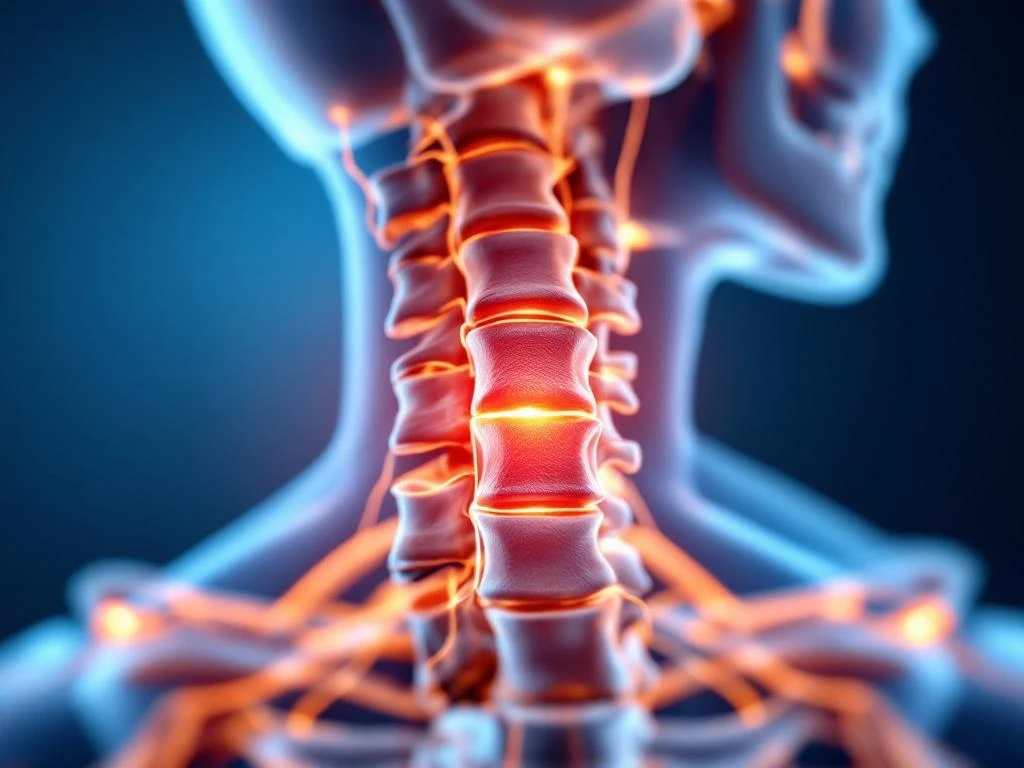
A cervical disc herniation is a condition where the soft core of an intervertebral disc in the neck pushes through the outer ring and exerts pressure on nerve roots or the spinal cord. This often causes radiating pain to the arm, tingling, numbness and neck stiffness. A cervical disc herniation occurs due to wear and tear, sudden movements or prolonged poor posture and differs from ordinary neck pain through the specific radiation patterns to arms and hands.
What are the clearest symptoms of a cervical disc herniation?
A cervical disc herniation causes radiating pain that travels from the neck to the arm and hand, often accompanied by tingling and numbness in specific fingers. You usually also feel neck stiffness, headaches and sometimes weakness in the arm. These symptoms differ from ordinary neck pain because they follow a clear radiation pattern.
The pain usually radiates along a specific nerve pathway. With a herniation between the fifth and sixth cervical vertebrae, you feel pain and tingling in your thumb and index finger. A herniation between the sixth and seventh vertebrae causes complaints in the middle finger and ring finger. These specific patterns help in determining the location of the herniation.
Other recognisable symptoms are:
- Sharp, burning pain that worsens when coughing or sneezing
- Numbness in specific parts of the arm or hand
- Weakness when gripping or lifting objects
- Stiffness in the neck, especially in the morning
- Headaches that often begin in the neck
The symptoms can vary per person. Some people experience mainly pain, while others suffer primarily from tingling or weakness. Stress can worsen the complaints because tension in the neck muscles increases the pressure on the nerve.
How does a cervical disc herniation actually develop?
A cervical disc herniation develops when the soft core of an intervertebral disc breaks through the fibrous outer ring and exerts pressure on nearby nerves. This usually happens through a combination of wear and tear, sudden movements or prolonged poor posture. The cervical vertebrae are smaller than lumbar vertebrae, making them more sensitive to damage.
Your neck consists of seven vertebrae with intervertebral discs between them that work as shock absorbers. These discs have a strong outer ring and a soft, gel-like core. Through ageing, overload or trauma, small tears can develop in the outer ring, allowing the core to push outward.
Common causes are:
- Prolonged computer work with incorrect posture
- Sudden movements, such as with whiplash
- Wear and tear through ageing of the cartilage
- Repetitive strain from work or sport
- Poor sleeping posture with an incorrect pillow
Risk factors that promote a cervical disc herniation are age above 30 years, smoking (reduces oxygen supply to the discs), overweight, work involving much forward bending and genetic predisposition. People with RSI or tennis elbow also have an increased risk due to the tense posture of neck and shoulders.
What is the difference between a cervical disc herniation and ordinary neck pain?
The most important difference is that a cervical disc herniation causes radiating pain to arm and hand, while ordinary neck pain usually remains local in the neck and shoulders. With a herniation you feel specific tingling and numbness in certain fingers, which does not occur with ordinary neck pain. Also, the pain with a herniation is often sharper and worse with certain movements.
Ordinary neck pain usually develops through tense muscles, incorrect posture or stress. This pain remains limited to the neck and shoulder region and often improves with rest, heat or massage. You feel no tingling in your arms and the pain has no specific radiation pattern.
Characteristics of a cervical disc herniation versus ordinary neck pain:
Cervical disc herniation:
- Radiating pain to arm and hand
- Specific tingling in fingers
- Weakness in arm or hand
- Pain worse when coughing or straining
- Numbness in specific areas
Ordinary neck pain:
- Pain remains local in neck and shoulders
- Muscle tension and stiffness
- No tingling in arms
- Improves with rest and heat
- Often related to stress or posture
Seek medical help if you have radiating pain to your arm, feel tingling in your fingers or experience weakness when gripping. Also with an acute neck blockage or a “crick in the neck” that does not improve within several days, professional treatment is advisable.
Which treatments help best with a cervical disc herniation?
Most cervical disc herniations heal with conservative treatment such as rest, physiotherapy, chiropractic care and pain medication. Surgery is only necessary with serious nerve damage or if conservative treatment gives no improvement after 6–8 weeks. Chiropractic treatment can be effective through careful alignment of the spine and improvement of nerve communication.
Conservative treatment options that often help:
- Physiotherapy: Exercises for neck stability and posture
- Chiropractic care: Gentle manipulations to reduce pressure on nerves
- Pain medication: Anti-inflammatories to reduce swelling around the nerve
- Rest and activity modification: Avoid movements that worsen the pain
- Heat and cold: Alternating for pain relief and relaxation
Additional treatments can be:
- Dry needling for tense neck muscles
- Massage to improve circulation
- Ergonomic adjustments to the workplace
- Stress management, because stress can worsen complaints
Surgery is considered with:
- Serious weakness in arm or hand
- Progressive nerve damage
- No improvement after 6–8 weeks of conservative treatment
- Severe pain that does not respond to medication
Most people (approximately 80–90%) recover within 6–12 weeks with the right conservative treatment. Early treatment often prevents complaints from becoming chronic.
How Ruggensteun helps with treating neck pain
We approach a cervical disc herniation and neck pain with a holistic approach, where we address the underlying causes instead of only treating the symptoms. Our specialised chiropractors use advanced techniques to carefully align your spine and improve nerve communication between brain and body.
Our unique treatment options for neck pain include:
- Y-strap treatment: One of the few practices in the Netherlands that offers this intensive decompression technique
- CFR (Cranial Facial Release): Specialised technique for headaches and migraines related to neck problems
- Dry needling: For treating tense neck muscles and trigger points
- Acute treatment: Quick availability for urgent cases, such as an acute neck blockage
- Personal approach: Extensive time per patient for thorough analysis and treatment
We also treat related complaints such as jaw problems, whiplash, RSI and tennis elbow, because these often relate to neck problems. You can contact us directly without referral from your GP.
Benefits of our approach:
- Treatment of the cause instead of only the symptoms
- No long waiting times, even for urgent cases
- Comprehensive explanation of your complaints and treatment plan
- Free parking at both locations in Eindhoven and Valkenswaard
- Specialists for all ages, including babies and pregnant women
Do you suffer from neck pain, headaches or radiating pain to your arm? Contact us for an appointment. We are happy to help you address the cause of your complaints and improve your quality of life. More information about our approach can be found on our homepage.
Sorry, the comment form is closed at this time.