


Oct
What Helps With Back Pain From Sitting Too Long?
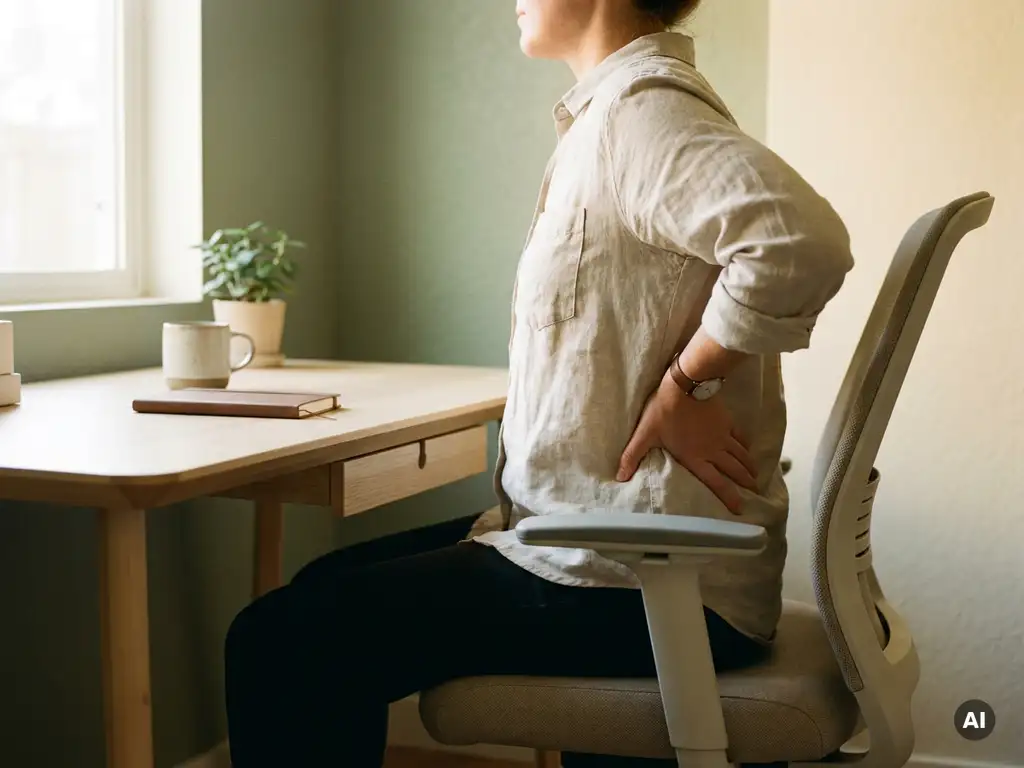
Getting up regularly, moving around, and doing targeted exercises help the most against back pain from prolonged sitting. The core of the problem is that sitting for long periods puts stress on the intervertebral discs, weakens the muscles around the spine, and reduces blood circulation. In this article, we answer the most frequently asked questions about back pain from prolonged sitting and driving, from the correct sitting posture to when to seek professional help.
Why does back pain get worse from prolonged sitting?
Prolonged sitting significantly increases pressure on the intervertebral discs, more so than standing or moving. In a seated position, the pelvis tilts backward, the lumbar curve decreases, and the muscles in the lower back become chronically overloaded. This applies both at a desk and while driving, where vibrations further increase the load on the spine.
In addition, the hip flexors and hamstrings shorten with prolonged sitting, which affects the position of the pelvis and places extra strain on the lower back. The intervertebral discs are nourished by movement: they absorb fluid and nutrients when you move and release them when you sit still. Prolonged sitting disrupts this process, causing the discs to become drier and less resilient. That explains why back pain from prolonged sitting and driving can be so persistent.
Which sitting posture reduces pressure on your back the most?
A slightly reclined posture of approximately 100 to 110 degrees reduces pressure on the lumbar spine more than sitting upright. Make sure your lower back is supported by a lumbar cushion or the backrest of your chair, your feet are flat on the floor, and your knees are slightly lower than your hips.
The same principles apply when driving. Adjust the seat so that you can easily reach the pedals without arching your back, and use the built-in lumbar support if available. Keep your arms slightly bent on the steering wheel so your shoulders remain relaxed. A small neck support can help on longer journeys to relieve the cervical spine.
Keep in mind that no posture, however good, is ideal if you maintain it for hours on end. The best sitting posture is one that changes regularly.
How often should you stand up in a sedentary job?
Stand up every 30 to 45 minutes and move for at least two to three minutes. This is sufficient to relieve pressure on the intervertebral discs, restore circulation, and activate the muscles surrounding the spine. The same applies to prolonged driving: plan a short stop every 45 minutes.
Use practical reminders such as a timer on your phone, a smartwatch, or a standing desk that you alternate with your seated workspace. Even a short walk to the kitchen, a standing meeting, or a few minutes of stretching at your desk makes a measurable difference. The goal is not to move a lot, but to regularly interrupt sitting.
Which exercises help with back pain from sitting?
The most effective exercises for back pain from prolonged sitting focus on mobilizing the spine, strengthening the core muscles, and stretching the hip flexors. A combination of these three approaches yields the best results.
- Knee-to-chest stretch: Lie on your back, pull one knee toward your chest, and hold for ten seconds. Switch legs. This relaxes the lower back and the sacroiliac joint.
- Cat-cow: On hands and knees, alternate between arching and rounding your back. This mobilizes the entire spine and is particularly effective after prolonged sitting or driving.
- Hip flexor stretch: Step one leg forward into a lunge and lower the rear hip. This stretches the hip flexor that shortens with prolonged sitting.
- Plank: Strengthen the deep abdominal muscles that stabilize the spine. Start with 20 to 30 seconds and gradually build up.
- Back extension: Lie on your stomach and gently lift your upper body with your arms. This strengthens the back extensors that become underactive during sitting.
Perform these exercises daily, preferably after a workday or a long drive. If an exercise causes pain rather than relief, stop and consult a specialist.
When is back pain from prolonged sitting a sign of something serious?
Back pain from prolonged sitting is in most cases mechanical in nature and resolves with movement, posture adjustment, and exercises. However, certain signs point to an underlying condition that requires professional attention. Seek help promptly if the back pain is accompanied by radiation into one or both legs, numbness or tingling, or loss of strength in the legs.
Other warning signs include:
- Back pain that gets worse at night and does not improve with movement
- Pain that radiates into the buttock or leg (possible herniated disc or nerve compression)
- Problems with bladder or bowel function in combination with back pain
- Back pain after a fall, accident, or trauma
- Persistent pain that does not improve after several weeks
When in doubt, it is always wise to consult a specialist. Early intervention prevents a complaint from becoming chronic.
What can a chiropractor do for back pain from prolonged sitting?
A chiropractor examines the spine for functional restrictions, blocked vertebrae, and disruptions in nerve communication that may contribute to back pain from prolonged sitting. Targeted corrections are then performed to restore mobility and relieve pressure on the intervertebral discs and nerves.
For persistent complaints from prolonged sitting or driving, chiropractic care can help address the cause rather than merely suppressing the pain. Treatments focus on the spine as a whole, including the lower back, pelvis, and neck, all of which are affected by a sedentary lifestyle.
How Ruggensteun helps with back pain from prolonged sitting
At our practice, we regularly see people with persistent back complaints that have developed or worsened due to a sedentary job or long drives. We offer a holistic approach in which we treat the spine, nervous system, and musculoskeletal system as an interconnected whole.
This is what we can do for you:
- Thorough analysis of your posture, spine, and nerve function to identify the cause of your complaints
- Chiropractic corrections targeting blocked vertebrae and reduced mobility in the lower back, pelvis, and neck
- Y-Strap treatment for targeted decompression of the intervertebral discs, performed by one of the few certified chiropractors in the Netherlands
- Personalized advice on sitting posture, movement patterns, and exercises tailored to your situation
- No referral needed from your GP and free parking at both locations in Eindhoven and Valkenswaard
Do you suffer from back pain due to prolonged sitting or driving and want to know what we can do for you? make an appointment or contact us. We are happy to help you quickly, including for acute complaints.
Sorry, the comment form is closed at this time.