


Jun
What are the most common causes of recurring back pain?
Recurring back pain almost always develops because the underlying cause has never been fully addressed. Symptom management — such as painkillers or temporary rest — provides relief but does not resolve the structural problems in the spine, nervous system, or movement patterns. As soon as the load increases, the pain returns. In this article, we answer the most frequently asked questions about chronic back complaints and how to address them structurally.
Why does back pain keep coming back despite treatment?
Back pain keeps returning when treatment focuses on relieving symptoms rather than addressing the root cause. The pain disappears temporarily, but the underlying imbalance in the spine, muscle tension, or pressure on the intervertebral discs remains and triggers a new flare-up at the slightest additional strain.
A common reason is that people stop treatment as soon as the pain subsides, even though the spine has not yet fully recovered. Think of it like a broken leg you put weight on too soon: the pain is gone, but the bone isn’t strong enough yet. The same applies to back complaints where joints, discs, and nerves have not fully healed.
Lifestyle factors also play a major role. A sedentary work posture, insufficient movement, lack of sleep, and stress all keep the spine under constant pressure. Without addressing these factors, the likelihood of recurring back pain remains high, regardless of what treatment you undergo.
What physical causes most commonly underlie back pain?
The most common physical causes of back pain are overloading of the intervertebral discs, muscle imbalance, poor posture, and joint restrictions in the spine. These factors rarely occur in isolation; they typically reinforce one another and together create a recurring pattern of complaints.
The most common causes at a glance:
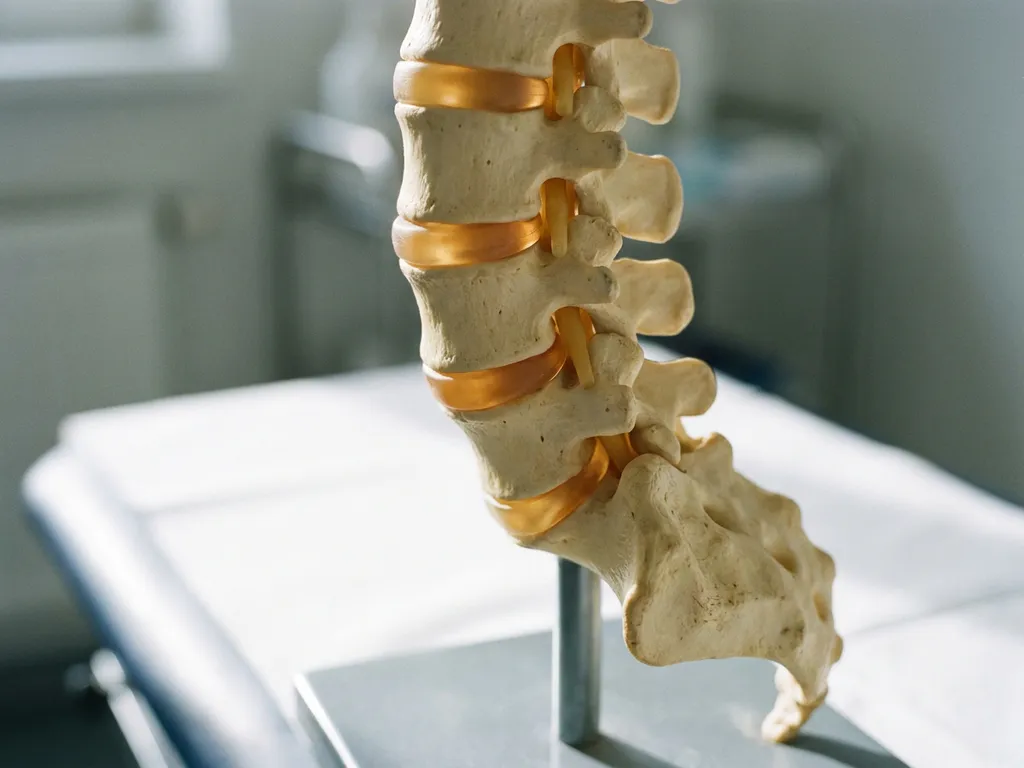
- Intervertebral disc problems: Prolonged pressure on the discs — caused by poor posture or overuse — leads to bulging or herniation. The disc can then press on surrounding nerves.
- Muscle imbalance: When muscle groups at the front and back, or left and right sides of the trunk, are unevenly developed, the spine is pulled out of alignment. This causes chronic tension and pain.
- Joint restrictions: Vertebrae can become restricted in their movement due to repeated improper loading. This limits range of motion and irritates surrounding nerves and muscles.
- Postural problems: Prolonged hunching over a desk or screen significantly increases pressure on the lower vertebrae and disrupts the spine’s natural curvature.
- Sleep deprivation and stress: Chronic stress increases muscle tension in the back and neck. Lack of sleep impairs the recovery of muscles and joints, causing complaints to return more quickly.
How does the nervous system influence recurring back complaints?
The nervous system plays a central role in recurring back complaints because the spine is the protective structure through which the spinal cord runs. When vertebrae or intervertebral discs are misaligned, they can place direct pressure on nerves. This disrupts communication between the brain and the body and can lead to pain, tingling, radiating symptoms, and reduced muscle function.
What many people don’t realize is that nerve irritation can exist without any conscious pain. Communication between the brain and the organs, muscles, and joints becomes less efficient, undermining the body’s ability to heal itself. The body compensates by placing greater strain on other muscles and joints, which over time creates new complaints in other areas of the back or neck.
A well-functioning nervous system is therefore a prerequisite for lasting recovery. Treatments that only address pain without attention to nerve communication offer only temporary relief.
What is the difference between acute and chronic back pain?
Acute back pain comes on suddenly, lasts less than six weeks, and usually has a clear trigger, such as an awkward movement or overexertion. Chronic back pain lasts longer than three months and typically no longer has a single cause; it has become a pattern in which multiple factors within the body interact.
With acute back pain, the body is responding to a specific stimulus: a muscle is overloaded, a joint is restricted, or a disc is irritated. With the right treatment and rest, recovery is relatively quick. The risk arises when the acute complaint is not properly treated or is considered resolved too soon.
Chronic back pain is more complex because the nervous system has by now begun to respond differently to pain signals. The body has learned compensatory patterns, muscles are chronically tense, and joints move structurally less well. This explains why chronic back pain is harder to treat and why an approach focused solely on the painful area is rarely sufficient.
When should you see a chiropractor for back pain?
You should see a chiropractor for back pain when symptoms persist for more than a week, recur regularly, or are accompanied by radiating pain, tingling, or numbness in the arms or legs. You do not need a referral from a doctor to make an appointment.
Signs that you should not wait any longer:
- Back pain that radiates into a leg or arm, which may indicate nerve compression
- Neck pain accompanied by headaches or dizziness
- Back complaints that keep returning after a brief period of relief
- Pain that worsens with prolonged sitting, standing, or a specific posture
- Morning stiffness that lasts longer than thirty minutes
A chiropractor evaluates not only the location of the pain, but also the spine as a whole, joint mobility, and nervous system function. This allows the structural cause of the complaints to be identified rather than simply treating the symptom.
How do you prevent back pain from returning after treatment?
After treatment, you can prevent back pain from returning by structurally addressing the underlying causes: keep your spine mobile, strengthen your core muscles, improve your posture, and reduce the daily load on your back. Preventive treatment and lifestyle adjustments together offer the most effective protection against recurring complaints.
Concrete steps that make a difference:
- Stay active: Regular, gentle movement such as walking or swimming keeps the intervertebral discs nourished and the joints supple.
- Strengthen your core: A strong core supports the spine and reduces the load on the lower vertebrae.
- Adjust your work posture: Maintain an ergonomic sitting position and change positions regularly — ideally every hour.
- Actively manage stress: Chronic stress increases muscle tension in the back and neck. Relaxation techniques, adequate sleep, and breathing exercises help break this cycle.
- Maintain your spine: Just as you have your teeth checked regularly, the spine benefits from periodic evaluation and correction — even when there are no acute complaints.
How we help with recurring back pain
At Ruggensteun, we focus not on temporarily suppressing pain, but on finding and treating the structural cause. We work from the conviction that the spine and nervous system are the key to the body’s self-healing capacity.
What we offer:
- Specialized Y-strap treatment: We are one of the few chiropractors in the Netherlands with a certified qualification in the Y-strap treatment — a targeted spinal decompression technique that relieves pressure on intervertebral discs and nerves.
- Comprehensive intake and analysis: We don’t just map the location of the pain; we assess the spine as a whole, including nerve function and mobility.
- Treatment without a referral: You can contact us directly, even for acute complaints. We offer prompt availability for urgent cases.
- Preventive guidance: After treatment, we actively support you in preventing relapse, with practical advice on posture, movement, and lifestyle.
- Locations in Eindhoven and Valkenswaard: Both locations offer free parking and are easily accessible.
Are you struggling with recurring back pain and want to know what’s causing it? Make an appointment with Ruggensteun today and discover how we can help you achieve lasting relief.
Sorry, the comment form is closed at this time.