


Jun
Is the y-strap suitable for people with a hernia?
In many cases, a y-strap treatment can absolutely be used for people with a herniated disc, but this depends heavily on the severity of the symptoms, the location of the herniation, and the overall condition of the spine. The y-strap works by creating decompression in the intervertebral discs, which can provide relief from pressure on the nerve roots. Below, we answer the most frequently asked questions about the y-strap and herniated discs, so you know what to expect.
What exactly does a herniated disc do to the spine?
A herniated disc occurs when the soft inner core of an intervertebral disc pushes through the outer ring and presses on nearby nerve roots or the spinal cord. This causes pain, tingling, numbness, or loss of strength in the back, neck, arms, or legs, depending on the location of the herniation.
The spine consists of vertebrae with discs between them that act as shock absorbers. With a herniated disc, that disc becomes damaged or weakened, causing the gel-like core to protrude outward. This is also known as a herniated nucleus pulposus. The symptoms are directly related to which nerve is under pressure. A herniated disc in the lower back (lumbar herniation) often causes radiating pain down the leg, also known as sciatica. A herniated disc in the neck (cervical herniation) can cause pain or tingling in the arm.
It is important to understand that a herniated disc does not always cause pain. Some people have a herniated disc without noticing it, while others experience severe symptoms. The severity of the symptoms depends on how much pressure is placed on the nerve and how the surrounding tissue responds. This makes assessing the right treatment an always individualized process.
How does the y-strap work on pressure in the intervertebral discs?
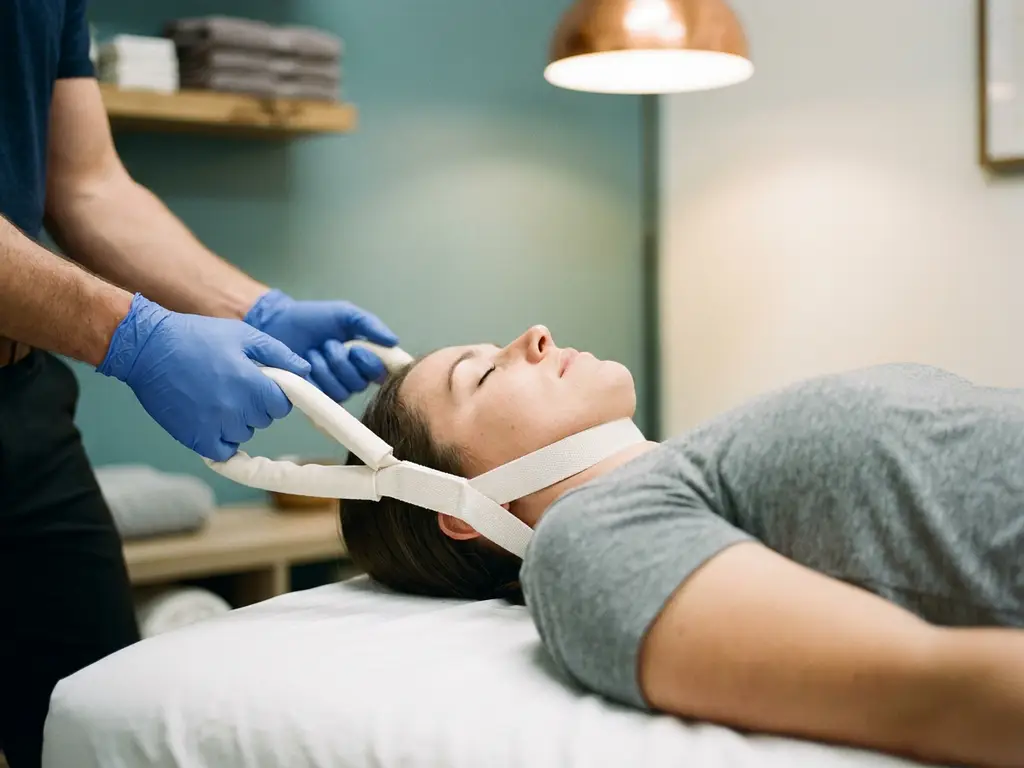
The y-strap works through traction: a controlled pulling force along the spine that creates space between the vertebrae. This reduces pressure on the intervertebral discs and can thereby decrease pressure on irritated nerve roots. This principle, also known as spinal decompression, is precisely what can provide relief in cases of a herniated disc.
There are two ways a chiropractor can use the y-strap, depending on the complaint and the condition of the spine:
- Slow stretch movement: Slow, fluid, and controlled movements aimed at general decompression and relaxation. This form is gentler and is often used in sensitive or painful situations.
- HVLA movement (High Velocity Low Amplitude): A rapid movement with limited displacement, intended for an actual chiropractic adjustment, for example in the case of a blocked vertebra. HVLA is a recognized technique within manual medicine and is applied worldwide.
With a herniated disc, the slow stretch variant is generally chosen, as this is the most controlled and least taxing form of decompression. The traction gently pulls the vertebrae apart, reducing pressure on the disc and giving the nerve root a little more space. This can provide pain relief and support the body’s healing environment.
Is a y-strap treatment safe for a herniated disc?
A y-strap treatment is safe for a herniated disc, provided it is performed by a qualified and trained chiropractor who thoroughly assesses the situation beforehand. Not every chiropractor in the Netherlands is certified in the y-strap technique, which makes choosing a qualified specialist especially important.
The safety of the treatment depends entirely on a thorough intake and assessment. An experienced chiropractor first examines the nature and severity of the herniation, its location, the presenting symptoms, and the overall health of the spine. Based on this, they determine which form of treatment is appropriate and whether the y-strap can be used at all.
When the treatment is carefully tailored to the patient’s situation, the y-strap offers a non-invasive back treatment that requires no medication or surgery. For people looking for a natural back treatment without surgery, this is a relevant option worth exploring. The decompression created by the y-strap aligns with what the body needs to reduce pressure on the nerve and activate its self-healing capacity.
When is a y-strap treatment not recommended for a herniated disc?
There are situations in which a y-strap treatment for a herniated disc is not appropriate. The treatment is not recommended when there is severe nerve damage, an unstable spine, osteoporosis, certain vascular conditions, or when the herniation is so large that immediate surgical intervention is necessary.
Specific contraindications to be aware of include:
- Severe neurological deficit, such as loss of bladder or bowel control (cauda equina syndrome)
- Recent vertebral fractures
- Severe osteoporosis where bone density is too low for traction
- Spinal instability due to conditions such as spondylolisthesis
- Active inflammation or infection in or around the spine
- Certain vascular conditions in the neck, such as an elevated risk of arterial dissection
When there is any doubt about suitability, additional imaging studies such as an MRI or CT scan are valuable. A good chiropractor will ask about this themselves or refer you if necessary. Transparency and safety always come first.
What are the alternatives if the y-strap is not suitable?
If the y-strap is not suitable for a herniated disc, there are other non-invasive treatment options that can provide relief. These include conventional chiropractic adjustments, dry needling, mobilization techniques, or targeted exercise therapy. The best approach depends on the location and severity of the herniation and the associated symptoms.
Some commonly used alternatives include:
- Chiropractic mobilization: Gentle joint mobilization without the intensity of the y-strap, aimed at improving mobility and reducing pressure.
- Dry needling: The insertion of thin needles into tense muscle tissue surrounding the herniation to reduce muscle tension and relieve pain.
- CFR (Cranial Facial Release): A specialized technique focused on the nervous system and cranial system, which can indirectly influence the spine and pain perception.
- Targeted exercise therapy: Specific movement exercises that strengthen the muscles surrounding the spine and reduce pressure on the intervertebral disc.
- Posture correction and lifestyle advice: Guidance on daily habits that place strain on the spine, so that recurring complaints are addressed structurally.
The goal always remains the same: addressing the underlying cause of the complaint rather than merely suppressing the symptoms. A holistic approach centered on the nervous system and the spine offers the best chance of lasting recovery.
How Ruggensteun helps with herniated discs and y-strap treatment
We are one of the few chiropractic practices in the Netherlands certified to perform the y-strap treatment. This means we not only master the technique, but also have the knowledge and experience to assess whether and how the y-strap can be safely used for a herniated disc. With us, you can count on:
- A comprehensive intake in which we map out the nature and location of the herniation
- A personalized treatment plan tailored to your complaints and situation
- Certified y-strap treatments performed by trained chiropractors
- Alternatives such as dry needling, CFR, and mobilization techniques when the y-strap is not suitable
- Quick appointment availability, including for acute complaints, without a referral from your general practitioner
You do not need to wait for a referral or continue living with complaints that affect your daily life. Contact us directly and schedule an appointment at our practice in Eindhoven or Valkenswaard. We are happy to work with you to find the best approach for your situation.
Sorry, the comment form is closed at this time.