


Sep
How Can I Best Sleep With Neck Pain?
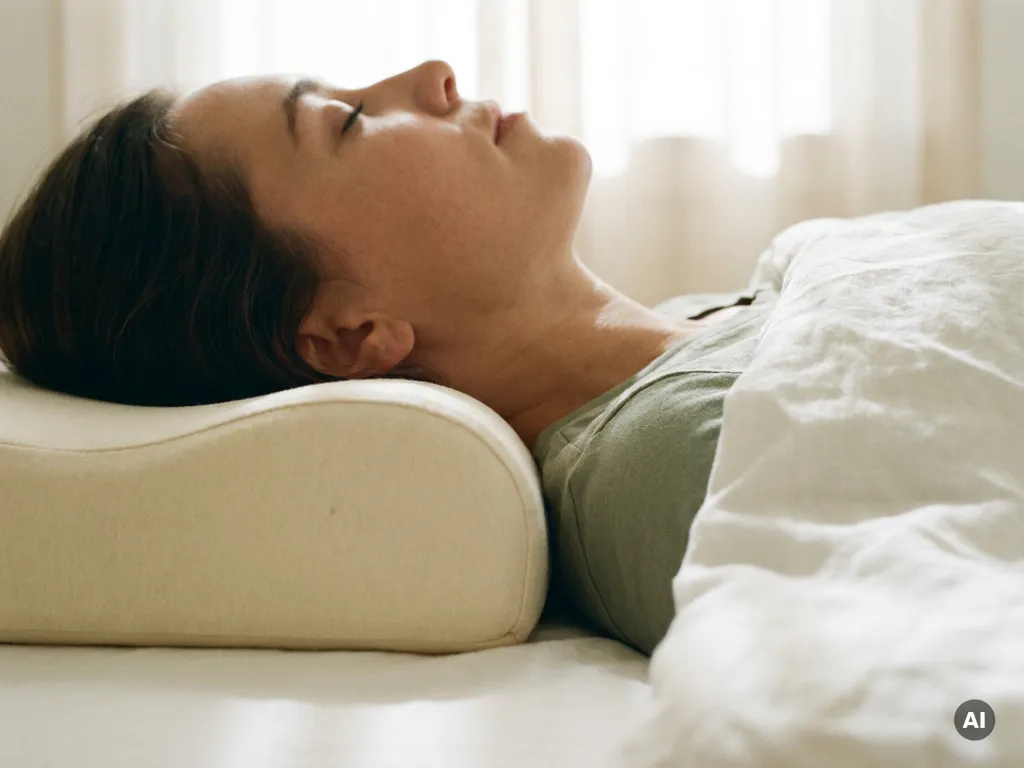
The best way to sleep with neck pain is on your back or on your side, with a pillow that keeps your neck in a neutral position. Avoid sleeping on your stomach, as this forces you to turn your head to one side for hours at a time, overloading the neck muscles and joints. In this article, we answer the most frequently asked questions about sleeping with neck pain, from sleep position to pillow advice and when to consult a specialist.
Which sleeping position puts the least strain on your neck?
Sleeping on your back is the least stressful position for your neck, because your spine lies in a straight line and pressure is distributed evenly. Sleeping on your side is also a good option, provided your pillow is high enough to support your head at shoulder height. Stomach sleeping is the worst choice when you have neck pain.
When lying on your back, your head rests flat, your neck muscles have little work to do, and the cervical spine maintains its natural curve. You can also place a thin pillow under your knees to relieve the lower back and further relax your entire spine.
If you prefer sleeping on your side, pay attention to the following points:
- Make sure your pillow is thick enough so that your head does not tilt to one side
- Keep your shoulders relaxed and avoid lifting your shoulder to support your neck
- Consider placing a pillow between your knees to keep your hips and spine balanced
Stomach sleeping forces your neck into a rotated position that lasts for hours. This increases pressure on the intervertebral discs in the cervical spine and can significantly worsen existing neck pain. If you are used to sleeping on your stomach, it is worth breaking this habit, even if it takes some time.
Which pillow is best for neck pain?
The best pillow for neck pain is one that keeps your head and neck in a neutral position, tailored to your sleeping position. Back sleeper? Choose a low to medium pillow. Side sleeper? Choose a firmer and higher pillow that fills the space between your shoulder and head. There is no universally “best” pillow for everyone.
In terms of material, there are several good options:
- Memory foam: conforms to the shape of your head and neck and distributes pressure evenly
- Latex: resilient and supportive, retains its shape well throughout the night
- Ergonomic or neck support pillows: specifically designed with a recess for the head and a raised area for the neck, useful for chronic neck complaints
- Adjustable pillows: allowing you to customize the filling to your specific needs
Avoid pillows that are too high or too soft. A pillow that is too high pushes your head forward; a pillow that is too soft provides insufficient support. Also replace your pillow regularly: most pillows lose their supportive function after one and a half to two years, even if they still look fine.
What makes neck pain worse at night?
Neck pain gets worse at night due to a combination of poor sleeping posture, insufficient pillow support, and reduced muscle tension during sleep. During the day, muscles actively support the neck; at night that active control falls away, causing the joints and intervertebral discs to bear more load if the posture is not optimal.
Other factors that worsen nighttime neck pain include:
- Stress and muscle tension: tension built up during the day in the neck and shoulders does not fully release, causing you to fall asleep with a tense neck
- Wrong mattress: a mattress that is too soft allows your shoulders to sink, which negatively affects neck posture
- Unconscious movement: many people change sleeping position without noticing and end up on their stomach anyway
- Pressure on intervertebral discs: complaints that are relieved during the day through movement can actually increase at night due to stillness and pressure
Spinal complaints often arise from an accumulation of factors such as prolonged overload, poor daytime posture, and lack of sleep. The night is then not only a moment of rest, but also a period in which that built-up pressure makes itself felt.
How can I relieve neck pain before going to sleep?
You can relieve neck pain before bedtime by relaxing the tense muscles with heat, gentle stretching exercises, and reducing screen use. A short routine of ten to fifteen minutes before sleep can make the difference between a restless and a restorative night.
Effective ways to relieve neck pain before bedtime:
- Apply heat: a warm shower or a heat pack on the neck relaxes the muscles and improves circulation
- Gentle neck stretches: slowly tilting your head from left to right and bringing your chin to your chest, without forceful movements
- Limit screen use: looking down at a phone or tablet significantly increases pressure on the cervical spine
- Relaxation techniques: breathing exercises or progressive muscle relaxation help reduce overall muscle tension
- Optimize your sleep environment: make sure your pillow and mattress are well matched before you lie down
Avoid cold compresses just before sleep if you suffer from muscle tension. Cold works better for acute inflammation; heat is more effective for tense muscles. If you are unsure which approach suits your complaint, discuss this with a healthcare provider.
When is nighttime neck pain a signal to see a specialist?
Nighttime neck pain is a signal to see a specialist if the pain persists for more than two to three weeks, is accompanied by radiating pain to the arm, tingling or numbness, or if the pain is so severe that you regularly wake up. This type of complaint indicates more than just muscle tension.
Consult a specialist if you recognize one or more of the following signs:
- Pain that radiates to your shoulder, arm, or hand
- Tingling or numbness in your fingers or arm
- Neck pain accompanied by headache, dizziness, or tinnitus
- Stiffness that does not improve after several weeks, despite adjustments to posture and pillow
- Pain that is worse at night than during the day and does not respond to rest
- A recent trauma such as whiplash or a fall
Chronic neck pain that keeps recurring despite adjustments to sleeping position and pillow calls for an approach that goes beyond self-care. A chiropractor can assess and treat the underlying cause in the spine and nervous system, rather than simply relieving symptoms.
How Ruggensteun helps with neck pain and sleep problems
At Ruggensteun we address neck pain at its core. Where sleep tips and a better pillow can offer temporary relief, we focus on the structural cause of your complaints in the spine and nervous system. Our chiropractors work with advanced techniques specifically tailored to your situation.
What we can do for you:
- Thorough analysis of your spine and posture to identify the cause of your neck pain
- Chiropractic treatments aimed at restoring the alignment of the cervical spine
- Y-Strap treatment for targeted decompression of the intervertebral discs, performed by one of the few certified chiropractors in the Netherlands
- Personal advice on sleeping position, pillow selection, and daily habits that contribute to recovery
- Quick availability for acute complaints, without a referral from your GP
Want to know whether chiropractic care can help you with neck pain? make an appointment or contact us at our team in Eindhoven or Valkenswaard. We are happy to help you.
Sorry, the comment form is closed at this time.