


Sep
How Should I Sit With Back Pain?
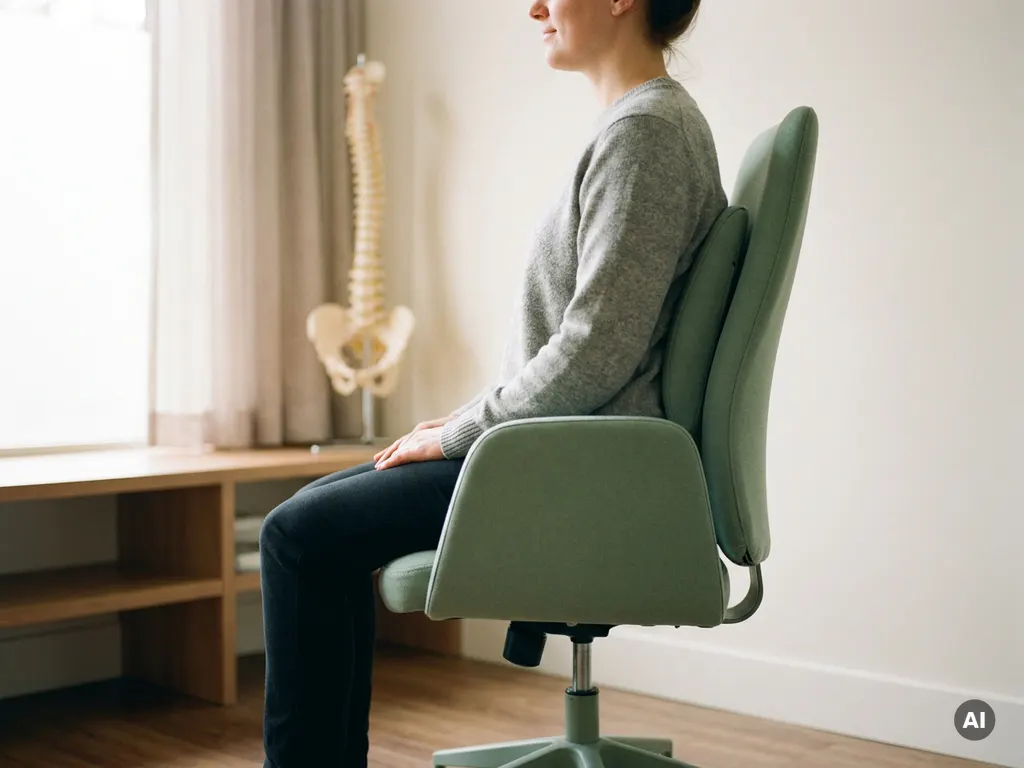
Sit with your back straight but relaxed, your feet flat on the floor and your knees hip-width apart. The ideal sitting posture for back pain keeps the natural S-shape of your spine intact, distributes weight evenly and reduces pressure on your intervertebral discs. In this article we answer the most frequently asked questions about posture, workplace setup and when it is time to seek professional help.
Which sitting posture reduces pressure on your back the most?
The sitting posture that reduces pressure on your back the most is an upright position with a slight backward recline of the backrest (approximately 100 to 110 degrees), your feet flat on the floor and your lower back lightly supported by a lumbar support or cushion. This posture respects the natural curvature of your spine and prevents excessive strain on the intervertebral discs.
When you sit upright without support, the muscles surrounding your spine must constantly work to keep you upright. Over time, this leads to fatigue and tension. A slight backward tilt of the chair takes over part of that work and literally gives the intervertebral discs more space. Also make sure your hips are positioned slightly higher than your knees, as this helps keep your pelvis in a neutral position.
- Feet flat on the floor or on a footrest
- Knees at or slightly below hip height
- Lower back lightly supported
- Shoulders relaxed, not raised
- Head above the shoulders, not pushed forward
What are the most common sitting mistakes that worsen back pain?
The most common sitting mistakes that worsen back pain are leaning forward, slouching in the chair, crossing the legs and staying in the same position for extended periods. Each of these postures disrupts the natural alignment of the spine and places extra pressure on muscles, joints and intervertebral discs.
Leaning forward, for example towards a screen, causes the head to hang far in front of the body’s centre of gravity. Our head weighs an average of five to seven kilograms, and every centimetre it moves forward multiplies the effective load on the cervical vertebrae. This is one of the most common causes of neck pain and tension headaches in office workers.
Slouching may feel comfortable, but it flattens the natural lumbar curve and places the full load on the lower intervertebral discs. Crossing the legs tilts the pelvis to one side, which over time causes asymmetric loading of the spine. And sitting still, even in a perfect posture, is never good for longer periods, because the blood supply to the intervertebral discs decreases.
How do you set up a workstation for back problems?
A good workstation setup for back problems starts with adjusting your chair to the correct height, positioning your screen at eye level and placing your keyboard and mouse within reach without having to stretch or bend. An ergonomically arranged workstation removes the structural causes of posture-related back pain.
Chair and seat height
Adjust your chair so that your feet are flat on the floor and your knees form an angle of approximately 90 degrees. Use a lumbar support or a rolled-up towel in the hollow of your lower back if your chair offers little support. A saddle chair or a chair with a slightly forward-tilted seat can help keep your pelvis in a more active, neutral position.
Screen and desk
Place your screen at arm’s length and ensure the top of the screen is at eye level. This prevents you from constantly tilting your head down or up. If you use a laptop, consider an external monitor or a laptop stand combined with a separate keyboard. Your desk should be high enough that your elbows form a 90-degree angle when you type, without your shoulders rising.
How often should you stand up and move when you have back pain?
With back pain, it is advisable to stand up briefly and move every 30 to 45 minutes, even if only for a minute or two. Prolonged sitting, even in an ergonomically correct posture, increases pressure on the intervertebral discs and reduces blood flow to the structures surrounding the spine.
The intervertebral discs have no blood vessels of their own and are nourished through diffusion, a process in which nutrients and fluid are exchanged through changes in pressure. Movement stimulates this process and keeps the discs supple and nourished. Sitting still does exactly the opposite: the discs gradually become dehydrated and less shock-absorbing.
Practical strategies to build more movement into your working day:
- Set a timer every 30 minutes as a reminder to stand up
- Take phone calls standing or walking
- Use the stairs instead of the lift
- Walk over to a colleague instead of sending a message
- Do a short stretching exercise for your back and hips after each sitting session
When is back pain while sitting a signal to seek help?
Seek professional help if your back pain while sitting persists for more than two to three weeks, worsens despite adjustments to your posture, or is accompanied by radiating pain into the legs, tingling, loss of strength or problems with bladder and bowel function. These are signals that there may be more going on than muscle tension or a temporary overload.
Back pain that only occurs when sitting and disappears with movement or lying down is often posture-related and responds well to ergonomic adjustments and movement. But if the pain is also present at night, does not decrease at rest or keeps returning in the same spot, this points to a structural problem that deserves attention. Radiating pain into the buttock or leg may indicate pressure on a nerve, which requires specific treatment.
Do not wait too long to seek help. The longer a complaint persists, the more the surrounding muscles and structures adapt to the incorrect load, making recovery more difficult.
How Ruggensteun helps with back pain from sitting
At Ruggensteun we do not only address back pain symptomatically, but look for the structural cause behind your complaints. Whether you suffer from persistent lower back pain, neck complaints from prolonged screen work or recurring pain that simply will not go away, we offer targeted treatments that go beyond temporary relief.
What we can do for you:
- Chiropractic treatment aimed at restoring the alignment of your spine and improving nerve communication
- Y-Strap treatment for decompression of the intervertebral discs, performed by one of the few certified chiropractors in the Netherlands
- Personal advice on posture, workstation setup and movement patterns, tailored to your situation
- Quick availability even for acute complaints, without a referral from your GP
Want to know what we can do for you? make an appointment via our website or contact us at one of our locations in Eindhoven or Valkenswaard. We are happy to help you.
Sorry, the comment form is closed at this time.