


Feb
How do you set up your workspace to prevent neck pain?
Setting up your workspace ergonomically helps prevent neck pain by positioning your monitor at eye level, using a supportive office chair, and regularly changing your posture. The correct screen distance (50-70 cm) and taking short breaks to move make all the difference. These adjustments significantly reduce tension in your neck and shoulders.
What are the main causes of neck pain in the workplace?
Work-related neck pain usually occurs due to incorrect monitor height, poor sitting posture, and staying in the same position for extended periods. Your neck becomes overloaded when you constantly have to look down or up at your screen, causing muscles to cramp and pain to develop.
The most common causes are a monitor that’s too low or too high, forcing you to bend your head. An office chair without proper support also causes you to slouch and hold your neck unnaturally. Additionally, stress plays a role, as tension often builds up in your neck and shoulder muscles.
Extended typing without armrests causes you to raise your shoulders, which directly affects your neck. Using a laptop without an external keyboard and mouse worsens this problem, as your head is constantly directed downward.
How do you adjust your monitor to prevent neck pain?
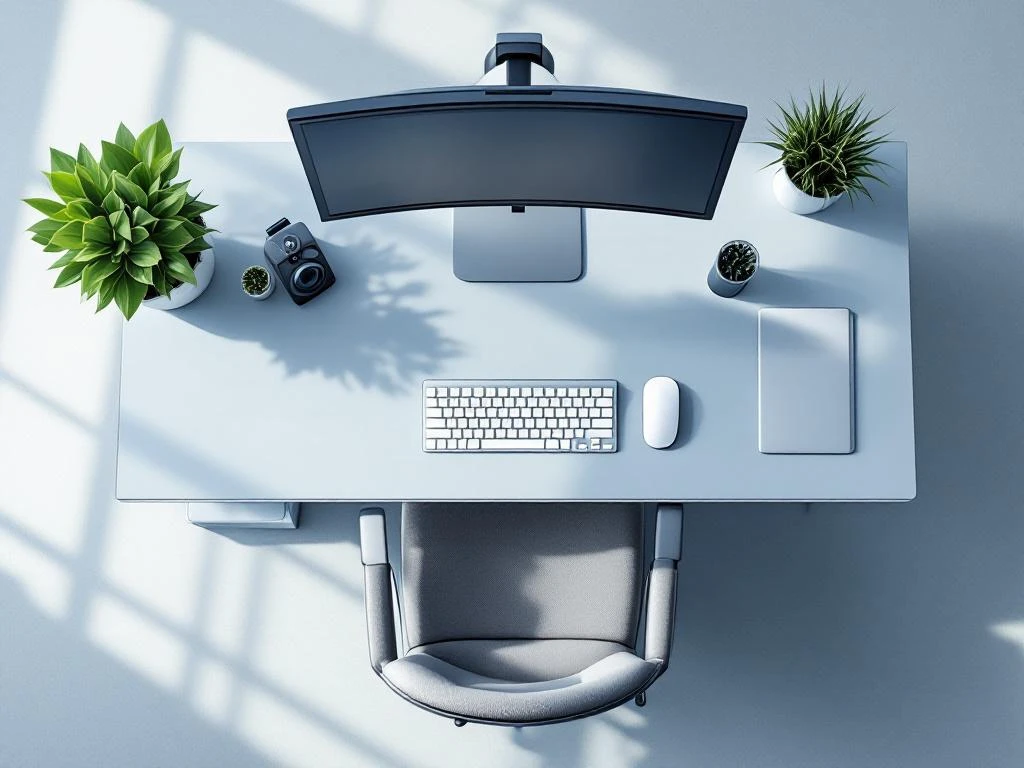
Position your monitor so that the top of the screen is at eye level, approximately 50-70 centimetres away. Your gaze should be directed slightly downward (10-20 degrees) to view the screen comfortably without straining your neck.
For laptop users, an external monitor or laptop stand is essential. Without these tools, you’ll be looking down for hours, which is guaranteed to cause neck problems. Always use an external keyboard and external mouse with a raised laptop.
With two monitors, place the main screen directly in front of you and the second screen at a 30-degree angle. Apply the 20-20-20 rule: every 20 minutes, look at something 20 feet (6 metres) away for 20 seconds. This relaxes your eye muscles and prevents you from pushing your neck forward.
Ensure adequate lighting to prevent leaning towards the screen. Bright sunlight or reflections force you into unnatural positions.
Which office chair features help against neck pain?
A good office chair has an adjustable headrest that supports the natural curve of your neck, adjustable armrests, and a backrest that supports your lower back. These features keep your spine in the correct position and reduce tension.
The headrest should support the back of your head without pushing you forward. Armrests at elbow height ensure your shoulders remain relaxed. A seat that’s too low or too high forces you into poor posture.
Can’t replace your current chair? Use a small cushion in your lower back and ensure your feet rest flat on the floor. A footrest helps if your chair is too high.
Invest in a new chair if you work more than four hours daily and regularly experience neck pain. A good office chair costs between 200 and 500 euros, but prevents many health problems.
How do you improve your work posture throughout the day?
Set a timer every hour to check your posture and take short movement breaks. Roll your shoulders backward, pull your shoulder blades together, and gently stretch your neck left and right. These habits break stiffness before pain develops.
Simple stretching exercises at your workplace make a significant difference. Slowly turn your head from left to right, bring your ear to your shoulder, and look over your shoulder. Hold each position for 10-15 seconds.
Alternate between sitting and standing if you have a standing desk. Don’t stand all day, but switch every 30-60 minutes. Walk around during phone calls and use the stairs instead of the lift.
Place reminder notes on your monitor saying “back straight” or “shoulders down” to remind yourself. After several weeks, good posture becomes automatic.
How Ruggensteun helps with treating neck pain
We treat neck pain with a holistic approach that addresses the cause rather than just fighting the symptoms. Our specialised chiropractors in Eindhoven and Valkenswaard use advanced techniques to align your spine and restore nerve communication.
Our treatment options include:
- Y-strap treatments for intervertebral disc decompression
- CFR techniques (Cranial Facial Release)
- Dry needling for muscle cramps
- Specialist care for work-related complaints
We understand that work-related neck pain often returns without structural intervention. Therefore, we combine treatment with practical advice for your workplace and daily habits. You can contact us directly, without referral from your GP.
Are you suffering from persistent neck pain that affects your work performance? View our specialised neck pain treatments or contact us directly for an appointment. More information about our holistic approach can be found on our homepage.
Sorry, the comment form is closed at this time.