


Oct
How to Prevent Back Pain While Driving
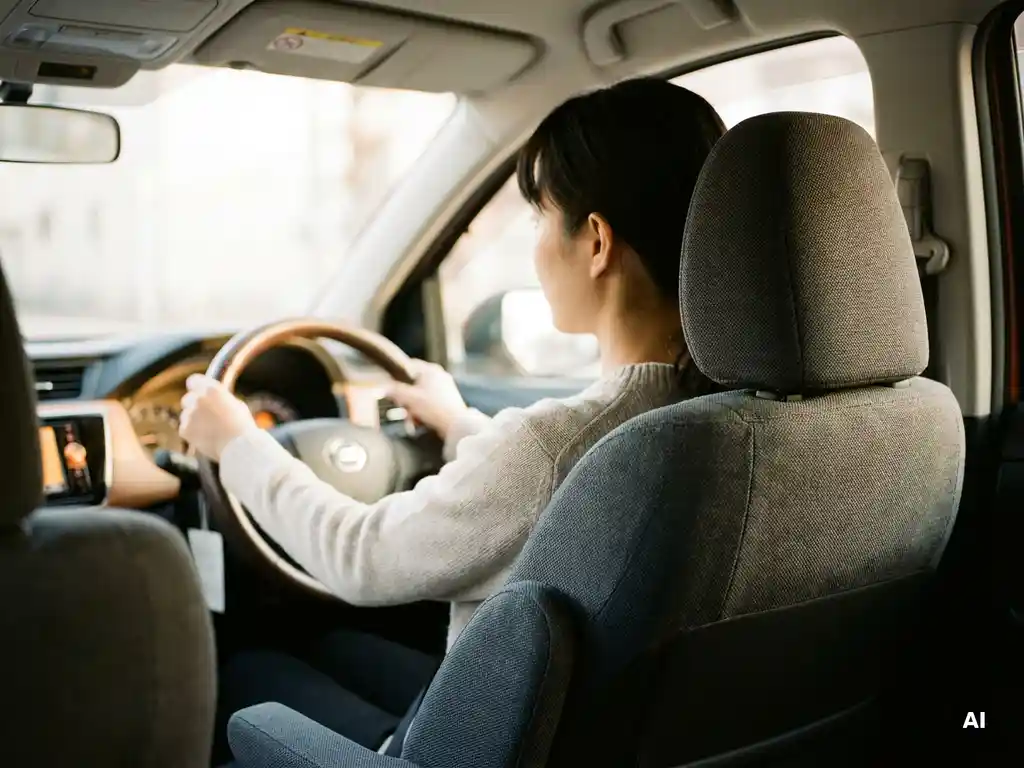
Back pain while driving can be prevented by correctly adjusting your car seat, maintaining an active sitting posture, and taking regular breaks to relieve your back. Sitting for extended periods in a fixed position is one of the most common causes of back problems, and this is especially true behind the wheel. In this article, we answer the most frequently asked questions about sitting and driving, so you can hit the road with less pain and more comfort.
Why does long-distance driving cause back pain?
Back pain from long-distance driving occurs because your spine is held in the same position for an extended period, while vibrations from the engine and road surface place extra stress on the intervertebral discs and surrounding muscles. This leads to muscle tension, reduced blood circulation, and pressure on the spine, which manifests as pain or stiffness.
While driving, your muscles are barely actively engaged in correcting your posture. The car seat takes over the support, but that support is rarely perfectly tailored to your body. As a result, the natural S-shape of the spine flattens out, particularly in the lumbar region. This loss of the lumbar curve significantly increases pressure on the lower intervertebral discs.
On top of that, the foot pedals and steering wheel force you into an asymmetrical posture. Especially on long journeys, this can lead to uneven loading of the muscles around the hips, pelvis, and lower back. The result: stiffness, pain, and sometimes even radiating complaints into the legs.
How do you correctly adjust your car seat for your back?
A correctly adjusted car seat ensures that your spine remains in a natural position, your knees are slightly bent, and your arms rest relaxed on the steering wheel. The right adjustment distributes your body weight evenly and significantly reduces pressure on the lumbar spine.
Follow these steps for a back-friendly seat adjustment:
- Backrest: Set the backrest to an angle of approximately 100 to 110 degrees. A slightly reclined position reduces pressure on the lower back more than sitting upright.
- Seat depth: Slide the seat so that your knees are slightly bent when you press the pedals. There should be a hand’s width of space between the back of your knee and the seat.
- Lumbar support: Use the built-in lumbar support or a separate cushion to support the lumbar curve. Make sure the support sits exactly in the hollow of your lower back.
- Headrest: Adjust the headrest so that its center is level with your ears. This also protects your neck in the event of a collision.
- Steering wheel distance: Your arms should be slightly bent when your hands are on the steering wheel. Tense, outstretched arms pull the shoulders forward and strain the neck.
What is the best sitting posture for your back in the car?
The best sitting posture in the car is an active, upright sitting position in which your lower back makes contact with the lumbar support, your feet are flat on the floor, and your weight is evenly distributed across both sitting bones. Avoid crossing your legs or slouching to one side in your seat.
A common mistake is slouching. This may feel comfortable, but it completely flattens the lumbar curve and increases pressure on the lower vertebrae and intervertebral discs. Your back then lacks the support it needs, which quickly leads to pain and fatigue on longer journeys.
Try to keep your sitting posture active by lightly engaging your abdominal muscles. This gives your spine extra stability from within, without having to sit rigidly. Also alternate between a slightly more upright and a slightly more reclined position to avoid continuously loading the same muscle groups.
How often should you take a break on long car journeys?
On long car journeys, it is advisable to take a short break of at least 5 to 10 minutes every 45 to 60 minutes. Get out of the car, walk a little, and stretch your back. This gives the intervertebral discs a chance to recover and prevents muscles from stiffening due to prolonged sitting and driving.
While driving, you can also make small adjustments without stopping. Occasionally change your sitting position slightly, briefly tense your gluteal muscles and then relax them, or consciously take a deep breath to correct your posture. These are small movements, but they make a noticeable difference on longer journeys.
Plan your breaks in advance if you know you have a long journey ahead. On the motorway, there are plenty of opportunities to stop. Use those moments not only to refuel or drink coffee, but also to move actively. Even two minutes of walking and stretching is better than nothing.
What exercises help with back pain from driving?
Simple stretching and mobilization exercises for the lower back, hips, and hamstrings are effective in relieving back pain caused by driving. They reduce muscle tension, improve blood circulation, and restore the mobility of the spine after prolonged sitting.
Try these exercises during or after a long car journey:
- Knees to chest: Lie on your back and slowly pull both knees toward your chest. Hold for 20 to 30 seconds. This relaxes the lumbar region and pelvis.
- Hip flexor stretch: Take a lunge position and lower yourself while keeping your torso upright. You will feel a stretch in the front of the leg that is behind you. Hold for 30 seconds per side.
- Cat-cow: Get on your hands and knees and alternate between an arched and a rounded back. Repeat this 10 times slowly. This mobilizes the entire spine.
- Standing lateral stretch: Stand upright and extend one arm above your head while bending sideways. This opens up the side of the trunk, which is often under tension during driving.
Do these exercises at every break, or at least at the end of your journey. Consistency is more important than intensity here.
When is back pain after driving a signal to seek help?
Back pain after driving is a signal to seek help when the pain persists for more than a few days, radiates into the legs, is accompanied by tingling or loss of strength, or keeps getting worse despite rest and movement. In those cases, the pain may indicate a deeper underlying problem in the spine or nervous system.
Short-term muscle pain or stiffness after a long journey is normal and usually resolves on its own. But when back pain becomes a recurring pattern, is also present outside of driving, or interferes with your daily functioning, it is wise to have the cause investigated. Treating symptoms with painkillers does not resolve the underlying problem.
Other warning signs include pain that worsens at night, pain combined with bladder or bowel problems, or pain following an accident or fall. In those cases, it is important to seek professional help promptly.
How we at Ruggensteun help with back pain from driving
Back pain from prolonged sitting and driving is often more than just muscle pain. When the spine is under sustained pressure, vertebrae and intervertebral discs can lose their optimal position, disrupting nerve communication between the brain and body. We focus on the structural cause of your complaints, not just the symptoms.
What we can do for you:
- Chiropractic examination to assess whether there is a blocked vertebra, reduced mobility, or increased tension in the spine
- Targeted treatments such as spinal manipulation and mobilization to reduce pressure on intervertebral discs and restore mobility
- Y-Strap treatment for spinal decompression through traction, a specialized technique for which we are one of the few certified practices in the Netherlands
- Personal advice on posture, movement, and prevention, tailored to your situation and lifestyle
- Quick availability, even for acute complaints, without a referral from your GP
Are you suffering from persistent back pain after driving and would you like to know what we can do for you? make an appointment at our practice in Eindhoven or Valkenswaard, or contact us for more information. We are happy to help you.
Sorry, the comment form is closed at this time.