


Jul
How does traction therapy work on the intervertebral discs?
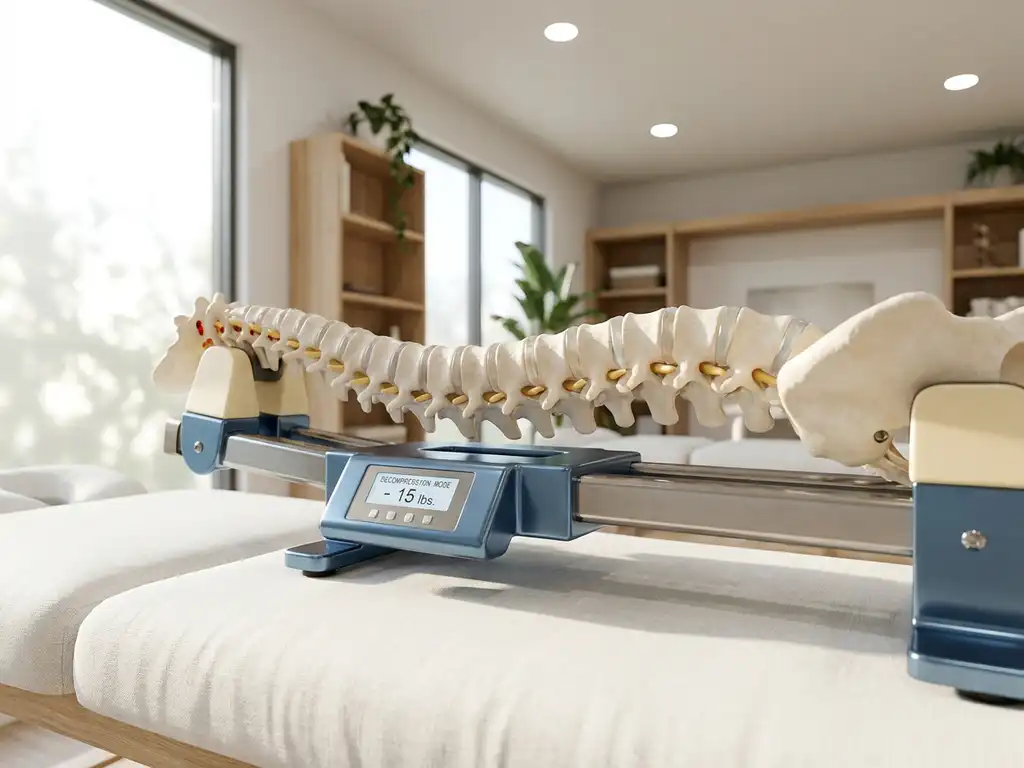
Traction therapy works on the intervertebral discs by applying a pulling force along the spine, temporarily increasing the space between the vertebrae and reducing pressure on the discs. This effect, also known as spinal decompression, gives the discs room to absorb fluid, recover, and relieve pressure on the nerves. In this article, we answer the most frequently asked questions about traction therapy, from how it works to whether it is right for your situation.
What happens to the intervertebral disc during traction?
During traction therapy, the spine is stretched along its longitudinal axis, temporarily relieving pressure on the intervertebral discs. The increased space between the vertebrae lowers the pressure inside the disc, draws protruding disc material back toward the center, and stimulates the absorption of fluid and nutrients. This supports the disc’s natural healing process from within.
Intervertebral discs have no blood supply of their own. They are nourished through diffusion: fluid and nutrients are absorbed when the pressure on the disc decreases. With prolonged sitting, poor posture, or overuse, pressure remains chronically elevated, causing this process to stagnate. Traction breaks this cycle by literally creating space for the disc.
In addition to the disc itself, the surrounding tissue also benefits. Muscles and ligaments around the spine are gently stretched, which reduces muscle tension and improves joint mobility. When a bulging disc is pressing on a nerve root, traction can directly relieve that pressure, reducing radiating pain or tingling sensations.
What is the difference between mechanical and manual traction?
Mechanical traction uses a device that applies a constant or intermittent pulling force at a fixed, preset intensity and duration. Manual traction is performed by a therapist using their hands, continuously adjusting the force, direction, and timing based on the patient’s response. Both approaches share the same goal but differ significantly in precision and flexibility.
Mechanical traction
With mechanical traction, the patient lies on a traction table or is connected to a traction device via a harness or strap. The device applies a predetermined amount of force, often in cycles of pulling and releasing. This provides consistency and is highly reproducible, but leaves little room for real-time adjustments based on how the patient responds.
Manual traction and the Y-strap
Manual traction, such as the y-strap treatment, combines traction force with chiropractic adjustment. With the y-strap, the patient’s head is pulled along the Y-axis of the body via a strap, creating targeted decompression of the entire spine. The therapist can feel directly how the body responds and adjust the movement accordingly. This makes the technique particularly effective for neck pain, tension headaches, and lumbar complaints.
What conditions does traction therapy help with?
Traction therapy is effective for conditions caused by increased pressure on the intervertebral discs or compressed nerves. The most common indications include herniated discs, radiating pain into the arms or legs, neck pain, tension headaches, lower back pain, and spinal stiffness. Even in chronic cases where previous treatments have provided insufficient relief, traction often offers a more structural approach.
Specific conditions for which traction has well-supported results:
- Cervical herniated disc with radiation into the arm or shoulder
- Lumbar herniated disc with radiation into the leg (sciatica)
- Tension headaches and migraines related to pressure in the cervical spine
- Chronic neck pain caused by poor posture or overuse
- Degenerative disc disease where disc height has decreased
- Facet joint pain in the neck or back
Traction therapy is not simply symptom management. By addressing the underlying cause of the pressure rather than merely dulling the pain, the treatment offers a more lasting solution for recurring complaints. This resonates with many people who have already tried multiple treatments without achieving lasting results.
How does traction therapy differ from regular physical therapy?
Physical therapy focuses primarily on muscle strength, mobility, and functional recovery through exercises, massage, and manual techniques. Traction therapy specifically targets increasing the intervertebral space and relieving pressure on discs and nerves. The two approaches complement each other, but traction addresses the mechanical cause of disc and nerve problems more directly.
A physical therapist typically works on the surrounding structures: strengthening muscles, correcting movement patterns, and treating inflammation. This is valuable, but it does not always get to the root of the problem when the disc itself is under excessive pressure. Traction resolves that mechanical issue directly by reducing the pressure and giving the disc room to recover.
Chiropractic traction, such as y-strap spinal decompression, adds another dimension: the treatment simultaneously addresses spinal alignment and the communication between the nervous system and the body. This holistic perspective is what sets chiropractic traction apart from a purely mechanical approach.
How many traction sessions are needed to see results?
Most people notice a significant reduction in their symptoms after just one to three sessions. For structural and lasting results, chronic or severe conditions typically require six to twelve sessions spread over several weeks. The exact number depends on the nature, severity, and duration of the complaints, as well as how the body responds to treatment.
Factors that influence the number of sessions needed:
- How long the symptoms have been present (acute versus chronic)
- The degree of disc degeneration or nerve compression
- Age and overall condition of the spine
- Whether the patient makes lifestyle changes such as postural correction and increased movement
Acute complaints often respond more quickly than chronic ones. For someone who has been dealing with recurring back pain for years, it is understandable that the body needs more time to recover structurally. A good chiropractor will develop a treatment plan after the first few sessions that is tailored to your specific situation.
Who is traction therapy not suitable for?
Traction therapy is not suitable for everyone. People with osteoporosis, vertebral fractures, severe spinal instability, active infections, or certain forms of cancer should not undergo traction. Specific precautions also apply during pregnancy, depending on the stage of pregnancy and the nature of the complaints.
Other situations in which traction is discouraged or needs to be modified:
- Recent spinal surgery
- Severe joint conditions such as rheumatoid arthritis affecting the cervical spine
- Acute inflammation or infections in the spinal area
- Advanced degeneration where the disc is largely absent
- Conditions in which the blood vessels in the neck are vulnerable
A thorough intake assessment and physical examination beforehand are therefore essential. A certified chiropractor will evaluate whether traction is safe for your situation and adjust the technique where necessary. Particularly with the y-strap treatment, it is important that the practitioner has received specific training in this technique, as the pulling force involved is greater than with many other manual techniques.
How we help with traction therapy and spinal decompression
At Ruggensteun, we offer traction therapy as part of a targeted, holistic approach to spinal and nervous system complaints. We are one of the few chiropractors in the Netherlands certified to perform the y-strap treatment, a powerful form of manual traction that decompresses the entire spine in a single, controlled movement.
What we offer:
- Certified y-strap treatments for neck, back, and headache complaints
- Comprehensive intake assessment and physical examination prior to treatment
- A personalized treatment plan focused on the cause, not just the symptoms
- Treatments for all ages, from athletes to older adults
- Fast availability, including for acute complaints, with no referral from a general practitioner required
- Locations in Eindhoven and Valkenswaard with free parking
Are you dealing with persistent neck or back pain and wondering whether traction therapy is right for you? Contact us directly or schedule an appointment. We are happy to help you with a treatment that goes beyond managing symptoms.
Sorry, the comment form is closed at this time.