


Jun
How does the nervous system work together with the spine?
The nervous system and the spine work together inseparably: the spine protects the spinal cord and the nerve roots that transmit signals between the brain and every organ, muscle, and tissue in the body. When the spine is in balance, that communication flows smoothly. As soon as pressure, blockages, or misalignments develop, nerve communication is disrupted and symptoms can appear in surprising places throughout the body. In this article, we answer the most frequently asked questions about this relationship and what you can do when something goes wrong.
What happens when the spine disrupts nerve communication?
When the spine disrupts nerve communication, signals between the brain and the body are delayed, weakened, or blocked. Chiropractors call this a subluxation: a functional disturbance in a spinal joint that places pressure on nearby nerve roots. As a result, organs, muscles, or limbs no longer receive optimal signals, leading to pain, stiffness, or reduced function.
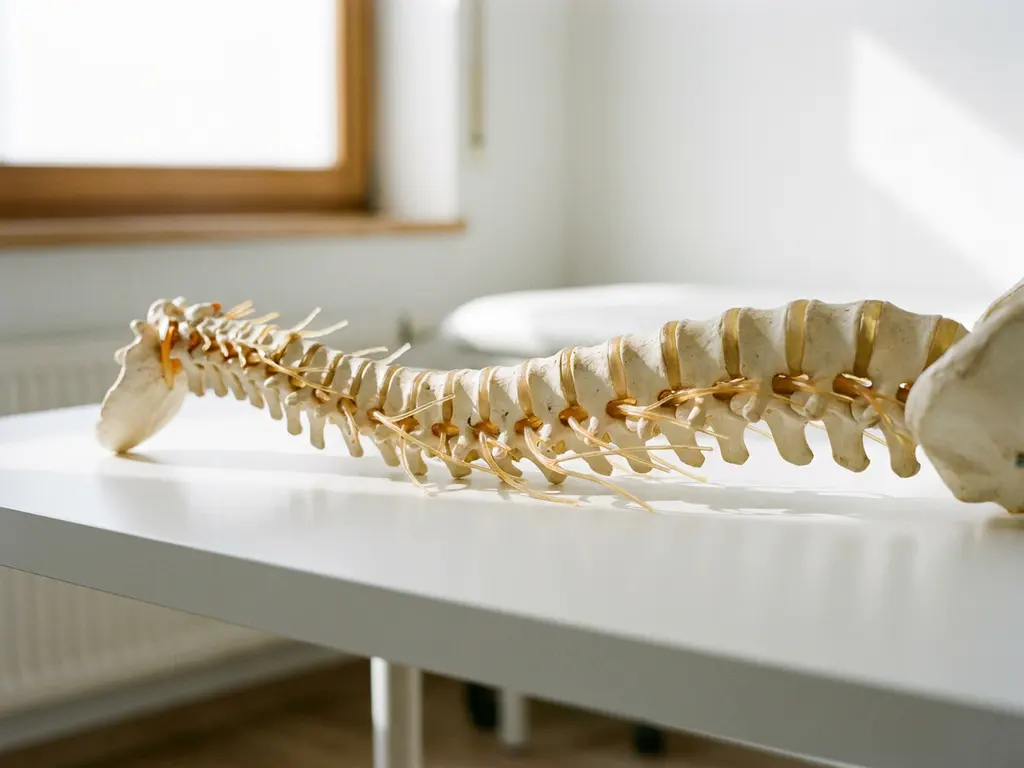
The spine consists of 33 vertebrae that together form a protective canal around the spinal cord. Between every two vertebrae are openings called foramina, through which nerve roots exit the spinal cord and travel to the rest of the body. If a vertebra shifts out of its ideal position due to overuse, poor posture, or injury, that opening can narrow. The nerve root then becomes compressed or irritated.
What makes this so deceptive is that the pain or discomfort is not always felt at the site of the disturbance. A blocked vertebra in the neck can cause tingling in the arm, while a problem low in the back may radiate down into the leg. This phenomenon, also known as referred pain, explains why many people spend a long time searching for the true cause of their symptoms.
What role does the spinal cord play in the nervous system?
The spinal cord is the central highway of the nervous system. It forms the connection between the brain and virtually every part of the body, carrying both motor signals (from the brain to the muscles) and sensory signals (from the body back to the brain). Without an intact and unobstructed spinal cord, the body cannot adequately respond to stimuli or regulate itself.
The spinal cord runs from the brainstem down to the lumbar spine and is made up of millions of nerve fibers. At every level, nerve roots branch off from the spinal cord to serve specific areas of the body. The cervical region (neck) sends signals to the arms, shoulders, and diaphragm. The thoracic region (mid-back) is connected to organs such as the heart and lungs. The lumbar region (lower back) serves the legs, the bladder, and the pelvic floor.
Because the spinal cord plays such a central role, even a small change in pressure at this level can have far-reaching consequences. This is also why the spine must be carefully protected and why chiropractic care focuses primarily on keeping this structure in optimal condition.
How does a spinal problem affect the autonomic nervous system?
A spinal problem can directly affect the autonomic nervous system because this system — which regulates unconscious bodily functions such as heart rate, digestion, and breathing — is closely intertwined with the spine. A disturbance in the spine can upset the balance between the sympathetic (action) and parasympathetic (recovery) branches of the autonomic nervous system, with consequences that go beyond pain alone.
The autonomic nervous system operates entirely outside our conscious awareness. It regulates blood pressure, sleep quality, immune response, and stress reactions. The nerve pathways that control this system run largely through the spine. If there is chronic tension or misalignment in the upper cervical spine, this can suppress the parasympathetic branch of the nervous system, making it harder for the body to enter a recovery state.
In practice, we see that people with long-term spinal complaints also more frequently experience sleep problems, reduced stress resilience, or slow recovery after physical exertion. These are signs that the autonomic nervous system is not functioning optimally. A holistic approach that views the spine as the key to the body’s self-healing capacity offers a logical starting point for treatment.
What are the most common signs of nerve compression in the spine?
The most common signs of nerve compression in the spine are radiating pain, tingling, numbness, and muscle weakness in the arms or legs. These symptoms arise because a compressed nerve root can no longer transmit signals without interference. The location and nature of the symptoms depend on which level of the spine is involved.
The most common symptoms are listed below:
- Radiating pain in the arm or leg, also known as sciatica or cervicobrachialgia
- Tingling or a numb sensation in the fingers, hands, feet, or toes
- Muscle weakness that makes certain movements difficult
- Persistent neck or back pain that worsens with certain postures or movements
- Tension headaches or migraines, often related to pressure in the cervical spine
- A burning or sharp pain sensation that travels along a specific nerve pathway
It is important to know that nerve compression is not always accompanied by severe pain. Sometimes the first indication is a subtle loss of strength or a mild tingling that people initially ignore. The longer a nerve root remains under pressure, the greater the risk of lasting irritation. Early intervention is therefore advisable.
How does chiropractic care restore the relationship between the nervous system and the spine?
Chiropractic care restores the relationship between the nervous system and the spine by gently returning blocked or misaligned vertebrae to their optimal position. This reduces pressure on nerve roots and the spinal cord, allowing nerve communication between the brain and the body to flow more freely again. The body is then given the space to activate its own healing processes.
Chiropractors use various techniques for this, depending on the nature of the complaint and the condition of the spine. Two commonly used approaches are:
- Slow traction movement (standard): Slow, smooth, and controlled movements aimed at general decompression and relaxation of the intervertebral discs, without abrupt impulses.
- HVLA movement (High Velocity Low Amplitude): A rapid movement with limited displacement, used when an actual chiropractic adjustment is needed, such as in the case of a blocked vertebra or a functional restriction. HVLA is a recognized technique within manual medicine and is applied worldwide.
A specialized technique specifically aimed at spinal decompression is the y-strap treatment. With this method, the head is pulled along the vertical axis of the body, releasing built-up pressure in the intervertebral discs in one targeted movement. The principle is similar to spinal traction, but combines it with the possibility of a chiropractic adjustment. The technique is used for complaints such as neck pain, tension headaches, and lower back pain, and can be performed as a slow traction movement or as an HVLA movement, depending on what the situation requires.
When is chiropractic care beneficial for nerve-related complaints?
Chiropractic care is beneficial for nerve-related complaints when the cause lies in a mechanical disturbance of the spine, such as a blocked vertebra, increased pressure on intervertebral discs, or a misalignment that irritates nerve roots. Whether the complaint is acute, chronic, or recurring, chiropractic care can offer an effective, non-invasive approach.
Chiropractic care is particularly beneficial for:
- Radiating pain in the arm or leg as a result of nerve compression
- Persistent neck or back pain that does not improve with rest
- Tension headaches or migraines related to the cervical spine
- Recurring complaints where previous treatments provided only temporary relief
- Symptoms accompanied by a reduced sense of vitality or sleep problems
Chiropractic care is not a replacement for medical treatment in cases of serious neurological conditions, but it is a valuable complement or first step for people who want to address structural causes rather than suppress symptoms. No referral from a general practitioner is needed to consult a chiropractor.
How we help with nervous system and spinal complaints
At Ruggensteun, we treat nervous system and spinal complaints from a holistic perspective: the spine and the nervous system together form the foundation of the body’s self-healing capacity. Our approach always focuses on the structural cause, not on temporarily suppressing symptoms.
What we offer:
- Y-strap treatment: We are one of the few chiropractors in the Netherlands with a certified qualification in this technique, focused on spinal decompression for neck pain, headaches, and back complaints
- CFR (Cranial Facial Release): Specialized treatment for head- and neck-related complaints
- Dry needling and manual therapy: For muscle- and joint-related problems
- Care for all ages: From babies and children to pregnant women and the elderly
- Fast availability: No referral needed, free parking at both locations in Eindhoven and Valkenswaard
Do you suffer from radiating pain, persistent neck complaints, recurring back pain, or other nerve-related symptoms? Book an appointment with Ruggensteun today and discover how we can help you address the root cause structurally.
Sorry, the comment form is closed at this time.