


Feb
How are jaw problems related to neck pain?
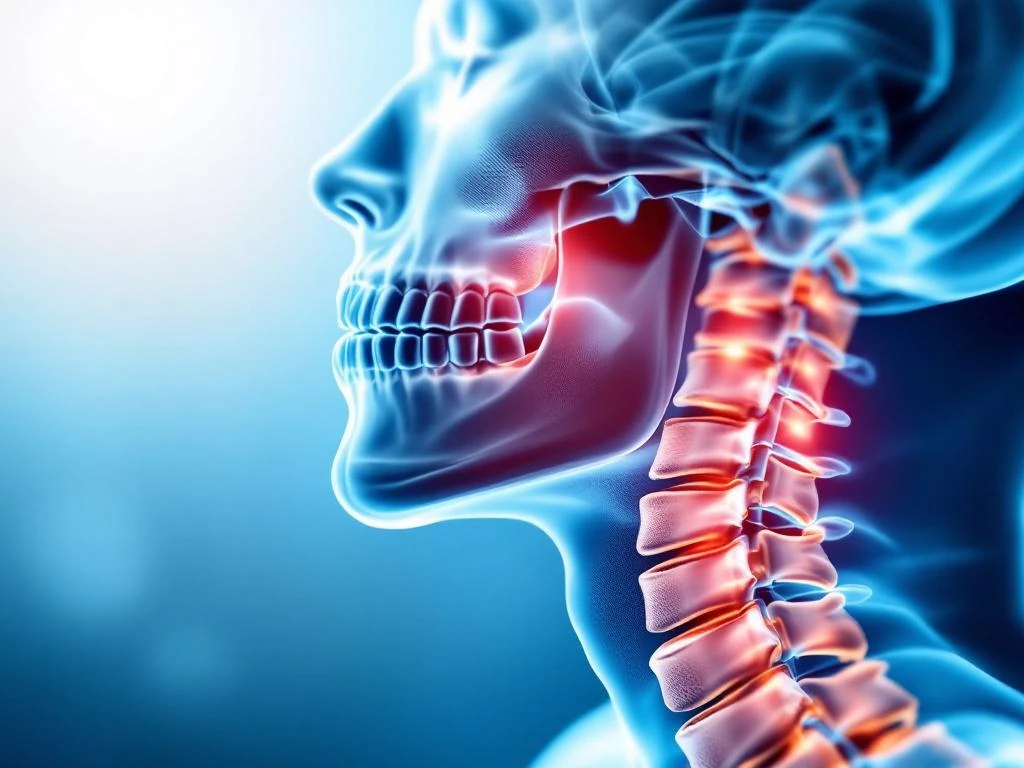
Jaw problems and neck pain are closely related due to the anatomical connections between the jaw joint, neck muscles and nerves. The temporomandibular joint works together with neck muscles to enable movements. Tension in one area easily spreads to the other, so jaw complaints can cause neck pain and vice versa. This interaction arises through shared muscle groups, nerve pathways and postural patterns.
What is the anatomical connection between jaw and neck?
The temporomandibular joint and neck muscles share various anatomical connections that can spread tension between both areas. The jaw muscles are directly connected to neck muscles, so problems in one area automatically affect the other. This physical connection explains why jaw problems often accompany neck pain.
The main connections consist of shared muscle groups that run from the skull to the cervical vertebrae. The sternocleidomastoid muscle, trapezius muscle and various small neck muscles work together with jaw muscles to enable head movements and jaw functions. When your jaw muscles are tense due to teeth grinding or stress, these muscles also pull on your neck muscles.
The nervous system also plays an important role. The trigeminal nerve, which controls jaw functions, has connections with nerves that control neck muscles. Stimulation of these nerve pathways can transmit pain between jaw and neck. This explains why people with jaw problems often experience headaches and neck stiffness, and why neck complaints sometimes cause jaw pain.
Which symptoms indicate a connection between jaw and neck complaints?
Recognisable symptoms that demonstrate the connection between jaw and neck problems are headaches during jaw movements, jaw pain that increases with neck movements, cracking sounds in both areas and simultaneous stiffness. These symptoms indicate underlying tension that affects both systems and often occurs together.
Many people experience morning stiffness in both jaw and neck, especially after a night of teeth grinding. You may also notice that headaches begin at your jaw and radiate to your neck, or vice versa. Other common signs are:
- Difficulty opening the mouth, combined with neck stiffness
- Ear pain that accompanies neck pain on the same side
- Increased sensitivity of jaw and neck muscles when touched
- Reduced freedom of movement in both areas simultaneously
Also pay attention to patterns in your complaints. If your neck pain worsens during chewing, talking or yawning, this indicates a strong jaw-neck connection. Conversely, jaw pain can increase with neck movements, such as turning around or looking up.
What causes the interaction between jaw problems and neck pain?
Stress, poor posture and teeth grinding are the main causes of the interaction between jaw problems and neck pain. These factors create tension in both areas simultaneously and reinforce each other. Whiplash, poor sleeping posture and prolonged screen work can strain both systems and lead to chronic complaints.
Stress causes unconscious muscle tension in both jaw and neck muscles. Many people clench their jaws or press their tongue against their palate during stressful moments, which directly affects the neck muscles. This chronic tension can lead to acute neck blockage or a crick in the neck.
Poor working posture also plays a major role. A forward head posture during screen work strains both neck muscles and jaw muscles. Your jaw has to work harder to stay balanced, while your neck muscles become overloaded. This can lead to RSI complaints that extend to jaw and neck.
Whiplash trauma often disrupts the normal cooperation between jaw and neck. After whiplash, people can develop jaw problems months later because the neck injury has disrupted the natural movement patterns. Migraine can also cause both jaw and neck tension through altered pain stimulation.
How can you relieve jaw and neck tension yourself?
Simple relaxation exercises and posture corrections can effectively reduce jaw and neck tension. Start with conscious relaxation of your jaw muscles by letting your tongue rest loosely against your lower teeth. Combine this with gentle neck stretches and heat application to treat both areas simultaneously.
Try these daily exercises:
- Place your tongue relaxed against your lower teeth and let your jaw hang loose
- Gently massage your jaw muscles while slowly rotating your neck
- Use a warm compress on jaw and neck for 15 minutes
- Practice conscious breathing while letting both jaw and shoulders drop
Posture correction is also important. Make sure your screen is at eye level and your shoulders are relaxed. Avoid prolonged chewing of gum and hard foods. At night, an ergonomic pillow can help keep your neck and jaw in a natural position.
Pay attention to signs of tension throughout the day. Many people unconsciously clench their jaws during concentration or stress. Set a timer to check every hour whether your jaw is relaxed and your neck posture is good.
How Ruggensteun helps with treating neck pain
We treat jaw-neck problems with a holistic approach that addresses the underlying causes. Our specialised chiropractors understand the anatomical connections between jaw and neck and can effectively treat both areas. By aligning the spine and improving nerve communication, we help your body regain its natural balance.
Our treatments for jaw-neck complaints include:
- Chiropractic corrections for improved cervical spine alignment
- Y-strap treatments for decompression of intervertebral discs
- CFR (Cranial Facial Release) techniques for jaw-related tension
- Dry needling for acute muscle tension in jaw and neck
- Holistic guidance for stress-related complaints
Whether you suffer from acute neck blockage, chronic neck pain, headaches, migraine, whiplash consequences or RSI complaints: we can help you. You can contact us directly, without referral from your GP. View our expertise in neck pain treatments or visit our homepage for more information. Contact us today for an appointment and experience how our specialised treatments can help you with jaw-neck problems.
Sorry, the comment form is closed at this time.