


Jun
Can the y-strap help with recurring back pain?
Yes, a y-strap can effectively help with recurring back pain, particularly when the cause lies in compression of the intervertebral discs or restricted vertebrae. The technique creates targeted decompression along the entire spine, addressing the structural cause of the symptoms rather than merely masking them. In this article, we answer the most frequently asked questions about y-strap traction therapy and who this treatment is suitable for.
Why does back pain keep coming back despite previous treatments?
Recurring back pain is almost always a sign that the underlying cause has not been fully addressed. Treatments that focus on muscle relaxation, pain relief, or temporary relief do not resolve the structural problem. As long as the spine is out of balance and nerve communication remains disrupted, symptoms will continue to flare up repeatedly.
The spine is under constant pressure from posture, movement, stress, and aging. When intervertebral discs are compressed for extended periods or vertebrae do not move properly, nerves become irritated or pinched. This leads to pain, stiffness, and radiating symptoms that keep returning once the effect of a temporary treatment wears off.
Recurring back problems call for an approach that structurally restores the spine. That means decompressing the discs, restoring vertebral mobility, and improving nerve function. These are precisely the three areas that a non-invasive back treatment such as y-strap targets.
How does y-strap work to relieve back pain?
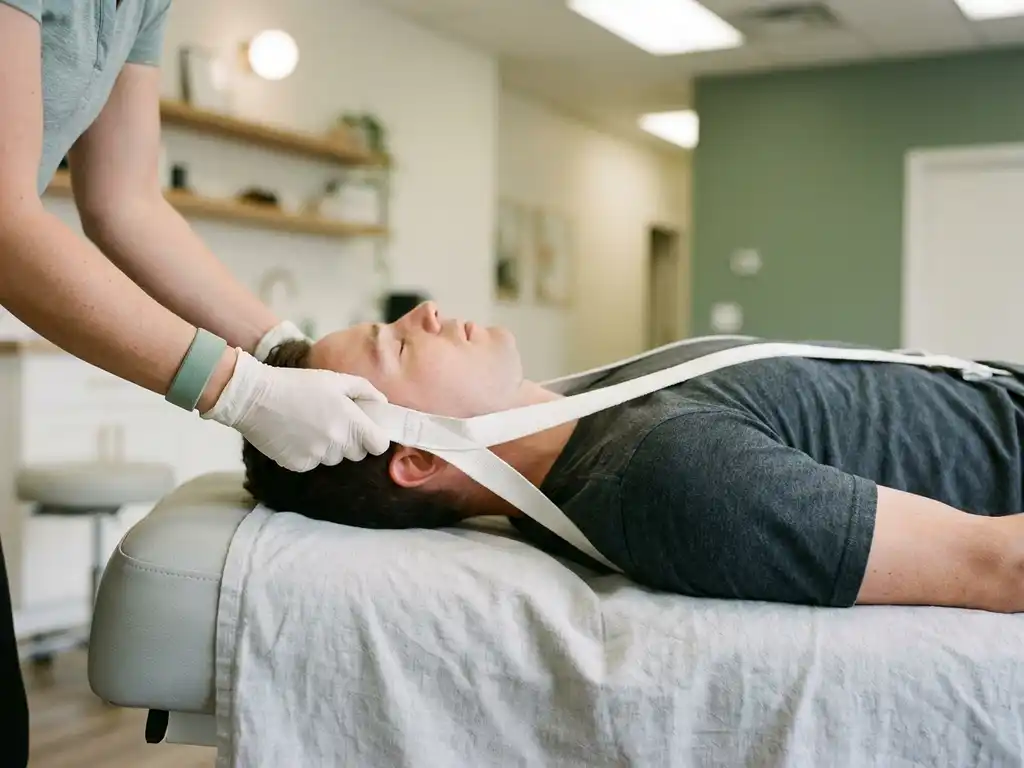
Y-strap works through traction: a strap is placed around the back of the head, and a controlled pulling force is then applied along the length of the spine. This y-strap spinal decompression reduces pressure on the intervertebral discs, increases the space between the vertebrae, and promotes fluid circulation within the discs.
The chiropractor selects the technique based on the nature of the complaint and the condition of the spine. There are two variations:
- Slow stretch movement (standard): Slow, smooth, and controlled movements aimed at general decompression and relaxation, without abrupt impulses. This variation is suitable for people with general back complaints, tension, or chronic neck pain.
- HVLA movement (High Velocity Low Amplitude): A rapid movement with limited displacement, used when an actual chiropractic adjustment is needed — for example, in the case of a restricted vertebra or functional limitation. HVLA is a recognized technique within manual medicine and is applied worldwide.
The result of y-strap traction therapy is that the spine gains more space, nerves are less irritated, and the body is better able to heal itself. Many people experience relief from back pain, neck pain, and even headaches immediately after treatment.
Who is a y-strap treatment suitable for?
A y-strap treatment is suitable for people with compression-related spinal complaints, such as recurring back pain, neck pain, pain radiating into the arms or legs, and headaches or migraines linked to the spine. People with chronic neck complaints where addressing the root cause is the priority also benefit from this technique.
The treatment is suitable for a wide range of people:
- Adults with recurring back or neck complaints
- People with sedentary or physically demanding occupations
- Athletes recovering from an injury or looking to improve performance
- People seeking y-strap headache treatment as an alternative to medication
- Older adults with reduced mobility and pressure on the intervertebral discs
Y-strap is not suitable for everyone. Caution is required in cases of severe osteoporosis, recent vertebral fractures, certain forms of spinal instability, or specific neurological conditions. A thorough intake and assessment by a qualified chiropractor is therefore always the first step.
What can you expect during and after a y-strap session?
During a y-strap session, you lie on your back on the treatment table. The chiropractor attaches the strap behind your head and then applies a controlled traction force. Depending on the technique used, the actual traction movement lasts only a few seconds, but the session as a whole always includes an intake, assessment, and any additional adjustments.
During the treatment, many people hear a cracking or clicking sound. This is the release of gas bubbles in the joints — similar to cracking your knuckles — and is completely normal and harmless.
After the session, most people experience a sense of relief, greater mobility, and reduced tension in the back and neck. Some people temporarily feel mild muscle soreness or fatigue, similar to the feeling after an intense workout. This typically subsides within a day. For structural improvement, multiple sessions are recommended, depending on the severity and duration of the complaints.
What is the difference between y-strap and regular chiropractic care?
The key difference lies in the direction and nature of the force applied. In regular chiropractic adjustments, the chiropractor works on a specific vertebra using a quick, targeted impulse. Y-strap traction therapy stretches the entire spine lengthwise, decompressing all intervertebral discs simultaneously.
Regular chiropractic care is ideal for correcting specific blockages or joint dysfunctions at a particular level. Y-strap is more effective when the complaint is related to overall spinal compression or when multiple levels require attention at the same time. In practice, both techniques are often combined for optimal results.
Another difference is the experience: y-strap feels more intense and direct to many people than a standard chiropractic adjustment. The decompression is physically noticeable and the effect is often immediately apparent, which partly explains y-strap’s reputation as a powerful treatment.
How many chiropractors in the Netherlands are authorized to perform y-strap?
Y-strap is a specialized technique that requires additional training and authorization. In the Netherlands, only a small number of chiropractors are qualified and authorized to perform this treatment. This makes a y-strap chiropractor in the Netherlands relatively rare.
The limited availability is related to the intensity of the technique and the expertise required to apply it safely and effectively. Not every chiropractor has completed the specific training needed to responsibly use both the standard stretch movement and the HVLA variation. For people seeking this treatment, it is therefore important to choose a practice with demonstrable qualifications.
How Ruggensteun helps with recurring back pain using y-strap
We are one of the few chiropractic practices in the Netherlands that are officially authorized to perform y-strap treatments. From our locations in Eindhoven and Valkenswaard, we offer a holistic approach in which we focus on the structural cause of your complaints — not just the symptoms.
Here is what you can expect from us:
- A thorough intake and assessment of your spine and complaint pattern
- Y-strap treatment by a certified chiropractor, tailored to your situation
- Choice between slow decompression or HVLA adjustment, depending on what your spine needs
- Treatments for all ages, from athletes to older adults
- Quick availability for acute complaints, without a referral from your GP
- Free parking at both locations
Want to find out whether a y-strap treatment is right for you? Contact us or book an appointment directly in Eindhoven or Valkenswaard. We are happy to help you on your way to lasting relief from your back complaints.
Sorry, the comment form is closed at this time.