


Jul
Can poor posture cause chronic neck pain?
Yes, poor posture can cause chronic neck problems. When the spine is held in an unfavorable position for extended periods, the pressure on the cervical vertebrae and intervertebral discs increases. This not only leads to muscle tension and pain, but can also disrupt nerve communication. In this article, we answer the most frequently asked questions about posture and neck problems, from cause to solution.
How does poor posture damage the cervical vertebrae?
Poor posture damages the cervical vertebrae by keeping the spine out of its natural alignment for prolonged periods. This increases the load on the vertebrae, intervertebral discs, and surrounding muscles. Over time, this overloading leads to wear and tear, reduced mobility, and disrupted nerve function in the cervical spine.
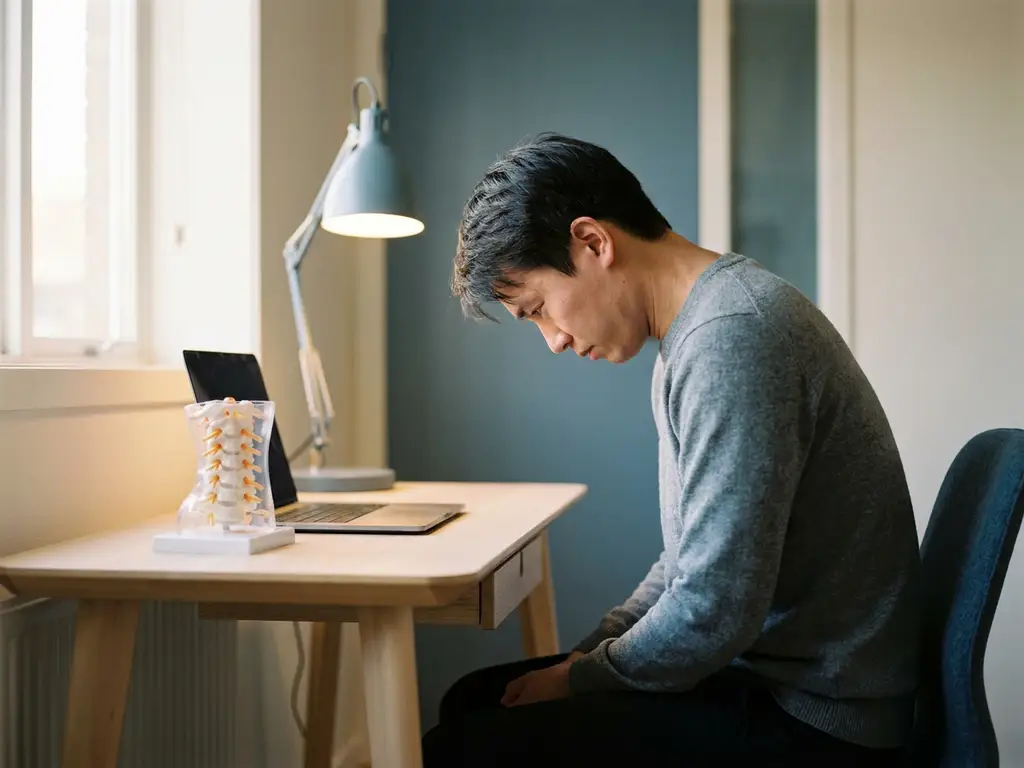
The cervical spine — the section of the spine in the neck — is designed for a specific, slightly curved position. When the head tilts forward structurally, which is very common during screen use, the effective weight on the cervical vertebrae increases significantly. The head weighs an average of five to six kilograms in a neutral position, but with a forward tilt of thirty degrees, the load on the lower cervical vertebrae can increase up to fourfold.
That extra pressure accumulates in the intervertebral discs. Discs that are constantly compressed lose elasticity and fluid. This reduces their shock-absorbing capacity and increases the risk of bulging or herniation. At the same time, the small joints between the vertebrae become overloaded, leading to irritation and inflammatory responses. Muscles attempt to compensate for the instability by remaining chronically tense, which further amplifies the pain.
Which postural habits most commonly lead to neck problems?
The postural habits that most commonly lead to neck problems are looking at a screen for long periods with the head forward, sleeping on a pillow that is too high or too low, and a rounded back posture in which the neck absorbs the compensation. These are patterns people repeat daily without realizing it.
The most common culprits at a glance:
- Forward head posture during screen use: Working at a computer or scrolling on a phone with the head positioned in front of the body is one of the most damaging postures for the neck.
- Incorrect sleeping position: Sleeping on your stomach forces the head into a rotated position for hours at a time, leading to muscle soreness and joint irritation in the neck.
- Rounded shoulders and a hunched back: When the upper back curves forward, the head automatically follows. The neck then has to work harder to keep the head upright.
- One-sided loading: Always carrying a bag on the same shoulder or cradling the phone between the ear and shoulder creates structural imbalances in muscle loading.
- Prolonged sitting without breaks: Even good posture leads to problems if it is maintained for hours on end without any movement.
What makes these habits so insidious is that they start out painlessly. The damage builds up gradually, which means people only make the connection between their daily behavior and their neck problems once the symptoms are already well established.
What are the signs that neck pain is caused by posture?
Signs that neck pain is caused by posture include pain that worsens after prolonged sitting or screen use, morning stiffness that clears up after moving around, and headaches that radiate from the neck toward the back of the head or the temples. These complaints follow a clear pattern that is linked to specific activities and positions.
Posture-related neck pain has several recognizable characteristics that distinguish it from other causes:
- The pain starts or worsens after prolonged sitting, driving, or working at a screen.
- There is a nagging, pressing pain in the neck and shoulders that builds throughout the day.
- Tension headaches, where the pain starts in the neck and radiates into the head, are a common accompanying symptom.
- Moving around or taking a short walk provides temporary relief, but the symptoms return as soon as you sit back in the same position.
- There is a feeling of stiffness or restricted range of motion when turning the head.
When neck pain radiates into the arm, is accompanied by tingling or numbness in the fingers, or when dizziness occurs, nerve irritation may be involved. In that case, it is advisable to have the underlying cause thoroughly investigated rather than addressing the symptoms alone.
Can neck pain caused by posture become chronic over time?
Yes, posture-related neck pain can become chronic when the underlying cause is not addressed. If the spine is held in a poor position for an extended period, the muscles, joints, and intervertebral discs adapt to that stressed position. This makes the symptoms increasingly difficult to break through with rest or pain medication alone.
Chronic neck problems rarely develop overnight. They are the result of an accumulation of small overloading incidents that build up over months or years. The spine adapts to the incorrect position — a process known in clinical terms as adaptive change. Muscles become structurally shortened or weakened, joints lose mobility, and intervertebral discs become compressed.
An additional concern is that nerve communication between the brain and the body can be disrupted when vertebrae are structurally out of their optimal position. This has consequences that extend beyond pain alone — think fatigue, difficulty concentrating, or a reduced sense of well-being. That is precisely why it is so important not to wait until the symptoms become unbearable, but to address the structural cause early.
What helps with neck problems caused by poor posture?
For neck problems caused by poor posture, a combination of postural correction, targeted movement, and treatment of the structural cause in the spine is most effective. Simply managing symptoms with pain medication or rest does not resolve the underlying problem and increases the risk of recurring complaints.
Practical steps that contribute to recovery and prevention:
- Workstation adjustment: Make sure your screen is at eye level and that your chair provides good lower back support, so the head does not tilt forward.
- Regular movement: Stand up every hour, gently stretch the neck, and activate the shoulder muscles to support circulation and mobility.
- Targeted exercises: Strengthening exercises for the deep neck muscles and upper back help support the spine more effectively and distribute the load more evenly.
- Optimize your sleeping position: Choose a pillow that supports the natural curve of the neck and avoid sleeping on your stomach.
- Structural treatment: When the spine has already adapted to a poor position, exercises alone are often insufficient. In that case, it is worthwhile to have the alignment of the vertebrae professionally assessed and corrected.
The sooner you take action, the greater the chance that the symptoms will resolve completely. The longer you wait, the more intensive and lengthy the recovery process becomes.
How we help with chronic neck problems caused by posture
At Ruggensteun, we treat neck problems by addressing the structural cause — not just the symptoms. We assess the alignment of the spine and the functioning of the nervous system, so we understand why the symptoms developed and what is needed for lasting recovery.
What we offer for people with posture-related neck problems:
- Chiropractic treatment: We restore the alignment of the cervical vertebrae, improve joint mobility, and reduce pressure on the nerves that are being irritated by the compressed spine.
- Y-strap treatment: As one of the few certified chiropractors in the Netherlands, we perform Y-strap treatments. This technique creates targeted decompression in the intervertebral discs through traction along the vertical axis of the body, which is particularly effective for neck problems involving compressed discs.
- Personal guidance: We clearly explain what is happening in your spine, which treatment is appropriate, and how you can structurally improve your postural habits.
- No referral needed: You can make an appointment directly, even for acute complaints. Free parking is also available at our locations in Eindhoven and Valkenswaard.
Are you dealing with recurring neck pain, or do you want to know whether your symptoms are caused by posture? Contact us or schedule an appointment directly. We would be happy to work with you toward a structural solution.
Sorry, the comment form is closed at this time.