


Nov
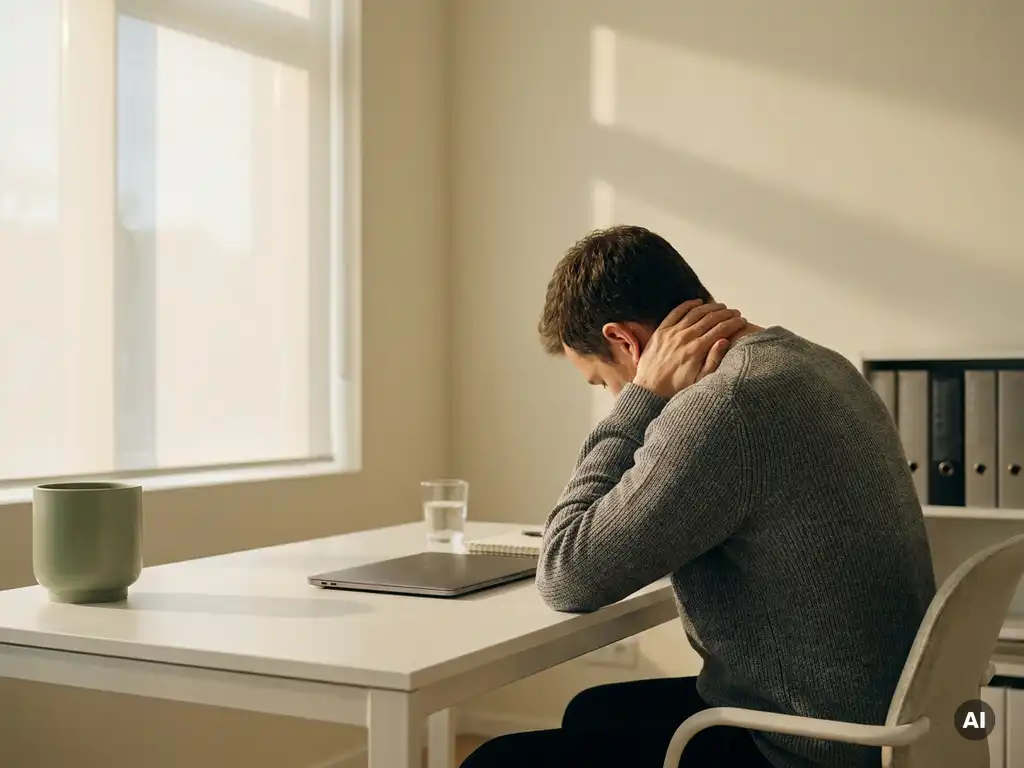
Can Neck Pain Be Caused by Stress?
Yes, neck pain can certainly be caused by stress. When you are under prolonged tension, your body unconsciously tightens the muscles in your neck and shoulders as a protective response. This leads to muscle tension, reduced blood flow, and ultimately pain. Below we answer the most frequently asked questions about neck complaints caused by stress, so you better understand what is happening in your body and what you can do about it.
How does stress cause neck pain?
Stress causes neck pain because your body automatically enters a state of heightened alertness when under tension. Your muscles, particularly in the neck, shoulders, and upper back, contract in preparation for a possible threat. If that tension is not released, the muscles remain chronically tense, leading to pain, stiffness, and neck complaints.
This mechanism is evolutionarily explainable: in the face of danger, the body raises the shoulders and tenses the neck to protect vulnerable structures. In daily life, during work stress, worry, or sleep deprivation, the body activates the same response. The problem is that modern stressors rarely disappear after a few minutes, causing muscle tension to persist and accumulate.
In addition, stress affects your posture. People who are stressed tend to sit hunched forward more often, raise their shoulders, or clench their jaw. All of these postures increase pressure on the cervical spine and surrounding muscles, which worsens or triggers neck complaints.
What are the symptoms of tension pain in the neck?
Tension pain in the neck is characterized by a dull, stiff pain that often extends to the shoulders and the back of the head. The muscles feel hard and tender to the touch, and the range of motion of the neck is limited. Many people also experience a feeling of pressure in the head or behind the eyes.
Typical symptoms of neck complaints caused by stress include:
- Stiffness and tension in the neck and shoulders, especially after a busy day
- Dull or throbbing pain in the neck that persists or keeps returning
- Reduced mobility when turning or tilting the head
- Tender muscle knots in the neck, shoulders, or upper back
- A feeling of pressure or heaviness in the head
- Fatigue and difficulty relaxing, even outside of working hours
An important characteristic of tension pain is that the complaints often worsen at the end of the day or after periods of intense concentration, such as working behind a screen for extended periods.
How do you know if your neck pain is caused by stress or something else?
Neck pain caused by stress is typically bilateral, diffuse, and accompanied by a general feeling of tension in the body. If the pain increases during busy periods and decreases after rest, relaxation, or vacation, stress is a likely cause. Neck pain that radiates into the arm, is accompanied by tingling, or flares up sharply with one specific movement more often points to a structural cause.
Some indicators that stress is the main cause:
- The complaints have been present for a while and fluctuate with your stress level
- You sleep poorly or grind your teeth, which intensifies muscle tension
- The pain is on both sides of the neck and radiates to the shoulders
- You also experience other stress-related complaints, such as fatigue, headaches, or stomach complaints
When the pain comes on suddenly and severely, radiates into the arm or hand, or is accompanied by loss of strength or numbness, it is wise to have this examined. In that case, there may be a pinched nerve or a herniated disc in the cervical spine, which requires a different approach.
Can neck pain caused by stress also cause headaches?
Yes, neck pain caused by stress can directly cause headaches. This type of headache is known as tension headache and is one of the most common forms of headache. The muscle tension in the neck and shoulders pulls on the muscles and connective tissue around the skull, creating a pressing or squeezing sensation in the head.
The cervical spine plays a central role in this. When the vertebrae and intervertebral discs in the neck are under pressure from chronic muscle tension, this can affect the nerves and blood vessels in the area. The result is a headache that is often on both sides of the head, feels like a tight band around the head, and worsens with stress or fatigue.
Some people with neck complaints caused by stress also develop migraine-like attacks. Although migraine has a more complex mechanism, persistent tension in the neck can be a well-known trigger. Addressing the neck tension often helps reduce the frequency and intensity of headaches as well.
What helps with neck pain caused by stress?
For neck pain caused by stress, a combination of reducing the tension itself and directly addressing the muscle tension in the neck is helpful. No single approach works the same for everyone, but the most effective strategies focus on both the physical and mental components of the complaint.
Practical measures that help:
- Movement and stretching: Regular neck stretches and light movement improve blood flow and reduce muscle tension. Even a short walk in between helps.
- Posture correction: Pay attention to your sitting posture behind a screen. Keep your head directly above your shoulders and avoid sitting hunched forward for extended periods.
- Breathing exercises: Deep abdominal breathing activates the parasympathetic nervous system and helps the body relax, directly reducing muscle tension in the neck.
- Heat: A hot water bottle or warm bath relaxes the muscles and temporarily relieves pain.
- Sleep and recovery: Sufficient and quality sleep is essential for muscle recovery and stress regulation.
- Stress management: Techniques such as mindfulness, yoga, or relaxation exercises address the underlying cause.
When complaints persist despite these measures, it is worthwhile to seek professional help. Chiropractic treatment focuses on the structural causes of neck complaints and can help restore mobility in the cervical spine.
When should you see a chiropractor for neck pain caused by stress?
You can see a chiropractor for neck pain caused by stress when the complaints persist for more than two weeks, keep recurring, or are accompanied by headaches, limited mobility, or radiating pain. A chiropractor examines not only the muscles but also the spine itself, to assess whether there are structural restrictions that are maintaining the complaints.
Stress-related neck complaints often lead to a pattern in which the muscles remain chronically tense, the joints in the cervical spine move less freely, and pressure on intervertebral discs increases. This is precisely the type of problem where chiropractic care is valuable, as it specifically targets spinal mobility and promotes communication between the nervous system and the rest of the body.
You do not need a referral from your general practitioner to visit a chiropractor. Quick access is important, especially if the pain is acute or is limiting your daily functioning.
How we help with neck complaints caused by stress
At Ruggensteun we treat neck complaints arising from stress with a holistic approach that goes beyond symptom management. We look at the structural causes in the spine and nervous system, so that your body can make use of its own healing capacity.
What we can do for you:
- Comprehensive examination of the cervical spine to assess where the tension and restriction are located
- Chiropractic treatment aimed at restoring mobility in the neck and reducing pressure on intervertebral discs and nerves
- Y-Strap treatment, in which targeted traction creates decompression in the spine, a technique for which we are certified as one of the few chiropractors in the Netherlands
- Dry needling for directly relaxing stubborn muscle knots in the neck and shoulders
- Personal advice on posture, movement, and stress management to prevent recurring complaints
You can visit us without a referral from your general practitioner, and for acute complaints we ensure quick availability. Free parking is available at both locations in Eindhoven and Valkenswaard. Would you like to know what we can do for your neck complaints? Make an appointment directly or contact us for more information.
Sorry, the comment form is closed at this time.