


Sep
Can Headaches Come From My Neck?
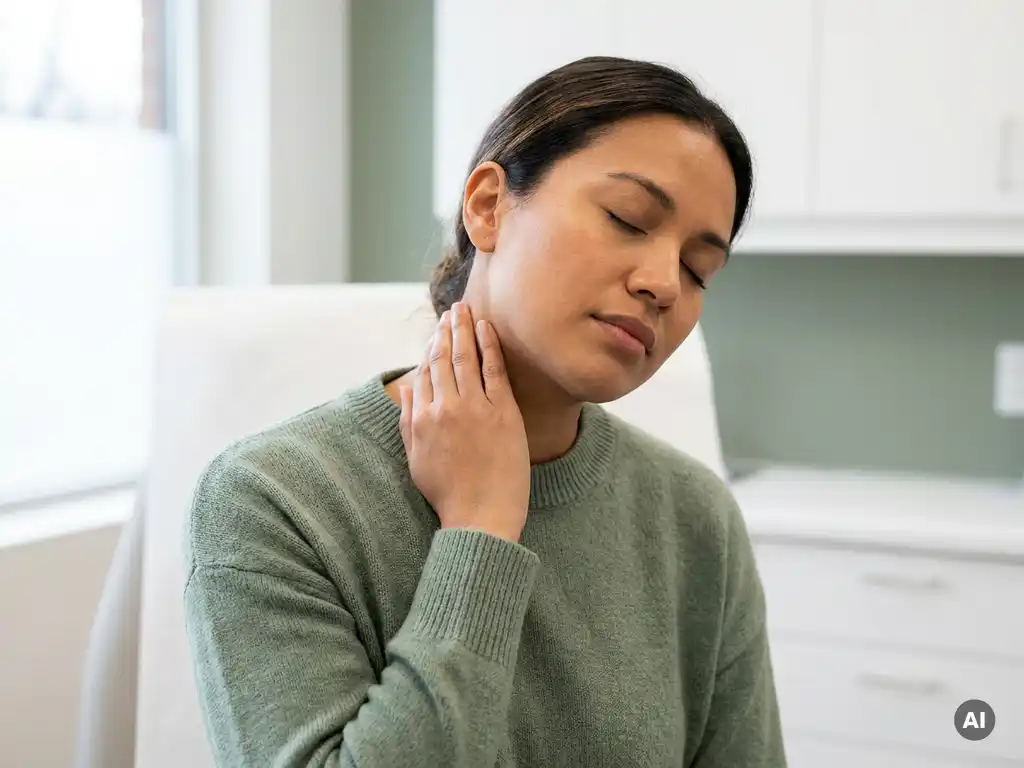
Yes, headaches can definitely originate from the neck. When muscles, joints, or nerves in the neck are under pressure or not moving properly, this can radiate pain to the head. This type of headache has its own name and characteristics that distinguish it from other forms, such as migraine or tension headache. In this article, we answer the most frequently asked questions about neck-related headaches and when it makes sense to seek help.
Which muscles and joints in the neck cause headaches?
The upper cervical vertebrae and the muscles surrounding them are the most common sources of neck-related headaches. In particular, the joints between the first, second, and third cervical vertebrae (C1, C2, and C3) play a key role, because the nerves that exit there have direct connections to the head and skull.
The muscles most commonly involved in neck-related headaches are:
- The suboccipital muscles, small, deep muscles at the base of the skull that finely control neck movements. Tension or overload here radiates almost directly to the back of the head and the temples.
- The trapezius, the large, flat muscle that runs from the neck across the shoulders. Chronic tension in the trapezius is a common cause of headaches on the side and top of the head.
- The sternocleidomastoid, the muscle that runs from behind the ear to the collarbone. Trigger points in this muscle can cause pain that radiates behind the eye.
In addition to muscles, the facet joints in the cervical spine can also be a source of pain. When these joints are blocked or become inflamed, this disrupts normal nerve communication and can lead to persistent or recurring headaches.
What is cervicogenic headache and how does it differ from migraine?
Cervicogenic headache is a headache that originates in the cervical spine, that is, in the neck. The pain begins in the neck or the back of the head and then travels to the head. The distinguishing feature is that the pain is triggered or worsened by neck movements or a certain posture, and that neck complaints are almost always present.
The difference from migraine is important to understand, because the treatment differs significantly:
- Cervicogenic headache is one-sided, begins in the neck, increases with neck movement, and is accompanied by limited mobility of the neck. There are generally no aura symptoms.
- Migraine is a neurological condition with episodes of throbbing headache, often accompanied by nausea, light sensitivity, and sometimes aura. Migraine does not by definition have a cause in the neck, although neck tension can trigger an attack.
Tension headache forms a third category: this is a pressing, band-like feeling around the head associated with stress and muscle tension, but does not always have a direct cause in the neck joints. Nevertheless, neck pain is often present as an accompanying symptom with tension headache.
How do you know if your headache comes from the neck?
You can suspect that your headache originates from the neck if the pain begins in the back of the head or the neck and travels from there to the head, and if neck movements trigger or worsen the complaints. Additional signs are a stiff or limited-mobility neck and the feeling that the pain is deep, rather than throbbing or pounding.
Concrete signs that point to a neck origin:
- Headache that gets worse when you turn or tilt your head
- Pain that starts in the neck or shoulders and moves up to the head
- Tenderness when touching the upper neck or base of the skull
- Headache that worsens after prolonged sitting, screen work, or driving
- One-sided pain that is always on the same side
If you are unsure, a simple test is useful: gently press on the muscles at the base of your skull. Does that feel painful and do you recognise in that pressure the pain you normally experience in your head? Then there is a good chance the neck is playing a role. A professional assessment remains necessary for a reliable diagnosis, however.
What are common causes of neck-related headaches?
Neck-related headaches develop when there is too much or too prolonged pressure on the cervical vertebrae, intervertebral discs, or surrounding muscles. The most common causes are a combination of posture, lifestyle, and stress.
The most common causes are:
- Prolonged screen use or office work, a head held forward significantly increases the load on the cervical vertebrae.
- Sleeping position, a wrong pillow or sleeping on your stomach places the cervical vertebrae in an unfavourable position for hours.
- Stress and mental overload, psychological tension manifests physically as muscle tension in the neck and shoulders.
- Whiplash or old injury, previous trauma to the neck can still cause complaints years later through scar tissue or joint restriction.
- Blocked cervical vertebrae, when one or more vertebrae no longer move freely, this disrupts nerve communication and can lead to radiating pain.
Notably, complaints rarely have a single cause. It is often an accumulation of factors that together exceed the threshold at which the body starts producing complaints. This makes structural treatment of the cause more effective than addressing one isolated factor.
Can chiropractic care help with headaches caused by neck complaints?
Chiropractic care can effectively help with headaches caused by neck complaints, particularly with cervicogenic headache and tension headache. By restoring the mobility of the cervical vertebrae and reducing pressure on surrounding nerves, the direct cause of the pain is addressed rather than just the symptoms.
Chiropractic treatment of neck-related headaches focuses on:
- Mobilisation and manipulation of the cervical spine, restoring normal freedom of movement in the neck joints
- Spinal decompression, relieving pressure on intervertebral discs and nerves that contribute to the headache
- Treatment of muscle tension, targeted work on the suboccipital muscles and trapezius that maintain the pain
For neck-related headaches and migraines associated with pressure in the cervical spine, spinal decompression via traction can also play a role. This principle is central to techniques aimed at releasing built-up pressure in the intervertebral discs.
It is important to understand that chiropractic care is most effective when there is actually a structural cause in the neck. With pure migraine without a neck component, the approach is different. A thorough intake and assessment are therefore essential.
When should you see a chiropractor for headaches?
You may consider visiting a chiropractor for headaches if the complaints are accompanied by neck pain or neck stiffness, if the pain returns after relief, or if previous treatments have not produced structural improvement. You do not need a referral from a general practitioner to make an appointment.
Specific situations where a chiropractor is a logical step:
- Headaches that recur regularly and are associated with neck or shoulder complaints
- Headaches after a whiplash, fall, or sports injury
- Headaches that worsen with screen work or prolonged sitting
- Insufficient results after physiotherapy or pain medication
- Headaches where you notice that neck movements influence the complaints
If you experience the following signs, first see a general practitioner or emergency department: sudden, severe headache you have never had before, headache after a head injury, or headache accompanied by fever, confusion, or neurological symptoms.
How we at Ruggensteun help with neck-related headaches
At Ruggensteun, we address neck-related headaches at the source. We examine the mobility of the cervical spine, map out which joints or muscles are causing the pain, and draw up a treatment plan tailored to your situation. Our approach is non-invasive, focused on resolving the cause, and suitable for all ages.
What we offer:
- Chiropractic treatment of the cervical spine aimed at restoring mobility and reducing nerve pressure
- Spinal decompression, including the Y-Strap treatment for cases where pressure in the intervertebral discs plays a role in the headache
- Personal guidance and clear explanation of the cause of your complaints
- No referral needed, quick availability of appointments, and free parking at both locations in Eindhoven and Valkenswaard
Do you recognise your complaints in this article and would you like to know whether chiropractic care could help you? make an appointment at Ruggensteun or contact us for more information. We are happy to help you on your way to a head free from pain.
Sorry, the comment form is closed at this time.