


May
Can children get migraines?
Yes, children can indeed get migraines, just like adults. Childhood migraines are more common than many parents think and can begin at a very young age. The symptoms may differ from those of adult migraines, which can sometimes make them difficult to recognise. This guide answers frequently asked questions about migraines in children, from recognition to treatment.
Can children really get migraines, just like adults?
Children can develop migraines from their second year of life, although it occurs more frequently from school age onwards. Childhood migraines do differ from adult migraines in duration and symptoms. Where adults often have attacks lasting hours, childhood migraine attacks usually last shorter.
In children, migraines often manifest differently than in adults. Young children, for example, more often have stomach pain than headache during an attack. They may also become nauseous without experiencing clear headache. The intensity of the pain can also vary, with children sometimes continuing to play despite the discomfort.
Migraines in children often have a hereditary component. If one or both parents have migraines, there is a greater chance that their child will also develop migraines. This makes early recognition and prevention particularly important for families with a family history of migraines.
How do you recognise migraines in children and what are the symptoms?
Childhood migraines manifest through various symptoms that occur together. Migraine headaches are often throbbing or pounding, usually on one side of the head. Children also complain of nausea, light sensitivity and sound sensitivity during an attack.
Other recognisable symptoms are:
- Sudden fatigue or irritability
- Stomach pain combined with headache
- Becoming pale during the attack
- Desire for rest and quiet
- Sometimes aura spots or flashes of light before the eyes
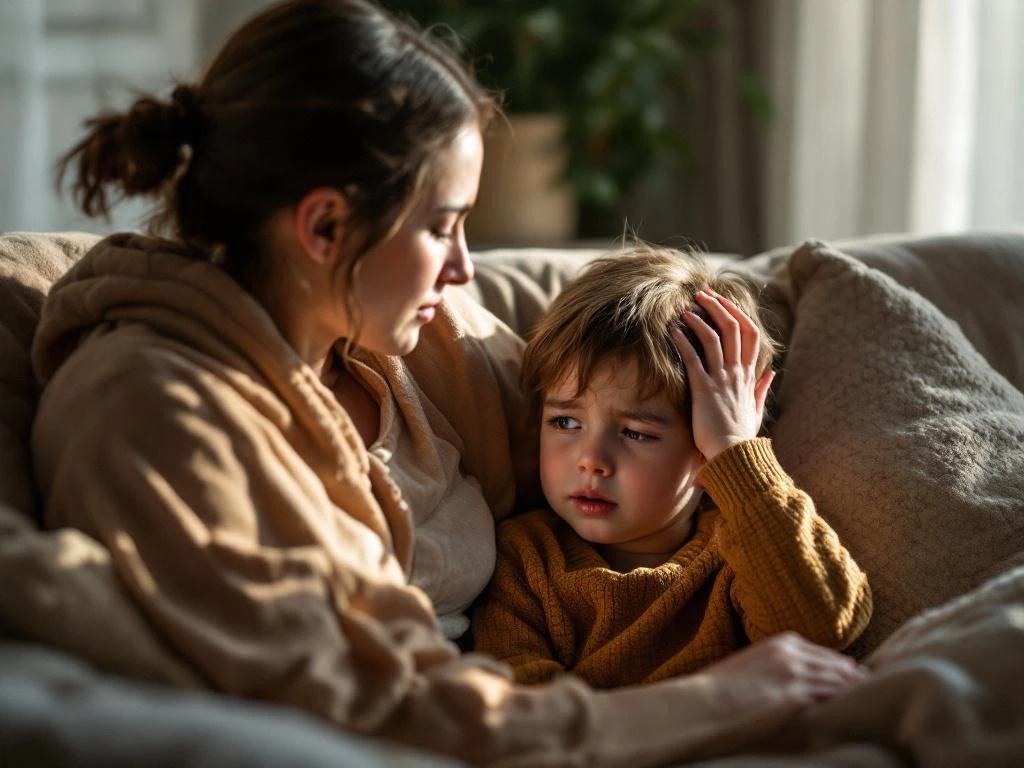
In toddlers and young children, migraines are more difficult to recognise because they cannot express their complaints well. Watch for behavioural changes such as tearfulness, holding their head or suddenly stopping playing. School-age children can better describe their symptoms and often complain of “a pounding pain” in their head.
What causes migraines in children and what triggers are there?
Various migraine triggers can provoke attacks in children. Sleep deprivation, stress, certain foods and hormonal changes are among the most common triggering factors. Weather changes and bright light can also cause migraines.
Common triggers in children are:
- Irregular sleep patterns or too little sleep
- School stress or emotional tensions
- Foods such as chocolate, cheese or citrus fruits
- Skipping meals
- Too much screen time
- Dehydration
Keeping a migraine diary helps identify personal triggers. Note when attacks occur, what your child ate, how much they slept and which activities preceded the migraine. This information is valuable for developing prevention strategies.
When should you see a specialist for childhood migraines?
Seek professional help when migraine attacks occur frequently or affect your child’s daily life. If your child regularly misses school due to headaches, or when general migraine tips such as rest and pain relief are insufficient, specialist care is needed.
Warning signs that require immediate attention:
- Sudden, severe headache that differs from previous attacks
- Headache with fever and neck stiffness
- Changes in behaviour or personality
- Headache after a head or neck injury
- Progressively worsening headache over time
Early intervention can make the difference in managing childhood migraines. A specialist can help identify the right type of migraine and develop a treatment plan that suits your child’s age and needs. This helps prevent migraines from becoming a chronic problem that hinders development.
How Ruggensteun helps with migraines in children
We offer a natural and safe treatment for childhood migraines through specialised chiropractic care. Our approach focuses on optimising spinal alignment and improving nervous system function, which often underlies migraine attacks in children.
Our treatment for childhood migraines includes:
- Gentle, child-friendly chiropractic techniques
- Assessment of posture and spinal alignment
- Advice on lifestyle and migraine prevention
- Guidance in identifying personal triggers
- A holistic approach without medication
By improving communication between the nervous system and the body, we can help reduce the frequency and intensity of migraine attacks. Our specialists have experience with children of all ages and create a safe, comfortable environment for treatment.
Would you like to know more about how we treat migraines in children? Contact us for a non-committal consultation or visit our practice for personal advice on the best approach for your child.
Sorry, the comment form is closed at this time.