


Oct
Can back pain be caused by stress?
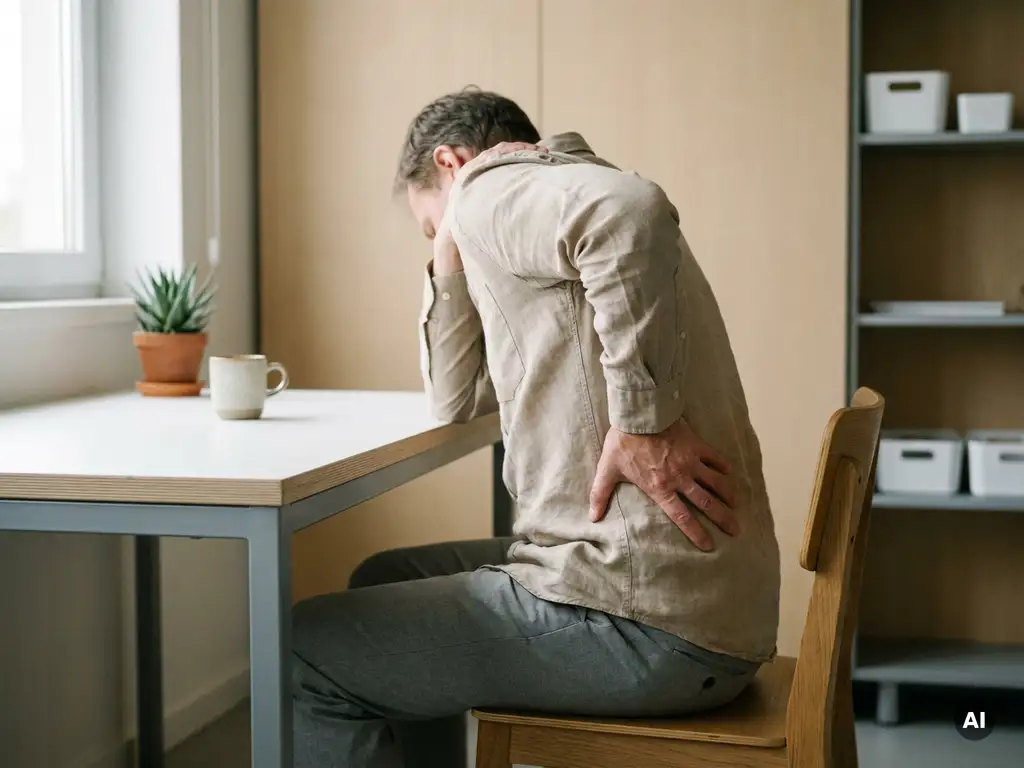
Yes, back pain can certainly be caused by stress. Stress causes increased muscle tension in the body, and the back is particularly sensitive to this. This is not just a feeling: the connection between mental strain and physical complaints is a well-documented phenomenon that leads to acute or chronic back pain in many people. In this article, we answer the most frequently asked questions about stress-related back pain, from the causes to what you can do about it yourself.
How does stress cause physical tension in the back?
Stress activates the nervous system in a so-called fight-or-flight response, causing muscles to involuntarily tense up to prepare the body for action. If that tension is not released, it remains in the body, and the back, neck, and shoulders are the areas where this is felt most strongly. Prolonged stress thus leads to chronic muscle tension that causes or worsens back pain.
During stress, the body produces hormones such as cortisol and adrenaline. These hormones are useful in short, acute situations, but with ongoing stress they have an inflammation-promoting effect on muscles and joints. At the same time, blood flow to muscle tissue deteriorates, meaning waste products are removed more slowly and muscle pain persists longer.
On top of that, stress also affects your posture. People who are tense unconsciously raise their shoulders, slouch, or clench their jaws. These kinds of postural patterns put extra pressure on the spine and intervertebral discs, which over time causes complaints in the back.
Which types of back pain are most often linked to stress?
Stress-related back pain most commonly manifests as tension in the upper back, neck, and shoulders, or as a nagging pain in the lower back. Tension headaches that radiate into the neck are also a common complaint. These forms of pain are directly connected to muscle tension caused by mental overload.
The most common complaints are:
- Neck pain and shoulder tension from raising the shoulders during stress
- Upper back pain from a slumped or tense posture at a desk
- Lower back pain that worsens with mental fatigue and sleep deprivation
- Tension headaches arising from pressure in the cervical spine
It is also important to know that stress can worsen existing complaints. Someone with a mild herniated disc or spinal wear will notice that pain increases during periods of high work pressure or emotional stress. Stress also lowers the pain threshold, causing complaints to be experienced more intensely than during calm periods.
How do you know if your back pain is caused by stress?
Back pain caused by stress can be recognized by the fact that the complaints coincide with busy or emotionally heavy periods, worsen with little sleep or worrying, and improve when you relax or go on holiday. There is usually no clear physical cause such as an injury or fall, and the pain varies greatly in intensity.
Some signals that point to stress-related back pain:
- The pain started or worsened at the same time as a stressful period at work or in your personal life
- You sleep poorly and feel tense when you wake up
- The complaints are mainly in the neck, shoulders, or upper back
- Relaxation techniques such as a warm shower or walk provide temporary relief
- No identifiable physical cause has been found after examination
This does not mean the pain is “all in your head.” Stress-related back pain is just as real as back pain from an injury. The difference lies in the cause, and therefore also in the approach.
Can chiropractic care help with back pain caused by stress?
Chiropractic care can effectively help with back pain that is caused or worsened by stress. By correcting the spine and improving nerve communication, chiropractic treatment reduces muscle tension, improves posture, and supports the body’s self-healing ability. This addresses not only the symptoms but also the physical consequences of prolonged stress.
Stress creates built-up pressure in muscles and intervertebral discs. Chiropractic adjustments focus on releasing that pressure and restoring the mobility of the spine. When the spine is properly aligned, the nervous system can do its job better, which also has a positive effect on how the body deals with stress.
For people with severe tension in the neck and upper back, a specialized treatment can provide additional relief. Techniques such as spinal decompression through traction specifically target the release of pressure in the intervertebral discs, which can produce noticeable results for tension-related complaints in the cervical spine.
What can you do yourself to relieve stress-related back pain?
You can relieve stress-related back pain through a combination of movement, relaxation, and awareness of your posture. Regular exercise, breathing exercises, and adjusting your working posture are proven effective ways to reduce the muscle tension that arises from stress.
Practical tips that help right away:
- Move daily: a 20 to 30 minute walk lowers cortisol levels and relaxes tense muscles
- Do targeted stretching exercises for the neck, shoulders, and lower back, preferably in the morning and after sitting for a long time
- Pay attention to your posture: make sure your screen is at eye level and your feet are flat on the floor
- Practice deep abdominal breathing: this activates the parasympathetic nervous system and helps the body relax
- Improve your sleep quality: sleep deprivation amplifies both stress and pain sensitivity
- Take conscious breaks during work, preferably getting up and moving every 45 minutes
These measures are valuable as a supplement to professional treatment, but will not resolve a structural problem if the spine has been under pressure for an extended period.
When is it time to consult a specialist for back pain?
Consult a specialist when your back pain persists for more than two weeks, returns despite rest and self-care, or is accompanied by radiating pain, tingling, or loss of sensation. Professional help is also needed if the pain interferes with your daily functioning or disrupts your sleep.
Many people wait too long to seek help, hoping the complaints will go away on their own. But the longer tension and pressure on the spine remain untreated, the greater the risk of chronic complaints. Early intervention generally leads to faster recovery and a lower chance of recurring pain.
The good news is that you do not need a referral from your GP for chiropractic care. You can make an appointment directly, even for acute complaints.
How Ruggensteun helps with back pain caused by stress
At Ruggensteun, we treat people daily with back pain that is (partly) caused or worsened by stress. We look beyond the symptoms and search for the underlying cause in the spine and nervous system. Our approach is non-invasive, personal, and focused on structural recovery.
What we can do for you:
- Thorough analysis of your complaints, posture, and spine to identify the cause
- Chiropractic adjustments that align the spine and restore nerve communication
- Y-Strap treatment for targeted decompression of the intervertebral discs, performed by one of the few certified chiropractors in the Netherlands
- Guidance on posture and lifestyle to prevent recurring complaints
- Quick availability for acute complaints, without a referral from your GP
We are accessible in Eindhoven and Valkenswaard, with free parking at both locations. Would you like to know what we can do for you? make an appointment or contact us via our website. We are happy to help you.
Sorry, the comment form is closed at this time.