


Oct
Can Back Pain Be Caused by a Pinched Nerve?
Yes, back pain can certainly be caused by a pinched nerve. When a nerve in the spine is under pressure, it can cause not only local pain but also radiating back pain that spreads to the legs, buttocks, or feet. This type of pain has a specific character that distinguishes it from ordinary muscle pain. In this article, we answer the most frequently asked questions about nerve pain in the back, so you better understand what is going on and what you can do about it.
What are the symptoms of a pinched nerve in the back?
A pinched nerve in the back typically causes more than just pain at the site itself. The most characteristic symptoms are radiating back pain, a burning or electric sensation along the leg, tingling, numbness, and sometimes muscle weakness. These complaints often follow the path of the affected nerve, making them easily recognizable.
The pattern of symptoms depends on which nerve is pinched and where in the spine it occurs. With a pinched nerve in the lumbar spine, the pain often radiates to the buttock, upper leg, calf, or even the foot. This phenomenon is also known as sciatica or radiating leg pain. With a pinched nerve in the neck, the pain spreads instead to the shoulder, arm, or hand.
Other common signs include:
- A sharp, shooting pain that worsens with certain movements or positions
- A numb or asleep feeling in part of the leg or arm
- Muscle weakness that makes standing, walking, or lifting more difficult
- Symptoms that worsen with prolonged sitting or standing
- Pain that improves when you move or change position
Important to know: muscle pain feels different. Muscle pain is typically diffuse, aching, and limited to the muscle itself. Nerve pain more often has a sharp, burning, or electric character and radiates to areas further away from the actual cause.
How does a pinched nerve in the spine develop?
A pinched nerve in the spine develops when surrounding structures exert too much pressure on a nerve root. This can be caused by a herniated disc, a narrowed spine, joint changes due to wear and tear, or a misalignment of the vertebrae. The pressure disrupts normal nerve conduction, causing pain and other complaints.
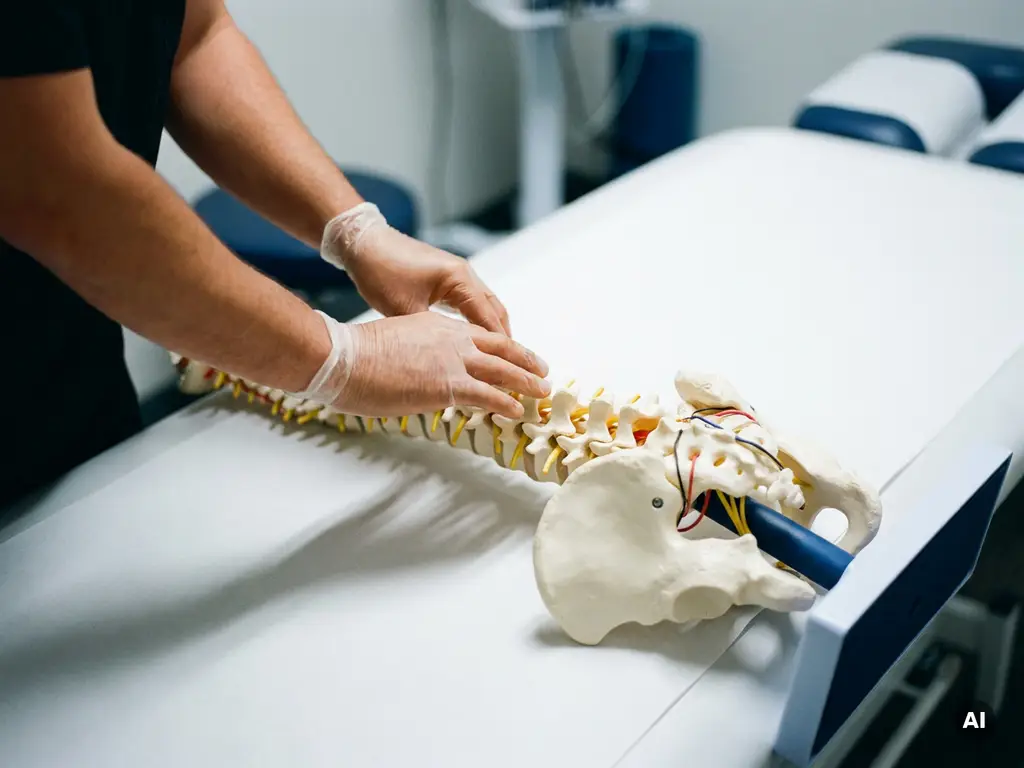
The spine consists of vertebrae separated by intervertebral discs. These discs act as shock absorbers and give the spine flexibility. When a disc is damaged or bulges, the soft inner material can exert pressure on a nearby nerve root. This is what is known as a herniated disc, and it is one of the most common causes of radiating back pain.
Other causes include:
- Wear and tear of the joints: Over the years, the facet joints in the spine can change, leaving less space for the nerves
- Muscle spasm: Tightly tensed muscles around the spine can indirectly exert pressure on nerve structures
- Poor posture or overuse: Working or sitting in an unfavorable position for extended periods increases pressure on discs and joints
- Stress and lifestyle factors: Chronic stress can contribute to muscle tension and increased sensitivity of the nervous system
Often there is no single cause, but a combination of factors that accumulate over time. That also explains why symptoms sometimes seem to appear suddenly, while the underlying problem had already been present for some time.
How do you know if your back pain is caused by a nerve?
You can suspect that your back pain is caused by a pinched nerve when the pain radiates beyond the back itself, is accompanied by tingling or numbness, and has a burning or electric character. Pain that stays exclusively in the back and feels like a dull ache more often points to muscle or joint complaints.
A few concrete signs that point toward nerve pain:
- The pain runs along a clear line through the buttock, leg, or arm
- You experience tingling or a numb feeling in the limbs
- The symptoms change significantly with posture or movement
- Coughing or sneezing temporarily worsens the pain
- There is a noticeable weakness in a leg or arm
Self-diagnosis is difficult, however, because various conditions can produce similar symptoms. A professional assessment by a chiropractor or doctor is the most reliable way to determine whether nerve irritation is the cause of your radiating back pain. A chiropractor looks not only at the location of the pain, but also at the function of the spine as a whole and the communication between the nervous system and the rest of the body.
Can a chiropractor treat a pinched nerve?
Yes, a chiropractor can treat a pinched nerve by reducing the pressure on the nerve root through targeted spinal corrections. By improving the alignment and mobility of the vertebrae, the nerve gains more space and normal nerve conduction can be restored. This is a non-invasive approach without medication or surgery.
Chiropractic treatment focuses on the cause of the pressure rather than merely suppressing the pain. Through manual techniques, blocked or misaligned vertebrae are corrected, relieving the pressure on surrounding nerve roots. In addition to the direct correction, the treatment also works on restoring normal mobility of the spine, which helps prevent recurring complaints.
For radiating back pain caused by nerve irritation in the lumbar spine, spinal decompression can be particularly effective. Techniques such as the Y-Strap work through traction along the vertical axis of the body, releasing pressure in the intervertebral discs in a targeted manner. This literally gives the pinched nerve more space.
Chiropractic care is suitable for many people with nerve pain, but there are situations where additional medical examination is necessary, such as in cases of severe muscle weakness or loss of bladder or bowel control. A good chiropractor recognizes these signs and refers you onward when necessary.
When should you see a chiropractor for nerve pain in the back?
You can see a chiropractor as soon as you notice that back pain radiates into a leg or arm, is accompanied by tingling or numbness, or persists for more than a few days without improvement. You do not need a referral from a general practitioner to make an appointment.
Do not wait too long to seek help. Nerve pain that goes untreated can worsen because the cause of the pressure remains. The longer a nerve is under pressure, the more time recovery may require. Early intervention increases the chance of a faster and complete recovery.
Preferably see a chiropractor or doctor promptly when:
- The pain came on suddenly and severely after a fall or accident
- You notice that a leg or arm is becoming weaker
- You experience numbness in the saddle or groin area
- You have problems with bladder or bowel control
- The symptoms are rapidly worsening rather than slowly improving
For less urgent but persistent complaints: even then, waiting is rarely the best choice. Radiating back pain rarely resolves on its own if the underlying cause is not addressed.
How Ruggensteun helps with radiating back pain caused by a pinched nerve
At our practice, we treat people with radiating back pain and nerve complaints every day. We look not only at the location of the pain, but at the spine and nervous system as a whole. Our approach is focused on removing the cause, not suppressing symptoms.
What we offer:
- Targeted spinal corrections to relieve pressure on pinched nerve roots
- Y-Strap treatment for spinal decompression, releasing pressure in the intervertebral discs in a targeted manner. We are one of the few certified providers of this technique in the Netherlands
- Holistic assessment in which posture, movement patterns, and lifestyle factors are taken into account
- Rapid availability for acute complaints, without a referral from a general practitioner
- Locations in Eindhoven and Valkenswaard with free parking at both locations
Do you recognize the complaints described in this article? Then contact us or make an appointment directly at Ruggensteun. We are happy to help you on your way to recovery.
Sorry, the comment form is closed at this time.