


Oct
Can Back Pain Be Caused by My Posture?
Yes, back pain can certainly be caused by your posture. Poor or prolonged posture puts extra pressure on the spine, muscles, and intervertebral discs, which over time can cause pain, tension, and even structural changes. Posture is therefore one of the most common yet most underestimated causes of back complaints. In this article, we answer the most frequently asked questions about posture and back pain, from recognition to treatment.
Which postures cause the most back pain?
The postures that cause the most back pain are sitting for long periods with a rounded back, standing bent forward, and maintaining an asymmetrical body posture. What they have in common is that they all disrupt the natural S-shape of the spine and thereby distribute pressure unevenly across the vertebrae and intervertebral discs.
Specifically, these are the most harmful postures:
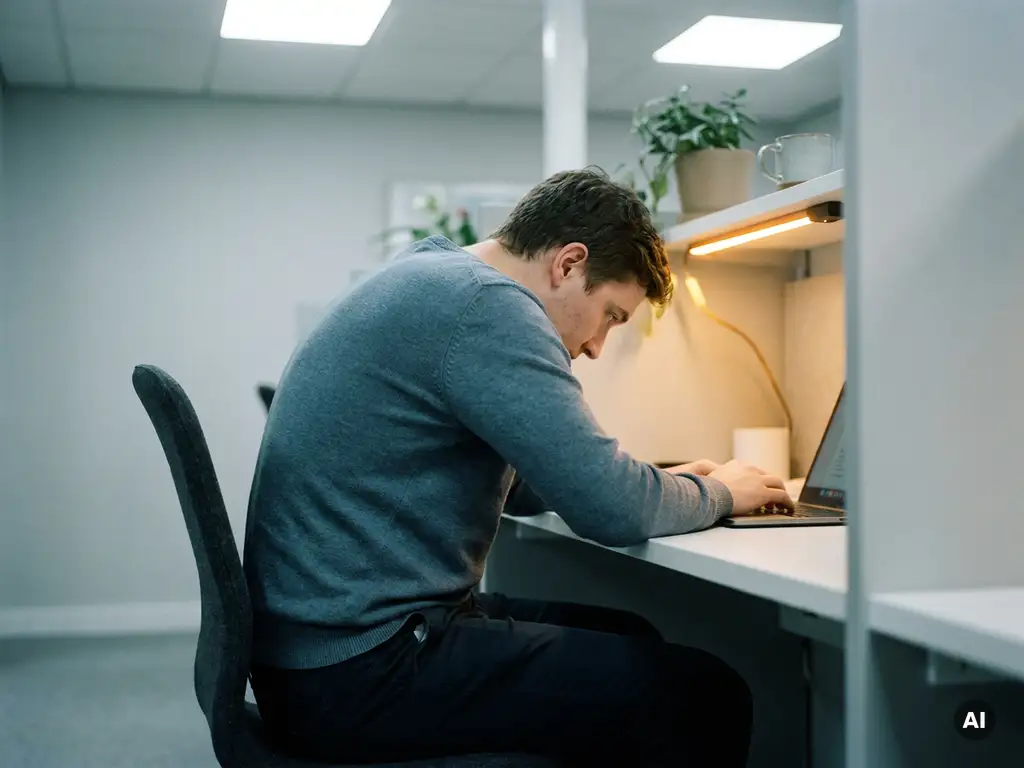
- Sitting hunched forward for long periods at a desk or screen, where the lower back loses its support and the neck sinks forward
- Holding the head forward when looking at a phone or laptop, also known as “text neck”
- Crooked sitting posture where your weight consistently leans to one side
- Standing with an exaggerated lower back curve, where the pelvis tilts too far forward
- Sleeping in an unfavorable position, such as on your stomach or with a pillow that is too high or too low
What makes these postures dangerous is not so much a one-time deviation, but the repetition and duration of them. Anyone who spends hours each day in an unfavorable posture gives the body little chance to recover. Muscles become overloaded, joints are unevenly stressed, and the spine slowly adapts to the wrong position.
How do you know if your back pain is caused by your posture?
Back pain related to posture is usually recognizable because the pain worsens after prolonged sitting, standing, or maintaining a fixed working posture, and decreases when you move or change position. If the pain also disappears after a night’s sleep but returns during the day, posture is a strong suspect.
Other signals that indicate posture-related back pain:
- The pain is located in a fixed spot, often in the lower back, the middle of the back, or the neck
- You notice that your shoulders consistently hang forward or that your head protrudes further forward than your shoulders
- The complaints started or worsened after you began working from home or got a new workstation
- Stretching or going for a walk provides temporary relief
- You also experience tension in the neck, shoulders, or headaches, which is often associated with a tense upper back
Not sure whether your complaints are really caused by your posture? A good way to test this is to consciously adjust your working posture and daily habits and see if the pain decreases. If the pain persists or gets worse, it is wise to consult a professional to rule out other causes.
What does poor posture do to your spine?
Poor posture causes uneven loading of the spine, causing intervertebral discs, joints, and muscles to become structurally overloaded. In the long term, this can lead to wear of the intervertebral discs, reduced mobility of the vertebrae, and even pressure on nerves that radiates to the arms or legs.
The spine is designed with a specific S-shape that absorbs shocks and distributes the weight of the body evenly. When you sit or stand in a deviated posture for a prolonged period, that S-shape is disrupted. The pressure on the intervertebral discs increases, muscles at the front or back of the trunk become imbalanced, and the spine is gradually “locked” into an unfavorable position.
What can happen over time:
- Intervertebral discs wear out faster because they are continuously loaded unevenly
- Vertebrae become less mobile, leading to stiffness and a limited range of motion
- Muscles become chronically tense to compensate for the spine, leading to fatigue and pain
- Nerves can become pinched due to the changed position of vertebrae, resulting in radiating pain or tingling
The good news is that the spine has a great capacity for adaptation. When you reduce the load and restore alignment, the body can recover well in many cases.
Can a chiropractor treat back pain caused by posture?
Yes, a chiropractor can effectively treat back pain caused by poor posture. The treatment focuses on restoring the alignment of the spine, improving the mobility of blocked vertebrae, and relieving pressure on intervertebral discs and nerves.
Chiropractic care is based on the idea that a well-aligned spine improves communication between the nervous system and the rest of the body. When vertebrae have moved out of their optimal position due to prolonged poor posture, this can impair nerve function and cause pain or tension. By making gentle corrections, the spine is returned to a better position.
In addition to direct treatment, a chiropractor also helps with:
- Insight into which postures worsen your specific complaints
- Advice on workplace ergonomics
- Exercises to strengthen and relax the muscles around the spine
- Preventive guidance to prevent recurring complaints
Chiropractic treatment is non-invasive and requires no medication or surgery, making it an attractive option for people who want to structurally address posture-related back pain.
How long does it take for better posture to reduce back pain?
Most people notice improvement within two to six weeks when they actively work on better posture, provided the complaints have not existed for too long. The longer the poor posture has persisted, the more time the body needs to adapt and recover.
There is no universal answer, because recovery time depends on various factors:
- How long you have had complaints: Acute complaints respond faster than chronic, ingrained patterns
- How consistently you adjust your posture: Occasionally sitting up straight has little effect; it is about a structural behavioral change
- Whether you also move actively: Movement significantly accelerates recovery because muscles are strengthened and the spine is better nourished
- Whether structural changes have already occurred: Wear of intervertebral discs or blocked vertebrae requires targeted treatment in addition to posture improvement
A realistic picture: posture improvement alone is rarely sufficient if the spine has already become imbalanced. In that case, professional guidance can significantly accelerate the recovery process and prevent recurrence.
How Ruggensteun helps with back pain caused by posture
In our practice, we see people every day with back complaints that can be directly traced back to poor working posture, prolonged sitting, or a disrupted balance in the spine. We not only treat the pain, but work together with you to find the underlying cause.
What we offer:
- Thorough intake and analysis of your posture, complaints, and lifestyle
- Chiropractic treatments focused on restoring the alignment of the spine
- Specialized techniques such as the Y-Strap treatment for spinal decompression, performed by certified chiropractors
- Personal advice on posture, ergonomics, and exercises for at home
- Quick availability, including for acute complaints, without a referral from your GP
- Locations in Eindhoven and Valkenswaard with free parking
Would you like to know whether your back pain is caused by your posture and what we can do for you? make an appointment or contact our team. We are happy to help you on your way to a pain-free back.
Sorry, the comment form is closed at this time.