


Jun
What are the benefits of y-strap spinal decompression?
The y-strap treatment offers benefits such as decompression of the intervertebral discs, relief of pressure on nerves, reduction of neck and back pain, and restoration of spinal mobility. The technique works by applying targeted traction force along the spine, creating space between the vertebrae and allowing the nervous system to function more effectively. In this article, we answer the most frequently asked questions about y-strap spinal decompression, from how it works to who it is suitable for.
How does y-strap decompression work on the spine?
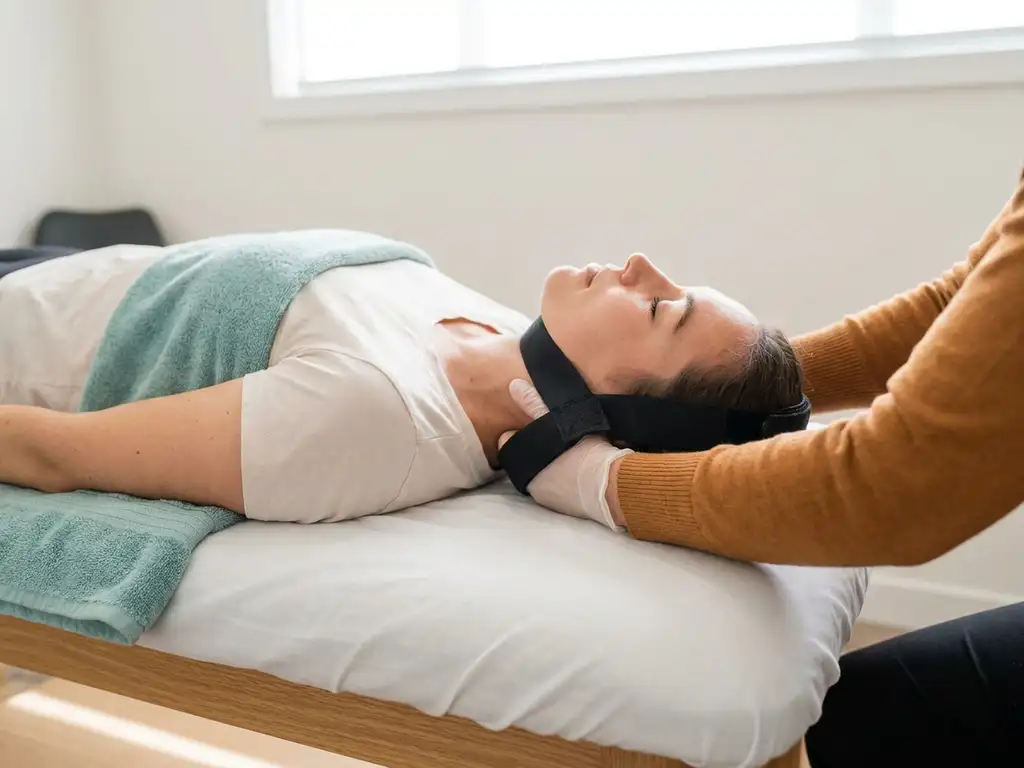
Y-strap decompression works by placing a specialized harness around the head and then applying a controlled traction force along the length of the spine. This traction creates space between the vertebrae, reduces pressure on the intervertebral discs, and promotes better spinal alignment. The result is direct decompression that relieves stress on the nervous system.
The chiropractor selects the technique based on the nature of the complaint and the condition of the spine. There are two variations:
- Slow stretch movement (standard): Slow, smooth, and controlled stretching movements aimed at general decompression and relaxation, without abrupt impulses. This variation is suitable for people who benefit from gentle traction therapy.
- HVLA movement (High Velocity Low Amplitude): A rapid movement with limited displacement, used when an actual chiropractic adjustment is needed — for example, in the case of a locked vertebra or functional restriction. HVLA is a recognized technique within manual medicine and is applied worldwide.
Through decompression, intervertebral discs that have been compressed by years of strain can partially recover. At the same time, blood circulation in the affected area improves and muscle tension around the spine decreases. This creates favorable conditions for the body’s natural ability to heal itself.
Which complaints can improve with y-strap treatment?
Y-strap traction therapy can bring improvement for a wide range of complaints related to compressed vertebrae or an overloaded nervous system. Commonly reported complaints that respond to y-strap treatment include neck pain, back pain, headaches, tingling in the arms or hands, and stiffness in the spine. The treatment can also provide targeted relief for chronic neck complaints with a structural cause.
More specifically, these are the complaints that people may benefit from treating:
- Recurring back and neck pain caused by poor posture or overuse
- Headaches and migraines originating in the neck or upper back
- Radiating pain in the arms or legs due to nerve compression
- Stiffness and limited mobility in the neck or back
- Complaints caused by a herniated disc or disc degeneration
- Stress-related muscle tension in the shoulders and neck
It is important to understand that y-strap treatment is aimed at addressing the underlying cause of these complaints, not at suppressing symptoms. People who have struggled for years with recurring complaints without finding a structural solution sometimes experience the treatment as a breakthrough.
What makes y-strap different from regular chiropractic care?
Y-strap treatment differs from regular chiropractic care in the way decompression is achieved. Where traditional chiropractic techniques work locally on specific vertebrae or joints, the y-strap applies traction force along the full length of the spine simultaneously. This makes it a more intensive and comprehensive correction.
In regular chiropractic care, targeted manual techniques are typically applied to a specific segment of the spine. The y-strap adds a further dimension through axial decompression, in which the spine is relieved as a whole. This is particularly valuable when multiple segments are under pressure at the same time, or when general stiffness and compression are the root cause of the complaints.
Because the y-strap is a more powerful technique than many standard treatment methods, it is not offered by every chiropractor. In the Netherlands, only a small number of chiropractors are authorized to perform this treatment, which underscores its specialized nature.
Is y-strap spinal decompression safe?
Y-strap spinal decompression is safe when performed by a trained and authorized chiropractor. The technique is non-invasive and requires no medication or surgery. A thorough pre-screening is essential to determine whether the treatment is appropriate for the patient’s specific situation.
As with any physical treatment, there are circumstances in which y-strap traction is not recommended. A chiropractor will always conduct a comprehensive intake assessment beforehand to rule out contraindications, such as severe osteoporosis, certain forms of arthritis, or recent spinal fractures. When the treatment is deemed appropriate, most people experience the y-strap as a relief — sometimes literally felt during the session itself.
The choice between the slow stretch movement and the HVLA variation is made carefully based on the complaint, ensuring that the intensity always matches what the body can handle. This makes the treatment both effective and responsible.
Who is y-strap treatment suitable for?
Y-strap treatment is suitable for adults with spinal, neck, or back complaints who may benefit from decompression. The treatment is particularly relevant for people with chronic or recurring complaints, people who have not experienced structural improvement with other treatment methods, and people who consciously choose a non-invasive approach to back care without surgery or medication.
The treatment is generally suitable for:
- Adults with persistent neck or back complaints
- People with headaches or migraines related to the neck
- Athletes with injuries or overuse of the spine
- People with sedentary occupations and posture-related complaints
- Individuals who have received previous treatment but continue to experience recurring complaints
People with specific medical conditions or a complex medical history always receive a comprehensive screening first. This determines which treatment approach is most appropriate, or whether a different treatment strategy would be a better fit.
How many y-strap treatments are needed to see results?
The number of y-strap treatments required varies from person to person and depends on the nature, severity, and duration of the complaints. Some people notice significant relief after just one session, while chronic or long-standing complaints may require a series of multiple sessions to achieve lasting results.
As a general guideline, acute complaints tend to respond more quickly than chronic conditions. With years of compression or structural spinal problems, the body needs more time to recover and adapt to the new alignment. A treatment plan is therefore always tailored to the individual, rather than following a standard protocol.
In addition to the treatments themselves, lifestyle factors play a role in the recovery process. Posture, physical activity, sleep quality, and stress levels all influence how quickly and fully the body responds to decompression. A good chiropractor will always discuss these factors as part of the overall guidance.
How Ruggensteun helps with y-strap spinal decompression
We are one of the few chiropractors in the Netherlands authorized to perform y-strap treatments. From our practices in Eindhoven and Valkenswaard, we offer a holistic approach in which we not only treat the complaint but also address its underlying cause. Here is what you can expect from us:
- A comprehensive intake and screening beforehand to determine whether y-strap treatment is suitable for your situation
- Treatment by specialized chiropractors with expertise in both the slow stretch movement and the HVLA variation
- A personalized treatment plan tailored to your complaints, goals, and pace of recovery
- Quick appointment availability, including for acute complaints, with no referral from a general practitioner required
- Free parking at both locations for a hassle-free visit
Are you dealing with recurring back pain, chronic neck complaints, or headaches, and would you like to know whether y-strap treatment is right for you? Get in touch today and schedule an appointment at Ruggensteun. We are happy to help you on your way to lasting recovery.
Sorry, the comment form is closed at this time.