


Jul
Can the y-strap reduce headaches?
Yes, a y-strap treatment can reduce headaches, particularly when the headache originates in the neck or upper spine. By relieving tension and pressure in the cervical spine, the y-strap improves nerve communication and blood flow in the head and neck region. In this article, we answer the most frequently asked questions about the y-strap as a treatment for headaches.
How can a y-strap treatment relieve headaches?
A y-strap treatment relieves headaches by creating decompression in the intervertebral discs of the neck and spine. The traction force unloads compressed structures, reduces muscle tension around the cervical spine, and improves nerve conduction. When nerves are less compressed and the spine is better aligned, a key cause of tension headaches and cervicogenic headaches is eliminated.
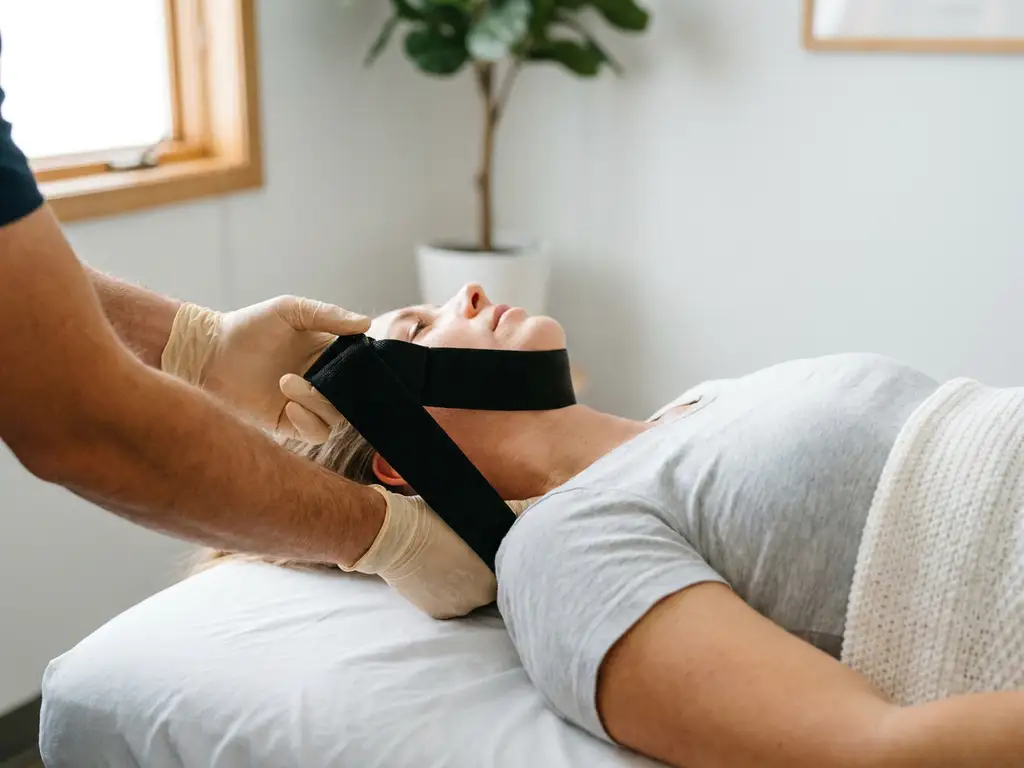
The y-strap works by means of a strap placed around the head, after which the chiropractor applies a controlled traction force along the longitudinal axis of the spine. This creates space between the vertebrae, reducing pressure on nerves and joints. Many people experience a sense of relief after just the first session — not only in the neck but also in the head.
In addition, the treatment stimulates blood circulation in the head and neck region. Improved blood flow means that tissues receive more oxygen, which helps reduce headache symptoms. Y-strap traction therapy therefore targets not the symptom itself, but the underlying mechanical cause in the spine.
Which types of headaches respond best to the y-strap?
The y-strap treatment works best for headaches that have a mechanical or cervical origin. These include tension headaches, cervicogenic headaches (headaches originating from the neck), and headaches associated with poor posture or prolonged screen use. In these cases, tension and pressure in the neck play a direct role.
Cervicogenic headache is a common but underestimated cause of chronic headache. The pain originates in the neck and radiates into the head — often toward the side, the back, or even behind the eyes. Because the y-strap directly targets the cervical spine, this type of headache is particularly well suited to treatment with this technique.
Tension headaches, caused by overloaded neck muscles and joints, also respond well to y-strap traction. The decompression unloads the affected structures and reduces the muscle tension that sustains the headache. For migraines in which neck complaints play a triggering role, the treatment may also provide support, although migraine is a more complex condition involving multiple contributing factors.
What is the difference between y-strap and conventional chiropractic care for headaches?
The key difference lies in how decompression is achieved. Conventional chiropractic techniques focus on targeted manipulation of individual vertebrae, while y-strap traction therapy decompresses the entire spine in one fluid movement. This makes the y-strap particularly well suited for people with widespread tension across multiple levels of the spine.
Within y-strap treatment, there are two methods of application, which the chiropractor selects based on the complaint and the condition of the spine:
- Slow stretch movement: Slow, fluid, and controlled movements aimed at general decompression and relaxation, without abrupt impulses. This is the standard form and suitable for a wide range of patients.
- HVLA movement (High Velocity Low Amplitude): A rapid movement with limited displacement, used when an actual chiropractic adjustment is needed — for example, in the case of a blocked vertebra. HVLA is a recognized technique within manual medicine and is applied worldwide.
Conventional chiropractic care offers more targeted corrections per vertebra and is sometimes better suited for specific, localized blockages. In practice, both approaches are often combined: the y-strap provides broad decompression, while additional chiropractic techniques address specific problems.
How many y-strap sessions are needed for chronic headaches?
For chronic headaches, multiple sessions are generally required to achieve lasting results. A realistic starting plan consists of three to six sessions, depending on how long the symptoms have been present, the degree of spinal degeneration, and how the body responds to treatment. Chronic neck complaints require an approach that addresses the root cause structurally, not just provides temporary relief.
After the initial sessions, the chiropractor evaluates progress and adjusts the treatment plan accordingly. Some people notice significant improvement after just one or two sessions, while others need more time. Factors such as prolonged poor posture, work-related strain, or previous injuries can slow the recovery process.
Lifestyle factors also play a role alongside treatment sessions. Exercise, ergonomic adjustments at work, and stress reduction all contribute to lasting recovery. A y-strap treatment by a chiropractor is most effective as part of a broader approach that places the structural cause of the headache at the center.
Is a y-strap treatment safe for headache complaints?
A y-strap treatment is safe for headache complaints, provided it is performed by a qualified and trained chiropractor. The treatment is non-invasive, requires no medication, and does not carry the side effects associated with pharmacological treatments. For people seeking a natural back treatment without surgery, this is an important advantage.
However, it is essential that the treatment be carried out by someone who is specifically certified in this technique. Not every chiropractor in the Netherlands is authorized to use the y-strap. Inexperienced application can place unnecessary strain on the neck and spine. Proper training and certification are therefore not a secondary concern, but an absolute prerequisite for safe application.
There are situations in which the y-strap is not appropriate, such as severe osteoporosis, spinal instability, recent surgery in the head or neck region, or certain vascular conditions. A thorough intake in which the chiropractor reviews the patient’s medical history is always the first step before treatment begins.
When is it worthwhile to consult a chiropractor for headaches?
Consulting a chiropractor for headaches is worthwhile when the pain recurs regularly, is accompanied by neck complaints, or does not respond adequately to conventional treatments such as painkillers or physical therapy. When headaches worsen in certain positions or after prolonged sitting, this points to a mechanical cause that chiropractic care can effectively address.
Many people wait too long before consulting a specialist, allowing complaints to become chronic and recovery to take longer. A chiropractor can assess during an initial consultation whether the spine and nervous system are contributing to the headache. No referral from a general practitioner is required, which lowers the barrier to seeking help.
Always consult a doctor first if you experience sudden, very severe headache that is unlike your usual headaches, headache following a fall or blow to the head, or headache combined with neurological symptoms such as speech difficulties or loss of strength. In those cases, medical evaluation is the first priority.
How Ruggensteun helps with headaches through y-strap treatment
We are one of the few chiropractic practices in the Netherlands certified to perform y-strap treatments. From our locations in Eindhoven and Valkenswaard, we help people with recurring headaches, neck complaints, and other spinal problems by addressing the structural cause rather than simply relieving symptoms. Our approach includes:
- A comprehensive intake to identify the root cause of your headaches
- Certified y-strap treatments performed by specialized chiropractors
- A personalized treatment plan focused on lasting recovery of the spine and nervous system
- Supplementary techniques such as HVLA manipulation, CFR, and dry needling where they add value
- Quick availability for urgent complaints, with no referral from a general practitioner required
Would you like to know whether a y-strap treatment is suitable for your headache complaints? Contact us or book an appointment directly at our practice in Eindhoven or Valkenswaard. We look forward to working with you toward a structural solution.
Sorry, the comment form is closed at this time.