


Jun
Can the y-strap help with stress-related neck complaints?
Yes, a y-strap treatment can help with neck complaints caused or aggravated by stress. The y-strap applies targeted decompression to the intervertebral discs of the spine, which can relieve tension in the neck and restore nerve communication. Below, we answer the most frequently asked questions about this treatment so you know exactly what to expect.
How does stress cause neck complaints?
Stress causes neck complaints because the body unconsciously tightens the shoulder and neck muscles under sustained tension. This chronic muscle tension pulls the vertebrae out of their optimal position, placing pressure on nerves and intervertebral discs. The result is a self-perpetuating cycle of pain, stiffness, and reduced mobility.
When stress persists, the nervous system enters a state of heightened alertness. The body produces stress hormones that keep the muscles in a constant state of mild contraction. The neck muscles are particularly sensitive to this, as they form the connection between the base of the skull and the shoulders. Prolonged tension in this area leads not only to local pain, but also to related complaints such as headaches, tingling in the arms, and reduced concentration.
What makes recovery more difficult is that stress-related neck complaints rarely have a single cause. The combination of muscle tension, spinal dysfunction, and an overstimulated nervous system calls for an approach that goes beyond simply suppressing pain. Only when the underlying mechanical and neurological cause is addressed can chronic neck complaints improve structurally.
What exactly does the y-strap do to the spine?
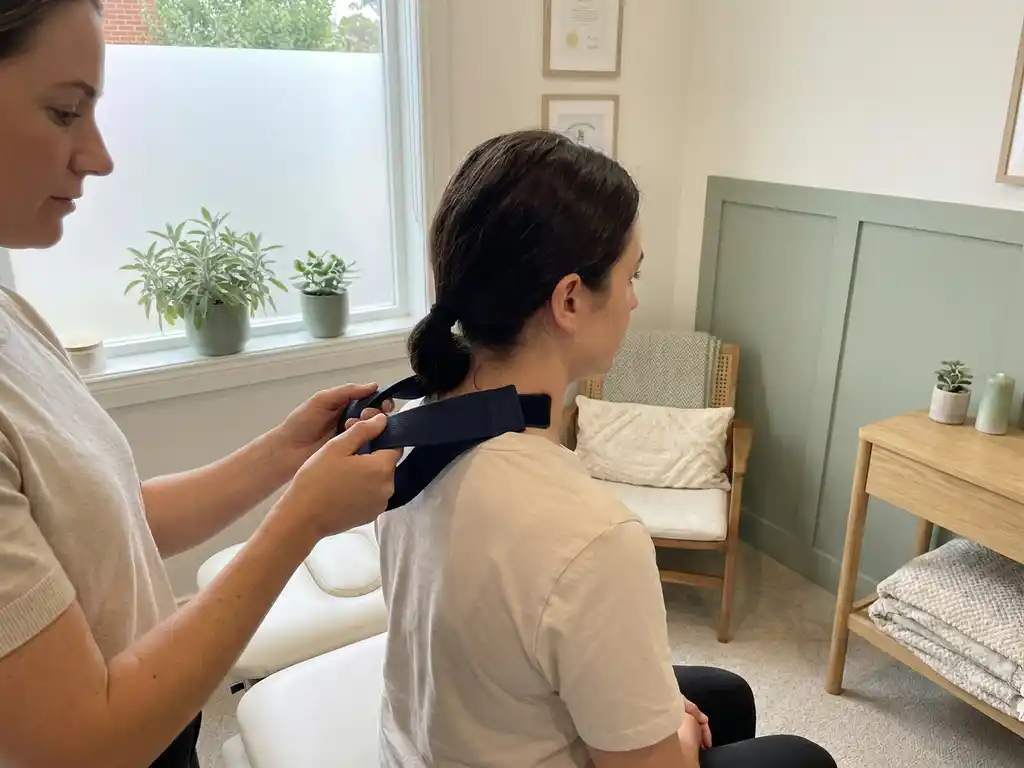
The y-strap is a traction instrument that achieves decompression of the intervertebral discs through controlled pulling force along the longitudinal axis of the spine. The strap is placed under the chin and behind the head, after which the chiropractor performs a stretching movement that temporarily separates the vertebrae and creates space in the intervertebral discs.
There are two techniques the chiropractor chooses based on the nature of the complaint and the condition of the spine:
- Slow stretching movement (standard): Slow, smooth, and controlled stretching movements aimed at general decompression and relaxation, without abrupt impulses. This form is particularly suitable for stress-related neck complaints where muscle relaxation and nerve relief are the primary focus.
- HVLA movement (High Velocity Low Amplitude): A rapid movement with limited displacement, used when an actual chiropractic adjustment is needed — for example, in the case of a blocked vertebra or functional restriction. HVLA is a recognized technique within manual medicine and is applied worldwide.
The decompression produced by y-strap traction therapy reduces pressure on nerve roots and promotes fluid absorption in the intervertebral discs. This supports the body’s self-healing capacity and improves nerve communication between the brain and the rest of the body.
Does the y-strap work differently from a regular chiropractic treatment?
Yes, the y-strap differs from a regular chiropractic treatment in that it applies a targeted, longitudinal pulling force to the entire spine rather than performing localized manipulations on individual vertebrae. Where traditional chiropractic adjustments focus on specific joints, the y-strap produces an overall decompression that affects multiple levels of the spine simultaneously.
A regular chiropractic treatment typically consists of a combination of mobilization techniques, soft tissue massage, and targeted adjustments to specific vertebrae. The y-strap adds another dimension by actively decompressing the intervertebral discs. This makes the technique particularly effective for complaints in which compression plays a central role, such as stress-related neck pain where the spine is under constant tension.
In practice, both approaches are often combined. The y-strap can be used as part of a broader treatment that also addresses muscle tension around the spine. This makes the treatment more versatile than a standalone technique.
Who is the y-strap suitable for when it comes to neck complaints?
The y-strap for neck complaints is suitable for adults dealing with persistent or recurring neck pain, stiffness, headaches, or stress-related tension in the neck and shoulders. The treatment is also relevant for people who find that previous treatments only provided temporary relief without addressing the underlying cause.
The y-strap is not suitable for everyone. There are situations in which the treatment is not applied, such as:
- Severe osteoporosis or bone density loss
- Recent spinal surgery or fresh fractures
- Certain forms of severe herniated disc where traction may worsen symptoms
- Spinal instability due to connective tissue disorders
A qualified y-strap chiropractor always assesses the individual situation before beginning treatment. This includes a thorough intake during which the history of complaints, any imaging, and the current condition of the spine are all taken into account. People with stress-related neck complaints and no structural contraindications are generally good candidates for this non-invasive treatment.
How many treatments are needed for stress-related neck pain?
The number of y-strap treatments required for stress-related neck pain varies from person to person and depends on the severity and duration of the complaints, the degree of spinal dysfunction, and the overall health of the nervous system. For mild to moderate complaints, many people see improvement after two to four treatments, while long-standing or complex complaints require a longer treatment period.
An important factor is how long the complaints have been present. Recent complaints typically respond more quickly to treatment than chronic conditions that have persisted for years. With stress-related neck pain, the extent to which the source of stress is addressed also plays a role. Even the best chiropractic treatment will have less lasting effect if the underlying stress factors remain unchanged.
After the initial course of treatment, many people opt for periodic maintenance sessions to preserve the results achieved and prevent relapse. This aligns with a preventive approach in which the nervous system and spine are kept in structural balance rather than only responding to acute complaints.
How we help with y-strap treatment for neck complaints
At Ruggensteun, we are one of the few chiropractors in the Netherlands authorized to perform y-strap treatments. We combine this specialized technique with a thorough intake and a personalized treatment plan focused on the structural cause of your neck complaints — not just the symptoms. Here is what you can expect from us:
- Specialized y-strap chiropractors with expertise in both the standard stretching movement and the HVLA technique
- Personal intake in which we thoroughly map your complaint history, lifestyle, and spinal condition
- Holistic approach focused on restoring nerve communication and spinal balance
- Quick availability for urgent complaints, without a referral from your general practitioner
- Locations in Eindhoven and Valkenswaard with free parking
Would you like to know whether a y-strap treatment is right for your neck complaints? Contact us or book an appointment directly. We would be happy to work with you to find the best approach for lasting recovery.
Sorry, the comment form is closed at this time.