


Feb
How do you choose the right pillow for neck pain?
Choosing the right pillow for neck pain starts with finding support that keeps your cervical spine in a neutral position. You choose a pillow that matches your sleeping position: back sleepers need a thinner pillow, side sleepers a thicker pillow, and stomach sleepers the thinnest pillow. Memory foam and latex provide good support, while the height depends on your shoulder width and sleeping position.
Why does the wrong pillow cause neck pain?
A wrong pillow throws your cervical spine out of balance, causing muscles to become overloaded and pain to develop. Your neck needs support during sleep to maintain its natural curvature. If your pillow is too high, too low, or too soft, your neck muscles must compensate all night long.
The consequences of a bad pillow are immediately noticeable. You wake up with stiffness, headaches, or pain that radiates to your shoulders. This happens because your muscles have worked for hours in an unnatural position to support your head.
Your sleeping position determines how your pillow affects your neck:
- Back sleeper: A pillow that’s too high pushes your head forward, causing tension on the neck muscles.
- Side sleeper: A pillow that’s too low lets your head sink, causing your cervical spine to become misaligned.
- Stomach sleeper: Any pillow causes overextension of the neck in this position.
The cervical spine consists of seven vertebrae that have a natural C-shape. When your pillow doesn’t support this curvature, pressure develops on nerves and joints. This can lead to chronic neck pain if you don’t address the problem.
Which pillow type works best for neck pain?
Memory foam pillows often work best for neck pain because they adapt to your head shape and provide sufficient support. Latex pillows are also a good choice due to their resilience and durability. Traditional down pillows usually provide too little support for people with neck complaints.
Here is a practical comparison of different pillow types:
Memory foam adapts to your contours and maintains this shape. The material responds to body heat and weight, providing perfect support. The disadvantage is that some people find it too warm to sleep on.
Latex pillows combine support with resilience. They maintain their shape better than memory foam and sleep cooler. Natural latex is more durable but also more expensive than synthetic variants.
Down pillows are traditional but often provide insufficient support. They compress under the weight of your head, so your neck isn’t properly supported. For people with neck pain, they’re usually not suitable.
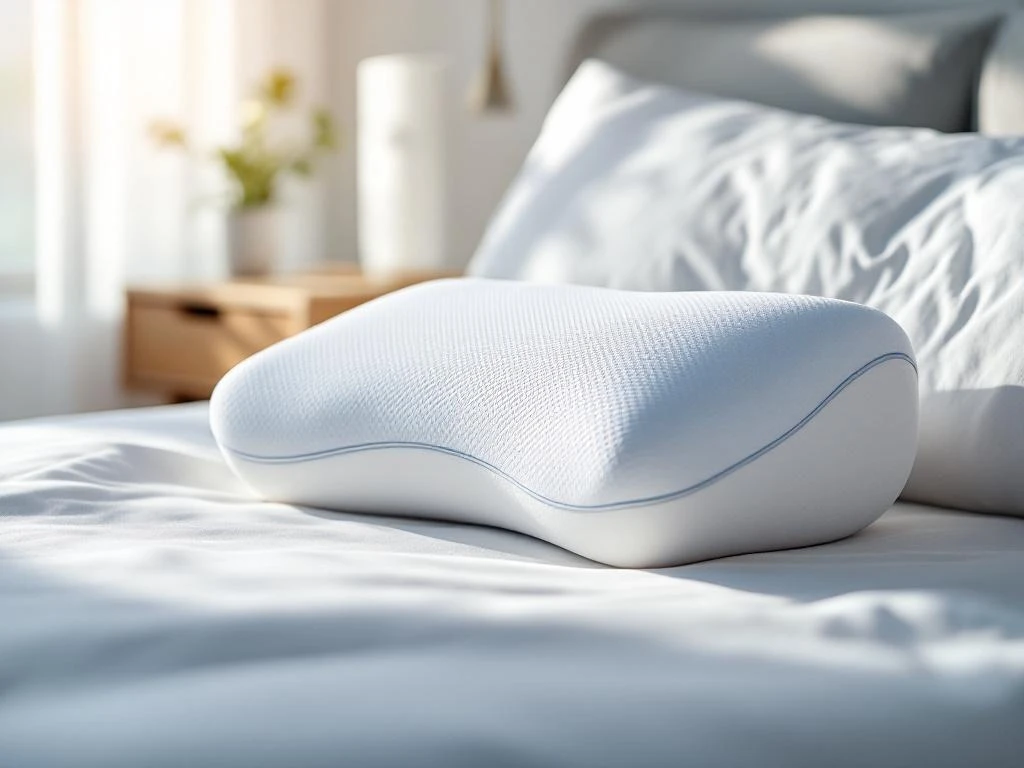
Ergonomic pillows have special shapes with hollows for your head and elevations for neck support. They can be effective, but you need to get used to the shape.
How do you determine the right height for your pillow?
You determine the right pillow height based on your sleeping position and shoulder width. As a side sleeper, you need a pillow that fills the space between your ear and shoulder. As a back sleeper, you choose a lower pillow that lightly supports your head without pushing it forward.
Here are concrete methods to find the ideal height:
For side sleepers: Measure the distance from your ear to the edge of your shoulder while standing upright. This distance determines the minimum pillow height you need. Add 2-3 centimeters to this for comfort.
For back sleepers: Your pillow should be thin enough so your head doesn’t tilt forward. Test this by standing against a wall: your back of head and shoulders touch the wall. Your pillow should maintain this natural position.
Practical testing method: Place a towel under or above your current pillow to adjust the height. Try different thicknesses until you find a comfortable position. This helps you determine the ideal height before buying a new pillow.
Pay attention to signals from your body. If you wake up with headaches or stiffness, your pillow is probably too high. If you feel tension in your shoulders, it may be too low.
What are the most important characteristics of a good neck support pillow?
A good neck support pillow has the right firmness to provide support without being too hard, maintains its shape throughout the night, and is breathable enough to prevent overheating. The shape must align with your natural neck curvature and the material must be durable.
Firmness is a balance between comfort and support. Too soft means insufficient support, too hard causes pressure points. A medium firmness works best for most people.
Shape retention determines how well your pillow supports you throughout the entire night. Good pillows maintain their shape and don’t compress. This is especially important if you change positions frequently during sleep.
Breathability prevents your head and neck from overheating. Materials like latex and memory foam with gel infusion sleep cooler than traditional memory foam. Good ventilation contributes to comfortable sleep.
Ergonomic shape supports the natural curvature of your neck. Some pillows have special contours with elevations and depressions that perfectly align with your anatomy. This can be more effective than a standard rectangular pillow.
The dimensions should fit your bed and sleeping habits. If you move a lot in your sleep, choose a wider pillow so your head always remains supported.
How Ruggensteun helps with treating neck pain
At Ruggensteun, we treat neck pain with specialized chiropractic techniques that go beyond just choosing a good pillow. We address the underlying causes of your neck complaints by aligning your spine and restoring nerve communication.
Our expertise in neck pain treatment includes:
- Y-strap treatments for decompression of the cervical vertebrae
- CFR (Cranial Facial Release) for tension in the head and neck area
- Specific chiropractic adjustments for alignment of cervical vertebrae
- Personal advice about sleeping position and pillow use
- Preventive care to prevent recurrence of neck complaints
We combine treatment with practical advice about your sleep environment. A good pillow is important, but if your cervical vertebrae aren’t properly aligned, you’ll continue to have problems. Our holistic approach ensures that your body can recover optimally during sleep.
Do you suffer from neck pain that doesn’t go away with a new pillow? Schedule an appointment at one of our locations in Eindhoven or Valkenswaard. We investigate the cause of your complaints and create a treatment plan that fits your situation. Contact us for an appointment: you don’t need a referral and we often have quick availability for urgent cases.
Sorry, the comment form is closed at this time.